Lukas Kucerik ⭐ Gleb Sinyavskiy ⭐ Azam Farooqui ⭐ Erik Heynekamp ⭐ James Maxson ⭐ Adrián Perales Fernández ⭐ Dan Arrington ⭐ Steve Willard ⭐ Pirmin Stanglmeier ⭐ James Bland ⭐ Michael Butler ⭐ Ján Trenčanský ⭐ Pieter Van Trappen ⭐ Josua Stuber ⭐ David Wolf ⭐ José Couto ⭐ Ashley Rezna ⭐ Peter Permenter ⭐ Daniel Bagge ⭐ Christopher Main ⭐ Brett Hagen ⭐ Rolf Wentland ⭐ Danilo Giacomini ⭐ Alishams Hassam ⭐ David Martinez ⭐ Boji Tony ⭐ Jan Maag ⭐ Darsey Litzenberger ⭐ Thibaud Franchetti ⭐ Amy Kay ⭐ Teemu Vartiainen ⭐ Michele Vigilante ⭐ Neil Baker ⭐ Michael Winters ⭐ Rodney Lorimor ⭐ Joshua Strobl ⭐ Gregorio Troncoso ⭐ Marko Peteri ⭐ Norbert Spina ⭐ Cristian Le ⭐ Steffen Jasper ⭐ Alexey Abolmasov ⭐ Herbie Hopkins ⭐ Luis Garcia ⭐ Jennifer Radtke ⭐ Kai DeLorenzo ⭐ Lino Moser ⭐ Wolfgang Kerschbaumer ⭐ Dustin Miller ⭐ Àlex Magaz Graça ⭐ Dimitrios Bogiatzoules ⭐ Reuben Parfrey ⭐ Bob Peters ⭐ Mark Rushing ⭐ Christian Leopoldseder ⭐ Jon Stelly ⭐ Catalina Rosca ⭐ Kieren Roberts ⭐ Dallin Dyer ⭐ Peter Johansson ⭐ Justin Geigley ⭐ Will Butler ⭐ Shir Havron ⭐ john athanasiadis ⭐ Keith Connor ⭐ Ole V. S. Mortensen ⭐ Thomas Chamberlin ⭐ Jonathan Bernard ⭐ Sasha Boyd ⭐ Martin Niemann Madsen ⭐ George Galt ⭐ Alexander Nolting ⭐ Travis Miller ⭐ Janne Hakonen ⭐ Guenther Danhofer ⭐ Batuhan Taskaya ⭐ Beat Gerber ⭐ Łukasz Nawrot ⭐ Ferdinand Brummet ⭐ Peter Kryger ⭐ Lee Dedear ⭐ Tim Okrongli ⭐ Anael González Paz ⭐ Rémi Verschelde ⭐ Fabian Ramos ⭐ Jean-Philippe Carlens ⭐ Mikko Kujala ⭐ Lucas Ji ⭐ Monu Monu ⭐ Mikel Ward ⭐ Carl Schwan ⭐ Richard Freitag ⭐ Xuanyu Yu ⭐ Josef Kejzlar ⭐ Valerio Pilo ⭐ Rahul Ramesh ⭐ Zdenek Zikan ⭐ Jan Válek ⭐ Grider Li ⭐ Michael Farkas ⭐ Kevin Steinbach-Reif ⭐ Philip Graham ⭐ Lee Pfeifer ⭐ TIMOPHEY TSITAVETS ⭐ François-Xavier Thomas ⭐ Dennis Zellner ⭐ Antoni Aloy Torrens ⭐ Alonso Mendoza ⭐ Emil Larsson ⭐ Kyle Lange ⭐ Thiago Oliveira ⭐ Michael Meister ⭐ Emilio Cobos ⭐ Joe Brockmeier ⭐ Alexey Andreyev ⭐ Adam Bushell ⭐ johannes Kehrer ⭐ David Koch ⭐ Howard T ⭐ Mauri Latvala ⭐ Matvey Ryabchikov ⭐ Tobias Fellmann ⭐ Alexander Gurenko ⭐ Matthias Born ⭐ Tobias Borgert ⭐ Richard Langis ⭐ Fred Dickens ⭐ Raphael Grieger ⭐ Dave X ⭐ Isaac Patton ⭐ Adam Luchjenbroers ⭐ Paul Birkholtz ⭐ Alan Gresly ⭐ Rémi Dehenne ⭐ Siegfried Meyke ⭐ Barry Titterton ⭐ laszlo kiss ⭐ Miroslav Ondrasina ⭐ Martin Supan ⭐ Erik Fleischer ⭐ Samwise Hansen ⭐ Alexander Olofsson ⭐ Jan Iversen ⭐ Harley Napolitano ⭐ Jeremy Winter ⭐ Keny Chatain ⭐ Joshua Schmitt ⭐ Alexander Gottweis ⭐ David Walluscheck ⭐ Zach B ⭐ Anthony Beninati ⭐ José María Galdós ⭐ Dave Lewis ⭐ Richard Olmsted ⭐ Witold Sosnowski ⭐ Ramazan Ahmedov ⭐ T. Hassing ⭐ Daniel Vršek ⭐ Henning Tönis ⭐ Clemente Cuevas ⭐ Arne Boedt ⭐ Christian Skoubye ⭐ Jeremy Fielder ⭐ JIMI ROSS ⭐ Chris Killingsworth ⭐ Peter Nunn ⭐ Raine Liukko ⭐ Alice Miller ⭐ John Rogers ⭐ Lucas Schmidt ⭐ Patrick Nagel ⭐ Nuno Gomes ⭐ Ralf E ⭐ Byron Fröhlich ⭐ Norbert Langner ⭐ Heinrich Arnold Witt ⭐ Peter Wiersig ⭐ Kakaka Ksksksk ⭐ Niclas Roßberger ⭐ Jan Braun ⭐ Antonio Caiazzo ⭐ Jimmy Lindsey ⭐ Daniel Landau ⭐ Christopher Bratusek ⭐ Sondre Dalen ⭐ Akseli Lahtinen ⭐ Patrick Cannon ⭐ Edoardo Regni ⭐ Simon Jorzick ⭐ Daniel Zalar ⭐ Xuetian Weng ⭐ Daniel Lloyd-Miller ⭐ Travis Suel ⭐ Harry A ⭐ Dawid Dziedzic ⭐ Jeremy Lainé ⭐ Phillip Gray ⭐ Brandon Lewis ⭐ Marco Julian Solanki ⭐ Tino Strauß ⭐ Brendan Foote ⭐ Neal Gompa ⭐ Samuel Martin ⭐ Andrzej Matuch ⭐ Daniel Larkin-York ⭐ Eliana Beasley ⭐ Andre Ramnitz ⭐ Janne Taipalus ⭐ Angelos Skembris ⭐ Torsten Fratzke ⭐ Marco Nelles ⭐ Oriol Tomas ⭐ Eli Opal ⭐ Linghai Yan ⭐ Daniel Jost ⭐ Tony Harmelink ⭐ Shubham Arora ⭐ Dawid Sowa ⭐ Mikko Syrjä ⭐ Paul Elliott ⭐ Olli-Pekka Karjalainen ⭐ Martin Geißler ⭐ Maximilian Meßmann ⭐ Alex Turner ⭐ Arjan van Griethuijsen ⭐ Nathan Pennington ⭐ Christopher Clarke ⭐ Balthasar Schlotmann ⭐ Florian Hirschhuber ⭐ Félim Whiteley ⭐ Rob Goris ⭐ Corey Schroeder ⭐ Igor Stojkovic ⭐ Nicholas Knoblauch ⭐ Michael Leger ⭐ Kormos Krisztián ⭐ William Penrod ⭐ Herbie Hopkins ⭐ Julio Moya ⭐ Lars Jose ⭐ Wouter Eerdekens ⭐ Gytis Ramanauskas ⭐ Camille Louédoc ⭐ Klemen Košir ⭐ V B ⭐ Anders S Danielsen ⭐ Brian Diederich ⭐ Benjamin Xiao ⭐ Tilo Brückner ⭐ arjen van drie ⭐ Guido Winkelmann ⭐ Emanuel Wegh ⭐ Jean-Luc GOFFLOT ⭐ Jennifer Radtke ⭐ Sean Kellner ⭐ Jan Koid ⭐ Alejandro Muñoz Fernández ⭐ Zacharie Monnet ⭐ Stephen Rider ⭐ Pavel Gejdos ⭐ Wesley Schroth ⭐ Edward Flick ⭐ Matthew Gulliver ⭐ Jon Atkinson ⭐ Henry Asbridge ⭐ gggg ggg ⭐ Vladimir Baskakov ⭐ Yann Nux ⭐ zzidun bourbaki ⭐ Jon Downs ⭐ Tal Shalif ⭐ Matthias Born ⭐ Janis Bundschu ⭐ Matthew Crowell ⭐ João Lucas de Sousa Almeida ⭐ Matthew Orr ⭐ Patrick Wu ⭐ Hennie Marais ⭐ Ulrich Schreiner ⭐ Matheus Ferreira Messias Guedes ⭐ Rocco Tormenta ⭐ Robin Princeley ⭐ Noah Davis ⭐ Brent Maxwell ⭐ Joseph Enders ⭐ Daniel Hurtado ⭐ Mathias Monse ⭐ Jan Bonkaß ⭐ Chris Lael ⭐ Johann Jacobsohn ⭐ Linas Mitkevičius ⭐ Alberto Bec ⭐ Adrian Friedli ⭐ Yannic Schreiber ⭐ Dennis Smith ⭐ Etienne Prud'homme ⭐ Matthias Hoffmann ⭐ Johannes Wolf ⭐ Armand Sleiman ⭐ Conner Smith ⭐ Alex Ramallo ⭐ Simon Will ⭐ Jason Spisak ⭐ Chris Feigl ⭐ Klaus Tusch ⭐ Christian Gmeiner ⭐ Wiktor Walaszuk ⭐ Santino Mazza ⭐ Sameh Sabry ⭐ A B ⭐ Matthew Brunelle ⭐ Christoffer Blomvik ⭐ Simon Österle ⭐ ADAM K BIERMAN ⭐ MArk McKillen ⭐ Harald Herrmann ⭐ Brian Lemons ⭐ Jared Blackard ⭐ Christoph Nenning ⭐ Dennis Kibbe ⭐ Flavio Fearn ⭐ Adon Metcalfe ⭐ Jim Crawford ⭐ Max Sickora ⭐ Jeff Cain ⭐ Thomas Ludwig ⭐ Scott Koch ⭐ Morten Buhl ⭐ Reinhold Wissing ⭐ Amy Cheathem ⭐ ARTEM KULESHOV ⭐ Pierre-Alexandre Hamel-Bussières ⭐ TrainDoc Last Name ⭐ Rüdiger Stenke ⭐ Mateusz Dytkowski ⭐ Pascal Herre ⭐ Mario Knothe ⭐ Alexander Lagerberg ⭐ Thomas Sappl ⭐ P Rosenheim ⭐ Pascal Jung ⭐ Jan Iversen ⭐ Matthew Cazaly ⭐ Patrick Gianelli ⭐ Bel Lord-Williams ⭐ Iain Cuthbertson ⭐ Volker Sachse ⭐ Aaron Ebert ⭐ Ramón Cahenzli ⭐ Jakub Jankowski ⭐ Tobias Schmidl ⭐ Federico Dossena ⭐ Artur Simonyants ⭐ Mantas Pocius ⭐ Michał Walenciak ⭐ Peter Schult ⭐ Sarah Hillebrand ⭐ Denis Doria ⭐ Jacob Ludvigsen ⭐ BigMouth TheGreat ⭐ Robin Slot ⭐ Frederik Hoffmann ⭐ John Chufar ⭐ Stewart Webb ⭐ Tubo Shi ⭐ Arthur Galiullin ⭐ Bastian Veith ⭐ Rhys Williams ⭐ Stefan Zurucker-Burda ⭐ Rene Salinas ⭐ Tiago Saraiva ⭐ Leif-Jöran Olsson ⭐ Ramón Cahenzli ⭐ Christoph Dreier ⭐ Ami Chayun ⭐ Simon Berz ⭐ Ralph Hohmann ⭐ Henrique Araujo ⭐ Víctor José Pérez Ruiz ⭐ Denis Hermann ⭐ William Wojciechowski ⭐ Christian McHugh ⭐ Till Schröder ⭐ Kit Cox ⭐ Jakob Rath ⭐ Rachel Berkhahn ⭐ Florian Klamer ⭐ David Germain ⭐ Paul Sobey ⭐ Mark Koenen ⭐ Dieter Rogiest ⭐ Iñigo Salvador Azurmendi ⭐ Maximilian Häcel ⭐ Seiya Ono ⭐ Sacha Schutz ⭐ Mikko Mensonen ⭐ Lennart Koopmann ⭐ David Chocholatý ⭐ Andrija Jovanovic ⭐ Skyler Malinowski ⭐ Thomas Schuster ⭐ Luca Cavana ⭐ Ulrich Tomaschowski ⭐ Skye Van Valkenburgh ⭐ Andreas Wagner ⭐ Régis GUYOMARCH ⭐ Michael Plemmons ⭐ Achilleas Koutsou ⭐ Gaurav Dasharathe ⭐ Matthias Schade ⭐ David Sgro ⭐ Ryan McCullough ⭐ Ahmed Khan ⭐ Sergey Platonov ⭐ Alexander Ypema ⭐ Uldis Petersons ⭐ Roman Shaposhnikov ⭐ Dmitry Sobolev ⭐ Ethan Li ⭐ Martin Beck ⭐ Tasuku Suzuki ⭐ Seth McDonald ⭐ Sigurd Holsen ⭐ Christian Strebel ⭐ Maria Rutaha ⭐ Karl Johnsson ⭐ Bryan Zaffino ⭐ Nathaniel Housman ⭐ Gabriel Malo ⭐ Dirk Holsopple ⭐ Klaus Wagner ⭐ Lauren Howe ⭐ Eric Botter ⭐ Nathan Westerman ⭐ Batuhan Cinar ⭐ Nathan Misner ⭐ Marcel Pierre Simon ⭐ Hans-Bernd Dr. Lindemann ⭐ Linus Karl ⭐ John Cohen ⭐ Jan Krause ⭐ Gene Evans ⭐ Cory Adkins ⭐ Peter Simonsson ⭐ Mahendra Tallur ⭐ Niklas Oetken ⭐ Ábel Nagy ⭐ Cristian Chiru ⭐ Raunak Chhatwal ⭐ Burgess Chang ⭐ Martin Ségur-Cabanac ⭐ Guenter Schwann ⭐ Christoffer Jansson ⭐ Amritpal Gill ⭐ Lukas Langrock ⭐ Deepak HS ⭐ Peter Strick ⭐ Martin Tschümperlin ⭐ Alicja Michalska ⭐ Matt Van Dyke ⭐ Sebastian Dornack ⭐ Anastasios Laouros ⭐ Matthias Bartl ⭐ Lucas Hoy ⭐ Costin-Tiberiu Vasilescu ⭐ Frank Schiebel ⭐ Will Styler ⭐ Nino Pinna ⭐ ali xyz ⭐ Julius Binder ⭐ Gyuwon Seol ⭐ Michael Cormier ⭐ Shayne Johnson ⭐ Ray Trautman ⭐ Ramazan Ahmedov ⭐ sergei pavlov ⭐ Antonios G. Panos ⭐ Torsten Gattung ⭐ Martin Schwarz ⭐ Zoran Dimovski ⭐ Kolja Kauer ⭐ Lise Gay ⭐ William Z ⭐ Matthew Gulliver ⭐ Jacopo Schiavon ⭐ Robert Hofmann ⭐ Rahul Ramesh ⭐ Pjol . ⭐ Henning Sextro ⭐ OC Blanco ⭐ Dmitry Kagan ⭐ Anthony Garratt ⭐ Gereon Schomber ⭐ Janne Hakonen ⭐ Joan Aluja Oraá ⭐ Christopher Woods ⭐ Martial Saunois ⭐ Monica Ayhens-Madon ⭐ Dominik Lux ⭐ Yu Te Wang ⭐ Andy Meier ⭐ Rebecca Sobol ⭐ Marco Götze ⭐ Eric Peters ⭐ David Zaslavsky ⭐ Archie Lamb ⭐ Jan Iversen ⭐ Chad McCullough ⭐ Marko Vodanović ⭐ William Orrison ⭐ Waylon Peng ⭐ Mike Eichler ⭐ Seth Morabito ⭐ Emanuele Cannizzaro ⭐ Jason Seville ⭐ Stevenson Weston ⭐ Christoph Singer ⭐ Jens Churchill ⭐ Jan Iversen ⭐ Bart Otten ⭐ Robert Wolniak ⭐ Oliver Rasche ⭐ Gary Dale ⭐ Julian Wefers ⭐ Torsten Fratzke ⭐ Bogdan Olar ⭐ Michal Klaus ⭐ Felipe Torrents ⭐ Brandon Clark ⭐ Leonardo Rodoni ⭐ Moritz Füssel ⭐ John Flynn ⭐ Aidan Fell ⭐ Thomas Franke ⭐ Kevin Berkhout ⭐ Nicola Feltrin ⭐ Charles Hollingsworth ⭐ Andreas Heinkelein ⭐ Evan Chang ⭐ Frank Mankel ⭐ Nick Severino ⭐ Bailey Hollis ⭐ Samuel Jordan Kleinman ⭐ Zebula Wienandt ⭐ Ralf Engelmann ⭐ Arian Wichmann ⭐ Adam Szopa ⭐ Justus Tartz ⭐ Torsten Hansen ⭐ Jad El Kik ⭐ Nico Opheys ⭐ Jordi Ferrando ⭐ Matt Milliman ⭐ Christoph Hümbert ⭐ Marko Hehl ⭐ Éric Gillet ⭐ Alex VanBeekum ⭐ bartosz bialek ⭐ Andrew Rosenwinkel ⭐ Simon Österle ⭐ Iulian Baciu ⭐ Yishu Wang ⭐ Titouan Forgeard ⭐ cvcv cvcvc ⭐ John Brown ⭐ Alexander Gabriel ⭐ Aaron Nixon ⭐ Efim Nefedov ⭐ Christoph Wolkanowski ⭐ Jakub Benda ⭐ Gernot Schiller ⭐ Kilian Schlosser ⭐ Kraus Rene P. P. ⭐ Lukas Kucerik ⭐ Francesco Sardara ⭐ Boji Tony ⭐ Björn A ⭐ Marián Polťák ⭐ Saurabh S ⭐ André Matos ⭐ Marcus Harrison ⭐ Christoffer Jansson ⭐ Mark Smith ⭐ Markus Lauchs ⭐ Karl Ove Hufthammer ⭐ Alejandro Muñoz Fernández ⭐ Sergei Golimbievsky ⭐ Artur Pieniążek ⭐ Roberto Alfieri ⭐ Alex Billson ⭐ Gregor Burgeff ⭐ Ari Butterly ⭐ Daniël Franke ⭐ Suhas Srinivasan ⭐ Giacomo Moser ⭐ Wolfgang Braun ⭐ Lisa StJohn ⭐ Marcin Mikołajczak ⭐ Maarten Bijster ⭐ Mitchel Bone ⭐ Jeff Swenson ⭐ Martin Fox ⭐ Curtis Bullock ⭐ Nikolai Eugen Sandvik ⭐ Nicholas Buckner ⭐ Tomislav Karaturović ⭐ Long Vu ⭐ Melchizedek Shah ⭐ Douglas Shaw ⭐ Nicola Jelmorini ⭐ Ulrich Müller ⭐ Jasmijn Knoope ⭐ Dennis Schumann ⭐ Dyllan Kobal ⭐ Grey Peterson ⭐ Emanuele Cannizzaro ⭐ Robert Möller ⭐ Jeremy Linton ⭐ Alistair Francis ⭐ Sanjib Patra ⭐ Florin Alexandru Dicu ⭐ Olivier Paquien ⭐ Michael John Nuñez ⭐ Ber Quispel van der Kruijs ⭐ Xian Wang ⭐ Aleksei Liudskoi ⭐ Aleksei Balandin ⭐ Thomas Holder ⭐ Antoni Aloy Torrens ⭐ Christian G ⭐ Nishant Kumar ⭐ Jordan Crawford ⭐ Marcin Sliwinski ⭐ Teodor Calin Sirbu ⭐ Kendrick Shaw ⭐ Dekrit Gampamole ⭐ perttu laaksonen ⭐ Andres Betts ⭐ Jeremy White ⭐ Anthony REY ⭐ Bill Figliolini ⭐ Ryan Osborne ⭐ Stavros Gero ⭐ Mischa Zschokke-Gohl ⭐ Ondřej Hruška ⭐ Martín Libedinsky ⭐ John McKinney ⭐ Côme Allart ⭐ Eliana Beasley ⭐ snow flurry ⭐ Dmytro Nezhevenko ⭐ Stefan Draxlbauer ⭐ Benjamin Ulrich ⭐ Peter Wesselius ⭐ Lauren Hafford ⭐ Konstantin Kostov ⭐ Konrad Jahn ⭐ Alexander Kaiser ⭐ Tomáš Hejátko ⭐ Aniruddh Deshpande ⭐ Theo van Rijn ⭐ Quentin Stuchlik ⭐ Sebastian Krönert ⭐ Stefan Neacsu ⭐ Julien Enselme ⭐ Felix Urbasik ⭐ Martin Bäcker ⭐ Grzegorz Wierzowiecki ⭐ Ashley Bone ⭐ John Kizer ⭐ Levi Whennen ⭐ Jesper Palmér ⭐ Nils Martens ⭐ David Döring ⭐ Laust Lund Kristensen ⭐ Roman Grebennikov ⭐ Malte Jürgens ⭐ harry loh ⭐ Eduard Nikoleisen ⭐ François Delpierre ⭐ Robert McCarter ⭐ Dylan Taylor ⭐ Kai Moschcau ⭐ Michael Rassokhin ⭐ Achim Königs ⭐ James Judith ⭐ Sebastian Löw ⭐ Étienne Pain ⭐ Bentleigh Beugelaar ⭐ Julian Borrero ⭐ Christopher Allan ⭐ Mikhail Mutsianko ⭐ Samega 7Cattac ⭐ Gregor Hilpert ⭐ Calvin Lang ⭐ Christopher Scheibel ⭐ Fabrizio Pelosi ⭐ Dmytro Skorodenko ⭐ a b ⭐ Thomas Steffen ⭐ Vincent Roach ⭐ Andrei Ioachim ⭐ Linda Polman ⭐ Dmitry Misharov ⭐ Christian Hölzl ⭐ Michal Hlaváč ⭐ Christian Locher ⭐ Robert McCarter ⭐ Florian Dazinger ⭐ Ryein Goddard ⭐ Stefan Lithén ⭐ Rob Hyndman ⭐ Linus Fell ⭐ Morgan Humes ⭐ A. Ugalde V. ⭐ Alexandru Octavian Butiu ⭐ Cornelius Kluge ⭐ Ravi Rauber ⭐ Denis Doria ⭐ Angus Kelsey ⭐ Ben R ⭐ Dima T ⭐ Carpe Asrael ⭐ Zachary Wyatt ⭐ Stephane Perrin ⭐ Paul Worrall ⭐ Ammon Kent ⭐ Aaron Schif ⭐ Nico Stöwe ⭐ Omar Luqman ⭐ Jasper Spit ⭐ alex jorhsen ⭐ Alexander Ben Nasrallah ⭐ E. Koster ⭐ Teemu Vartiainen ⭐ Adam Tibbetts ⭐ scaine uk ⭐ ILIOPOULOS IOANNIS ⭐ Lisa Di Martino ⭐ Björn Aili ⭐ Maria Teresa Gonzalez-Alujas ⭐ Francisco Bautista ⭐ Jacob Perron ⭐ Max Schwarz ⭐ Thomas Heckmann ⭐ Zhangzhi Hu ⭐ Trey Boyer ⭐ Christian Koop ⭐ Enrique Almiñana Magraner ⭐ Stefan Marotta ⭐ Paul McAuley ⭐ Nicole Hélène FAURE ⭐ Philipp Slusallek ⭐ Sebastian Turzanski ⭐ Elijah Racz ⭐ Lukas Potthast ⭐ Vladimír Drgoňa ⭐ Tone Milazzo ⭐ Christian Hofstede-Kuhn ⭐ user user ⭐ Merry Mello ⭐ BogDan Vatra ⭐ Victor Elmir ⭐ Owen Sessiecq ⭐ Christian Moesgaard ⭐ Rob Hasselbaum ⭐ Marcus Lönnqvist ⭐ Thomas ROBIN ⭐ Bart Fibrich ⭐ Philipp Reichmuth ⭐ Allen Hazen ⭐ David Roth ⭐ Dario Turco ⭐ Robert Horvath ⭐ David Knapp ⭐ Andreas Pietzowski ⭐ Jan Papež ⭐ László Kókai ⭐ Sébastien Monassa ⭐ Christian Fröhlich ⭐ Tyler Dalbora ⭐ Alasdair Stewart ⭐ ali xyz ⭐ Shane Farrell ⭐ Tobias Brunner ⭐ Andrey Melentyev ⭐ Stephen Crocker ⭐ Eimantas Bociulis ⭐ Mattias Bader ⭐ Jacob Childersmith ⭐ Calin Cerghedean ⭐ Henrik Nielsen ⭐ Benjamin Tzschoppe ⭐ Ckhina Pratt ⭐ JC Polanycia ⭐ Cary Hughes ⭐ Mehrad Mahmoudian ⭐ sebastian Rampe ⭐ Przemysław Romanik ⭐ Timothy Le Pés ⭐ Sandy F ⭐ Christoph Vollmer ⭐ Cass Midkiff ⭐ Mayank Mehrotra ⭐ Lee Seymour ⭐ Pontus Mellberg ⭐ Marcos Gutiérrez Alonso ⭐ Ralf Hein ⭐ Paxriel Pax ⭐ may meow ⭐ Georg Lassnig ⭐ Shingo Ishida ⭐ Sergi Navas ⭐ Chris Long ⭐ AoNeko Yachiyo ⭐ Urs Joss ⭐ Rhys Jones ⭐ Romain Fleurette ⭐ Ståle Helde ⭐ Scott Withrow ⭐ Eddie Carswell ⭐ Andres Reyes ⭐ Johannes Günther ⭐ Are Egner-Kaupang ⭐ Janic Voser ⭐ Richard Morrill ⭐ Moritz Schulte ⭐ Tim Burnham ⭐ Parker Dinkelman@hotmail.com ⭐ Hannes Hase ⭐ Timo Paappanen ⭐ Karl Quinsland ⭐ Ben Vidulich ⭐ Bernd Queck ⭐ Cannon Cloud ⭐ Klaus Tusch ⭐ Michael Lelli ⭐ Shuyuan Liu ⭐ Renè Dorfmann ⭐ Hayden Schiff ⭐ Martin Blumenstingl ⭐ Thomas Hepp ⭐ Esteve Farrés ⭐ Paul Merryfellow ⭐ E. Mau. ⭐ Dennis Zellner ⭐ Carlos Espinal ⭐ Jack Fletcher ⭐ Piotr Cwieczkowski ⭐ Carlos Morales ⭐ Guillaume GAY ⭐ Sander Smid-Merlijn ⭐ Klaus Weidenbach ⭐ Odin Vex ⭐ Samuel Pelz ⭐ Anton Ch ⭐ Marco Velten ⭐ Marijo Mustač ⭐ Vladimir Zapparov ⭐ Dennis Dalstrøm ⭐ Jonas 595Lab ⭐ Utheri Wagura ⭐ Thomas Gladwin ⭐ Lorenzo Bicci ⭐ rey r ⭐ Kevin Fleming ⭐ Kris Gray ⭐ Daniel Noga ⭐ Rodrigo Lourenço ⭐ Conny Magnusson ⭐ Harald Oberhofer ⭐ Justin van Nieuwpoort ⭐ Ricardo Soares Demterko ⭐ Florian Dittmer ⭐ David Gow ⭐ Community Compute LLC ⭐ Paul Fleischer ⭐ Lee Seymour ⭐ Devon Goode ⭐ John Huckle ⭐ Ice Spades ⭐ Alistair Bain ⭐ Alexandre BROUET ⭐ Nostre NZ ⭐ Andrzej Matuch ⭐ Frédéric Mesplède ⭐ Denis Jovic ⭐ Turritopsis Dohrnii Teo En Ming ⭐ José Guardado ⭐ Ronny Kunze ⭐ Markus Nagel ⭐ Mira Tamim ⭐ Arne Keller ⭐ Jens Reimann ⭐ Petr Tesarik ⭐ Plamen Dimitrov ⭐ Outi Lauhakangas ⭐ Maurice Barnich ⭐ Eve Carletti ⭐ Michael Bolleininger ⭐ Manfred Mislik ⭐ George Fountzoulas ⭐ Filip Digrín ⭐ Benedikt Tritschler ⭐ Dennis Körner ⭐ Karl Erik Hofseth ⭐ AJ Walter ⭐ bill morin ⭐ Peter König ⭐ Christoper Patti ⭐ Sascha Berner ⭐ Yoann LE TOUCHE ⭐ Thomas Braun ⭐ Thomas Wihl ⭐ Eric NGUYEN ⭐ Ralf Morgenstern ⭐ Jose Munoz ⭐ Alexander Schmitt ⭐ Luis Bolson ⭐ Markus Ebner ⭐ Felix Knecht ⭐ MIRZA BOROGOVAC ⭐ Heinz-Dieter Swiateck ⭐ Jonatan Rosenius ⭐ Christian Sommerlund ⭐ Thomas Moerschell ⭐ Nicolas Rojas ⭐ Daniel Dvergsnes ⭐ Lawrence Davis ⭐ Nicolas Everhart ⭐ Gabriel Morell ⭐ ren taotie ⭐ Artur Wala ⭐ Josep Fontelles ⭐ Konstantin Pleshakov ⭐ Henri Michael ⭐ Chuck Ard ⭐ Markus Schlaffer ⭐ Jason Nall ⭐ Antonio de Castro ⭐ Enes Selim ⭐ Jan Iversen ⭐ Jay L ⭐ Christian Leber ⭐ Jed Baldwin ⭐ Mindaugas Sasnauskas ⭐ Milas Bowman ⭐ Jingmin Wang ⭐ TIMOPHEY TSITAVETS ⭐ Barkha Herman ⭐ Roger Powell ⭐ Wiktor Zieliński ⭐ Alexander Sanderson ⭐ Michel van Son ⭐ Anthony (anthr76) Rabbito ⭐ Kim Hayo ⭐ Leo Gass ⭐ Pascal Mages ⭐ David Martinez ⭐ Ingo Klöcker ⭐ Renārs Ceļapīters ⭐ Yrjö Hatakka ⭐ Arthur Tadier ⭐ Eike Neumann ⭐ Gerhard Dittes ⭐ Rodislav Moldovan ⭐ Sébastien Jaffre ⭐ Josef Drasch ⭐ Riho Kalbus ⭐ Marcus Jacobs ⭐ Jörg große Schlarmann ⭐ René Sebestian ⭐ Samir Nassar ⭐ David Fridrich ⭐ Alejandro Cholaquidis ⭐ Edward Chan ⭐ Vladimir Serov ⭐ Kristian Kriehl ⭐ Samuel Therrien ⭐ Cassandra de la Cruz-Munoz ⭐ Wiktor Zieliński ⭐ Nina Wanca ⭐ Μιχάλης Αντωνόπουλος ⭐ Tamas Kornman ⭐ Florentin Rack ⭐ Pavel Yakunin ⭐ Sarat Chandra ⭐ Florian Schaupp ⭐ Jonathan Martinez ⭐ Alex Domingo ⭐ Stijn Trommel ⭐ Yuen Hoe Lim ⭐ Gabriel Matos ⭐ Kevin Messer ⭐ Łukasz Konieczny ⭐ Christopher Mandlbaur ⭐ Robert Levine ⭐ Daniel Lockhart ⭐ Jason A Holland ⭐ Jeffrey E. Jones ⭐ Konstantin Queckr ⭐ Klemen Košir ⭐ Chris Niewiarowski ⭐ Quentin Gallissot ⭐ Hendrik Richter ⭐ Matthew Wong ⭐ sa ssa ⭐ ismail can gökbudak ⭐ Marius Hergel ⭐ Hiyuu Tashiro ⭐ Ionel Ghidarcea ⭐ Dirk Müller ⭐ Klaus Imfeld ⭐ Adam Gochenour ⭐ John Fusek ⭐ Mateusz Albecki ⭐ Tim van Osch ⭐ Guennadi Kochelev ⭐ Michal Walach ⭐ Antti Luoma ⭐ Cody Harrison ⭐ Johan Breuninger ⭐ Kyle Keefer ⭐ Christian Hartmann ⭐ James Lloyd ⭐ Antonio Teixeira ⭐ Ismar Kunic ⭐ Ubaldo Lopez Bernis ⭐ Tim Jagenberg ⭐ Roberto Michán Sánchez ⭐ Sai Rahul Poruri ⭐ Luciano Barea ⭐ Lukas Polacek ⭐ Brian Aberts ⭐ Zhaosi Qu ⭐ Martin Hopen ⭐ Jacob Skoog ⭐ Daan Boerlage ⭐ Dennis Malmin ⭐ Robert Donat ⭐ Hunor Czaka ⭐ Rainier Ramos ⭐ Mr Meaty ⭐ Giovanni Tromp ⭐ Mikołaj Świątek ⭐ James Spaloss ⭐ Charlie Chan ⭐ Benjamin Terrier ⭐ Mark Marsh ⭐ Bernhard Breinbauer ⭐ Jonathan Fisher ⭐ Jan Válek ⭐ Art Haas ⭐ Markus Gasser ⭐ Thorsten Koslowski ⭐ Bread Loaf ⭐ Alexey Toklovich ⭐ Martin Kustra ⭐ Daniel Olson ⭐ Yuriy Zinchuk ⭐ Ben Strasser ⭐ Graham Cashin ⭐ Philipp Lohnes ⭐ Tobias Theisselmann ⭐ Jonas Gamao ⭐ Nathan Upchurch ⭐ Michael Niehoff ⭐ Christian Compagnon ⭐ Roman Pyro ⭐ Gregory Helding ⭐ Nathan Wolf ⭐ Vincent Wilms ⭐ Mo Gwai ⭐ Ferenc Lengyel ⭐ Michael Dolcimasolo ⭐ Tapio Metsälä ⭐ Sotiris Papaioannou ⭐ Johannes Kühnel ⭐ Loïc Bersier ⭐ Daniel Melin ⭐ Martin Meinhardt ⭐ Damian Fajfer ⭐ Willow Aran ⭐ Artem Puzikov ⭐ Daniel Horecki ⭐ Duc Nhat Minh Phan ⭐ Szymon Łągiewka ⭐ Benedikt Roth ⭐ Jindra Dušek ⭐ Jens Erdmann ⭐ Adam Dymitruk ⭐ Ilias Yacoubi ⭐ Teague Millette ⭐ Jared Adams ⭐ Max Brede ⭐ Matthew Standish ⭐ Christoffer Jansson ⭐ Christian Gruber ⭐ Ethan Hussong ⭐ Robert Riemann ⭐ Sebastian Fohler ⭐ Alexander Verweinen ⭐ James Cooper ⭐ Titouan Fuchs ⭐ Aidan Gauland ⭐ Techin Eamrurksiri ⭐ Vincent Delor ⭐ Srikar Gottipati ⭐ Jonas Larsson ⭐ Samuel Allen ⭐ Zarin Loosli ⭐ Anej Budihna ⭐ Elijah Helms ⭐ Markus Banfi ⭐ Matthias Born ⭐ Joey Eamigh ⭐ Alessandro Marigliano ⭐ Seaton Dosher ⭐ LG Ponte-PQ Arante ⭐ Henrique Borsatto de Campos ⭐ Morten Lind ⭐ Gordon Dexter ⭐ Catherine Zotova ⭐ Mike Dawson ⭐ John Kizer ⭐ Gonzalo Fernandez ⭐ Florian Stadler ⭐ Nate Coffey ⭐ Peter Crasta ⭐ Nicholas Jones ⭐ Piotr Gliźniewicz ⭐ Nikita Malgin ⭐ Robert Masterson ⭐ Victor Boivin ⭐ Bruno Ribeiro ⭐ Yves Soete ⭐ Mitchell Hoover ⭐ Tom Bullock ⭐ Ludovic Jozeau ⭐ Jose Antonio Insua ⭐ Karl Friedrich Schulz ⭐ Christian Hvide Jørgensen ⭐ Louis Salkeld ⭐ Joseph Gollery LaFournaise ⭐ Srikar Gottipati ⭐ Daniel van den Berg ⭐ Matthias Born ⭐ Justin Christian ⭐ Mario Ebenhofer ⭐ Mario Loik ⭐ Michał Kubiak ⭐ Jeroen Huijsman ⭐ Julian Braha ⭐ Kory Byrns ⭐ Sascha Möller ⭐ Andrew Keenan Richardson ⭐ Nikolai Maziachvili ⭐ Steven Barrett ⭐ Rebecca Müller ⭐ Baptiste Rajaut ⭐ Rain Doggerel ⭐ Martin Flöser ⭐ Andrei Zhatkin ⭐ Simon Hötten ⭐ Jasmijn Knoope ⭐ Leonhardt Schwarz ⭐ Annette Rios ⭐ Joshua Phelps ⭐ Erlend Furuset Jensen ⭐ Daniels Satcs ⭐ Heinrich Schuchardt ⭐ Mateusz Brdoń ⭐ Matthew Carter ⭐ Karsten Roberts ⭐ Martin Thomas ⭐ james ruggles ⭐ Hayk Karapetyan ⭐ Christopher Muller ⭐ Flori G ⭐ Marcel Siggelsten ⭐ Aurélien COUDERC ⭐ Martin Eller ⭐ Mian Kunze ⭐ Andrea Panontin ⭐ Diego Saavedra Aguirre ⭐ Andreas Paul ⭐ Robert Lake ⭐ Ulf Saran ⭐ Matyáš Černý ⭐ Tim Geel ⭐ Mark Dietzer ⭐ Tim Büning ⭐ Ecen Cronzeton ⭐ Kjetil Fjellheim ⭐ Mustafa Muhammad ⭐ Brandon Rozek ⭐ Paulo Dias ⭐ David Drapeau ⭐ Martijn Koolhoven ⭐ Rene Lange ⭐ Slobodan Halavanja ⭐ Ezekiel Littlefield ⭐ Jeremi Jasinski ⭐ niko türk ⭐ titouan jezequel ⭐ Marcin Mikołajczak ⭐ Franz Kuntke ⭐ Albert Goncharov ⭐ Adam Fidel ⭐ Winfried Hofmann ⭐ Mads Rotwitt ⭐ Albert Backer ⭐ Thomas Eckart ⭐ Wian Potgieter ⭐ Josemanuel Pastorcampos ⭐ Andrew Munkres ⭐ Jennifer Linnenberg ⭐ Mauro Rocco ⭐ edwin vervliet ⭐ Jay Tuckey ⭐ Jaroslav Reznik ⭐ André Barata ⭐ Martin Bednar ⭐ Alison Chaiken ⭐ Jan Radtke ⭐ Brian Marsh ⭐ Joel Moore ⭐ Matthias Born ⭐ Kjetil Kilhavn ⭐ Frailing Sosa ⭐ Zarin Loosli ⭐ Johannes Goller ⭐ Dan Heneise ⭐ Olivier Roy ⭐ Billy Van Rooy ⭐ Ole Solbakken ⭐ Daniel Czapla ⭐ Alma Gottlieb ⭐ Malte Swart ⭐ Giambonini Luca ⭐ Marcin Wolf ⭐ Leander Nachreiner ⭐ Justin Lutz ⭐ Matthew Vitale ⭐ Etienne Bucher ⭐ Jarkko Torvinen ⭐ Angel Golev ⭐ Michael Biel ⭐ Andras Mantia ⭐ James Wilde ⭐ Jure Repinc ⭐ Anton Lobashev ⭐ Ionut Leonte ⭐ Philip Grant ⭐ Huw McNamara ⭐ Marcin Panic ⭐ Andre Peeters ⭐ Arend van Beelen ⭐ Lasse Danegod ⭐ Stefano Badoino ⭐ Ali Zomorodi ⭐ Computer Guy ⭐ Tom Berthold ⭐ Seiichi Horie ⭐ Alberico Forgione ⭐ MD RIDOWAN ⭐ Jonathan Verner ⭐ Henry Backman ⭐ F. Freiwald ⭐ Damon Omstead ⭐ Miku Hatsune ⭐ Keelan Jones ⭐ Mark Woltman ⭐ Vojtech Kuchar ⭐ Torsten Römer ⭐ Jeffrey Stevens ⭐ Łukasz Plich ⭐ Grzegorz Wójcicki ⭐ Joe Dight ⭐ Agustin Gimenez ⭐ Lucas Streanga ⭐ Titas Karvelis ⭐ Aman Chhabra ⭐ Romuald Poteau ⭐ Simon Finlay ⭐ Florian Schaffers ⭐ Nico Wrobel ⭐ Jon Iler ⭐ PGL Porta-Mana ⭐ Thomas Eckart ⭐ Alan Friedrichsmeyer ⭐ Michael Stoll ⭐ Julian Espina ⭐ Nico Bunte ⭐ يونس اسدخانی ⭐ Florentin Rack ⭐ Oscar Falkman ⭐ Richard BEOLET ⭐ Jonas Mutke ⭐ Nova Bürky ⭐ Tatiana Mizerova ⭐ Stanislas Leduc ⭐ Benjamin Zachry ⭐ Thomas Karpiniec ⭐ Rick Groszkiewicz ⭐ Matthew Henry ⭐ Timothy Wood ⭐ Bjorn Stange ⭐ Ryan Chambers ⭐ Sebastian Voitzsch ⭐ Johann Valentin Seebaß ⭐ Gregg R ⭐ Lizoblyud Lika ⭐ Shaan Patel ⭐ Sahan Fernando ⭐ Ennio Barbaro ⭐ R.A. Bijl ⭐ Spencer Sawyer ⭐ Störm Poorun ⭐ Tony James ⭐ Joaquim Serra ⭐ Marc Baumung ⭐ Semen Sobolev ⭐ Jonas Büttner ⭐ Knut Masanetz ⭐ Aario Shahbany ⭐ Aljosha Papsch ⭐ T. Hassing ⭐ Valentyn Bykov ⭐ Marc Henning ⭐ Antun Horvat ⭐ Dipesh Patel ⭐ Mick Brun ⭐ Kevin McCarthy ⭐ Jack Case ⭐ Bob Richter ⭐ Andreas Gocht-Zech ⭐ Timothy Carr ⭐ Ondřej Vodáček ⭐ Graham Littlewood ⭐ Niklas Kämper ⭐ Tomás Duarte ⭐ Hans-Peter Jansen ⭐ Marco Chines ⭐ Tom Bullock ⭐ Daniel d'Andrada ⭐ Lars Maier ⭐ Stephen Ackerman ⭐ Diego Miguel Lozano ⭐ Jonas Hucklenbroich ⭐ Alex McGinnis ⭐ Takahiro Hashimoto ⭐ Victor Castillo ⭐ Sean Borak ⭐ Joshua Mohr ⭐ Gabriele Guarnieri ⭐ Reid Wiggins ⭐ Wiktor Walaszuk ⭐ Lenno Nagel ⭐ 昱愷 黃 ⭐ Bryan Childs ⭐ Tarik Koca ⭐ Martín Cigorraga ⭐ Neil Cadman ⭐ Bernie Innocenti ⭐ Andrei Sebastian Cîmpean ⭐ Volker Schoenert ⭐ Mark Hiles ⭐ George Pchelkin ⭐ John Hopper ⭐ Asim Shrestha ⭐ Szymon Łągiewka ⭐ Yitian Wang ⭐ Teemu Vartiainen ⭐ May Doušak ⭐ Luca Junge ⭐ Dominik Riedl ⭐ Jason Carrete ⭐ Peter Tangemann ⭐ Robin Scholle ⭐ John Fee ⭐ Maxime Bernard ⭐ Thai Flowers ⭐ Daniel Waycik ⭐ Michael Cinkus ⭐ Steven Naumov ⭐ Lisardo Sobrino ⭐ John Boero ⭐ Malin Stanescu ⭐ Hauke Winkler ⭐ ali xyz ⭐ Pieta Schofield ⭐ Kasper Lind ⭐ Helmy Saker ⭐ Olivier Morneau ⭐ Florian RICHER ⭐ Max Buchholz ⭐ Pierre van Niekerk ⭐ Herbert Feiler ⭐ Petronio Coelho ⭐ Mustafa Muhammad ⭐ Colin Evans ⭐ Niclas Meick ⭐ Moritz Niesen ⭐ Daniel Horecki ⭐ Øjvind Fritjof Arnfred ⭐ Tobias Brunner ⭐ Mustafa Gündoğdu ⭐ Jackson Williams ⭐ mlncn Agaric ⭐ Chris Davis ⭐ Manuel Bödder ⭐ Marco Fell ⭐ Tomás Duarte ⭐ Richard Mader ⭐ Sebastian Goth ⭐ Iacopo Spalletti ⭐ René Vandamme ⭐ Quentin Guyot ⭐ Aroun Clément Baudouin-van Os ⭐ Loïc Michel ⭐ Michael Schönitzer ⭐ Alex Lienert ⭐ Gökhan Kocak ⭐ Steep Bratzon Salvador Mancisidor ⭐ Timo Büttner ⭐ Adrien Guichard ⭐ Jan De Luyck ⭐ Dirk Ziegelmeier ⭐ Yosuke Matsumura ⭐ Nick Beaton ⭐ Chris Chapman ⭐ Luis Alvarado ⭐ Robin Slot ⭐ Jacob Becker ⭐ Gareth Hulse ⭐ Florian Edelmann ⭐ Christophe Burais ⭐ Jeffrey Zhang ⭐ Michael Singer ⭐ Karol Piłat ⭐ Aurélien COUDERC ⭐ Zane Godden ⭐ Patrick David ⭐ Steve Renz ⭐ James North ⭐ Joachim Lasserre ⭐ Ziyi Song ⭐ Marc Collin ⭐ Oleksii Markovets ⭐ Elian Manzueta ⭐ Jim Rogantini ⭐ Joey Twiddle ⭐ Blair Thiessen ⭐ Ivan Nack ⭐ Frédéric LAURENT ⭐ Christian Clifford ⭐ Andrei Khanin ⭐ Tom Kirsch ⭐ Michael Watzko ⭐ Mira Tamim ⭐ Nicola Mingotti ⭐ Vojtěch Indrák ⭐ Erik Naprstek ⭐ Max R ⭐ Luis Alvarado ⭐ Vincent R ⭐ René Schmieding ⭐ Davor Grubisa ⭐ Josh Dix ⭐ Grant Klassy ⭐ Gerbrand van Dieyen ⭐ Tanguy Maynard ⭐ Jan Wiele ⭐ Pablo Navarro ⭐ Olav Seyfarth ⭐ Sebastian Da Silva ⭐ Björn Bauer ⭐ Kylie Leach ⭐ Stephan Huebner ⭐ Michael Schaffner ⭐ Luis Büchi ⭐ Richard Acton ⭐ David Gonzalez Rivera ⭐ James Fryman ⭐ Martin James Olminkhof ⭐ Alex Plescan ⭐ Martin Bednar ⭐ Regina Abendroth ⭐ Chris Wallace ⭐ Janis B ⭐ Jeroen Tor ⭐ Jai Clark ⭐ Lukas Hannawald ⭐ Tobias Knöppler ⭐ your mom ⭐ Yousuf Philips ⭐ Mihail Morosan ⭐ Ivo Marciniak ⭐ Dougie Beney ⭐ Rocky Cardwell ⭐ Jeffrey Revock ⭐ Gabriel Shaw Cannabrava ⭐ Ben Strozykowski ⭐ Bjarne Kohnke ⭐ Guruprasad L ⭐ Neil Redfern ⭐ Paul Sadauskas ⭐ Rodrigo Pelorosso ⭐ Paul Riley ⭐ Eduardo Correia ⭐ Alexis FLANQUART ⭐ Simon Vinberg Andersen ⭐ Linghai Yan ⭐ Bengt Norlander ⭐ Grégoire Duvauchelle ⭐ Alexander Reimelt ⭐ Tommy Beauclair-Mariotti ⭐ Hawk - ⭐ Michał Sala ⭐ Luke Renaud ⭐ Sergei Lopatin ⭐ Robin Thomas ⭐ Jean-François ROUX ⭐ Christoph Wolkanowski ⭐ Daniel Avilés Hurtado ⭐ Lee Courington ⭐ Chrismettal Binary-6 ⭐ Jim Helm ⭐ Jakub Judas ⭐ Simon Wittwer ⭐ Fco Javier Bolívar ⭐ Valentin Petzel ⭐ Ruben Hamelink ⭐ Wyatt Childers ⭐ Shawn Dunn ⭐ Markus Meier ⭐ Lars Hoeger ⭐ Remy Genin ⭐ Jonas Kiefer ⭐ Christopher Snowhill ⭐ Matthias Pfafferodt ⭐ Luis "Aragar" Oliveira ⭐ Eliseu Amaro ⭐ Warren Krettek ⭐ Pablo Caballero ⭐ Michel Filipe ⭐ Tristan Remy ⭐ Stefan Hellwig ⭐ Jarl Gjessing ⭐ Martin Rossbach ⭐ Raphael Walcher ⭐ Mark Gabby-Li ⭐ Arnaud Dupuis ⭐ E. Mau. ⭐ Mikle Kerim ⭐ Fabian Niepelt ⭐ Sean Clayton ⭐ Dino Čobo ⭐ Andrea Scartazza ⭐ Anže Časar ⭐ Jan Meichsner ⭐ ZHUOCHENG WANG ⭐ Alexander Sanderson ⭐ Johannes Pfrang ⭐ Jaspal Chauhan ⭐ Jasper de Laat ⭐ Solomatin Vladimir ⭐ Achim Bohnet ⭐ Michael Meister ⭐ Bjørnar Hausken ⭐ Øystein Sture ⭐ Lars Ehrhardt ⭐ Glenn Jenkins ⭐ Thaddeus Hogan ⭐ Brandon Jones ⭐ Benny Fields ⭐ Patrick Groh ⭐ Emanuele Cannizzaro ⭐ Benjamin Robinson ⭐ Martin Guillemot ⭐ Baptiste Lartigau ⭐ Maks He ⭐ Peter Johansson ⭐ Arjen Hoekman ⭐ Bruno Rocha ⭐ Coen Blijker ⭐ Milton Hagler ⭐ Károly Veres ⭐ Tom Schwarz ⭐ Esmir Lišić ⭐ Helge Bahmann ⭐ Aly Raffauf ⭐ Jan Wameling ⭐ Michael Stemle ⭐ Oliver Zobel ⭐ Radek Nováček ⭐ Roger Granrud ⭐ Ruiqi Niu ⭐ Ivan Sabourin ⭐ Mark Murphy ⭐ Muthanna K. ⭐ Peter Horatschek ⭐ Riccardo Ciman ⭐ Aleksandar Janković ⭐ Aaron Bockelie ⭐ Kay Joseph ⭐ Gerardus Franciscus Maria van Iersel ⭐ Kai-Uwe Uhlitzsch ⭐ Jason Freidman ⭐ Jarsto van Santen ⭐ Thomas Reinhardt ⭐ Pascal Schmidt ⭐ Lennart Kroll ⭐ Lukas Neubert ⭐ Jairo Benitez ⭐ Sam Smucny ⭐ Ben Weiß ⭐ Jared Gibson ⭐ Samuel Barkley ⭐ Jason Logue ⭐ Iulian Baciu ⭐ Moritz Lammerich ⭐ Nate Kirk ⭐ Berker Şal ⭐ Márton Lente ⭐ Carlos Asmat ⭐ Paul Marin ⭐ Melissa Autumn ⭐ Lukas Skala ⭐ Nicholas Harper ⭐ Logan Rogers-Follis ⭐ Sven Spiller ⭐ Tobias Hellmann ⭐ Petri Koskimaa ⭐ Irina Melnikova ⭐ Michael Alexsander ⭐ Cameron Bosch ⭐ Joost Cassee ⭐ Marvin Jahn ⭐ Sebastian Paul ⭐ Petr Kadlec ⭐ François Freitag ⭐ Ryan Badgley ⭐ Adam Tazul ⭐ Ulrich Feindt ⭐ D Ennis ⭐ Thor Aiff ⭐ Julian Raschke ⭐ Mark Wilson ⭐ Julien Kaspar ⭐ Harald Gall ⭐ Toxes Foxes ⭐ Devin Zuczek ⭐ Rudi Hartinger ⭐ Derek Bolthausen ⭐ Kristian Kriehl ⭐ Lars Hollander ⭐ Jan Steen ⭐ Galin Yordanov ⭐ Alessio Adamo ⭐ Hauke Winkler ⭐ Oliver Jaksch ⭐ Pablo PERNOT ⭐ James Coleman ⭐ Sergio Rodríguez Sansano ⭐ Ole Erik Heins Brennhagen ⭐ Tim Blomme ⭐ John Dowling ⭐ Ian Boll ⭐ Matija Šuklje ⭐ Michael Brunner ⭐ Justin Zobel ⭐ Oliver Omega ⭐ Pontus Johansson ⭐ Kiril Vladimirov ⭐ Dean Bradley ⭐ Jan Iversen ⭐ James Medlicott ⭐ Ryan Chew ⭐ Walb Tech ⭐ Muthanna K. ⭐ Alexander Nikiforov ⭐ Heath Waite ⭐ Dominik Viskovic ⭐ Gianmarco Gargiulo ⭐ Severin Hamader ⭐ Mike Dawson ⭐ Andrew Bowen ⭐ Carlos Gonzalez Cortes ⭐ Maximilian Henzl ⭐ Henning Rohde ⭐ Nicolai Manique ⭐ Lucas Dooms ⭐ Jérémy Friche ⭐ Joey Simone ⭐ Paul Porubsky ⭐ Raphael Pretot ⭐ Harry Mutch ⭐ Andriy Kushnir ⭐ Thomas Frach ⭐ Mukilan Thiyagarajan ⭐ James Dore ⭐ Christoffer Jansson ⭐ Simon Schweighofer ⭐ Coty Ternes ⭐ Sjoerd van Leent ⭐ Mohammad Rawashdeh
<! -
Célébrons cette année jubilaire en découvrant des faits intéressants concernant KDE que vous ne connaissiez pas, en vous faisant découvrir de nouveaux produits dont vous ne saviez pas avoir besoin (Mais c'est le cas maintenant !), et en vous aidant à organiser des fêtes et des rencontres.
Et en assurant 30 ans de plus de KDE...
Campagne d'adhésion pour le trentième anniversaire de KDE !
En devenant membre contributeur, vous rejoignez une communauté éclairée et altruiste se souciant vraiment de l'avenir des « Logiciels Libres ». Vous garantissez sa survie future et vous ne vous contentez pas de l'utiliser pour vous-même. Mais, vous contribuez également pour les autres souvent moins chanceux que vous.
Devenez un membre. Adoptez une application
Pour adopter une application, veuillez appuyer sur le bouton jaune « Adhésion » pour accéder au formulaire d'adhésion. Veuillez cliquer la case "Écrivez-nous un commentaire" et Ajoutez votre nom (Ou le pseudo ou l'identifiant que vous souhaitez que nous utilisions) et le nom de l'application que vous souhaitez adopter en commentaire.
Lorsque vous adoptez une application, votre don est versé à KDE e.V. Nous l'affecterons au financement d'activités, au paiement des salaires, à l'aide aux contributeurs pour les frais de déplacement, etc. en fonction des besoins des communautés. Nous ajouterons votre nom à la page d'accueil du projet en reconnaissance de votre soutien pendant la durée de votre adhésion.
Cliquez sur le bouton bleu pour en savoir plus sur chaque application.
Revenez souvent ! Nous ajouterons de nouvelles applications au fur et à mesure de leur adoption.
Applications adoptées
Ces applications ont déjà été adoptées. Veuillez appuyer sur le bouton bleu pour en savoir plus sur chaque application.
1500
1996
Nous avons commencé avec 1200 membres. Nous souhaitons atteindre les 15001.
%1 NOUVEAUX MEMBRES SE SONT DÉJÀ INSCRITS !
KDE est né en 1996. Il est donc symboliquement important pour nous d'atteindre également notre objectif ambitieux de 1996 membres contributeur avant le début de notre conférence annuelle Akademy.
Comme organisation à but non lucratif, nous ne pouvons pas accumuler de richesse. Nous ne pouvons pas compter sur un coffre au trésor pour nous aider à traverser une période difficile. Vos contributions régulièresmaintiennent KDE en fonctionnement quoi qu'il arrive.
Vous devenez un véritable personne bienfaitrice, une partie essentielle de notre communauté, pour des actions de facilitation, de contribution et de livraisons. Avec des dons réguliersvous pouvez vraiment dire « J'ai contribué ».
Pour mieux exprimer notre gratitude pour votre soutien, nous aimerions vous inclure sur la liste des personnes qui nous aident régulièrement à maintenir KDE en vie. Si vous préférez rester anonyme, c'est bien sûr également possible. Mais, si vous souhaitez rejoindre notre Salle des personnes bienfaitrices, nous publierons votre nom / pseudonyme ici prochainement et l'inclurons également dans le diaporama de bienvenue sur Plasma 6.82.
1 La barre de progression est mise à jour quotidiennement. Quand nous atteindrons notre premier objectif, un arc-en-ciel 🌈 sera affiché dans sa totalité.
2 Plasma 6.8 sera publié en Octobre, juste à temps pour l'anniversaire officiel de KDE.
Concevez un Konqi en 3D
Vous possédez des compétences sur Blender. Alors, nous avons la proposition !
Tyson Tan a conçu Konqui en 2012. Nous voulons maintenant que notre dragon de compagnie passe en 3D ! Vous pouvez récupérer l'image ci-dessus ou le paquet complet 📦.
Créez-nous un modèle avec Blender (Des points bonus s'il est entièrement truqué — Points bonus si vous créez également des modèles de Katie et de Kori ! )et téléchargez-le dans notre dossier 3D 📂. Les meilleures créations seront exposées et partagées ici. Elles seront utilisés pour des graphismes, des animations, des figurines 3D et des trophées pour les Akademy Awards !
**Voudriez-vous faire appel à d'autres artistes, monteurs et créateurs de contenu ? Découvrez la discussion en direct ici et partagez vos progrès ! **
Aidez KDE...
La majeure partie de nos budgets (70 % !) provient de personnes utilisatrices privées comme vous. Alors, devenez un Membre contributeur et aidez-nous à garantir une disponibilité régulière de budget sur laquelle nous appuyer. Cela nous aide à planifier et à savoir sur quoi nous pouvons nous engager pour le mois, le trimestre ou l'année à venir.
Nous produisons des logiciels de haute qualité et votre don nous permet de « rester en activité et de rendre nos logiciels durables pour les générations à venir.
Nous vous gardons dans la boucle et votre don permet à KDE de rester véritablement indépendant.
Nous attirons les personnes que l'industrie technologique a laissées de côté et votre don contribue à servir celles ignorées par l'industrie et à intégrer les personnes utilisatrices marginalisés dans la communauté. Ainsi, nous pouvons développer le projet pour toute personne.
Nous nous efforçons de faire entrer les logiciels libres dans les institutions publiques et votre don nous aide à adapter nos logiciels aux besoins des institutions publiques. Ainsi, vos impôts financent les logiciels libres et non une grande entreprise technologique.
Comment votre argent est utilisé
Nos objectifs sont ambitieux. Par conséquent, nous avons besoin de financements pour les réaliser. Nous avons besoin de :
une infrastructure solide pour l'équipe de développement, pour les traducteurs et les autres personnes contributrices
Entreprises (Responsable marketing, entreprise d'organisation d'évènements, avocats / avocates, comptables) pour réaliser des tâches spécialisées
Pour financer les frais de voyage des personnes contributrices afin que tout le monde ait la possibilité de participer à la communauté
Financer des évènements et du matériel des stands
Passer commande d'œuvres d'art et de créations
Développements envisagés.
... et sauver le monde
KDE contribue à nettoyer le monde et vous le pouvez aussi. Nous avons élargi nos engagements pour créer une société numérique plus écologiquement durable. Faites partie de cet effort en rejoignant notre programme « 30 pour 30 ».
Farid, contributeur de KDE, nous a encouragé à relever le défi « 30 pour 30 » : pour notre trentième anniversaire, nous vous proposons de lancer et développer un projet pour aider l'environnement et rendre la planète plus agréable à vivre. Farid plante 30 arbres. Ainsi, nous souhaiterions que vous trouviez quelque chose de similaire.
Filmez vous et votre équipe lors de la réalisation de vos efforts. Nous ferons la promotion de votre projet sur les réseaux sociaux.
Voici quelques autres idées :
Participer au sauvetage de 30 ordinateurs (Ou plus !) pour leur éviter de finir dans une décharge en faisant une installation d'un système d'exploitation libre.
Recycler 30 téléphones avec un système d'exploitation mobile gratuit
Nettoyer 30 hectares de forêt
Attirer 30 personnes vers un système d'exploitation gratuit
Faire comparaître 30 cadres de sociétés de technologies de l'information au tribunal pour qu'ils arrêtent de polluer l'air, l'eau et Internet avec leurs centres de données pour l'Intelligence Artificielle
Qu'allez-vous faire maintenant ? Faites le nous savoir !
Que ce soit une rencontre autour d'un verre, un bon repas entre personnes amies, une réunion pour des installations ou une conférence complète, faites-nous savoir quoi, où et quand vous célébrez l'anniversaire de KDE.
Nous inclurons votre évènement dans notre liste. Il apparaîtra sur la carte ci-dessous.
KDE s'est construit une histoire longue et passionnante. Cette page présente un bref résumé de ce qui s'est passé au cours des dernières décennies. Mais, si vous voulez avoir tous les détails, veuillez visiter notre site Internet avec la chronologie. En effet, il est mis à jour chaque fois que quelque chose d'important se produit.
1995
Qt a été créé
En 1995, la société norvégienne Troll Tech a créé l'environnement de développement multi-plate-forme Qt, avec lequel KDE sera créé l'année suivante. Qt est devenu le fondement des principales technologies de KDE au cours de ces 20 années. Pour en savoir plus, veuillez consulter l'histoire de Qt.
1996
KDE est annoncé
En 1996, Matthias Ettrich a annoncé la création de Kool Desktop Environment (KDE), une interface graphique pour les systèmes Unix, construite avec Qt et C++ et conçue pour l'utilisateur final. Le nom « KDE » était un jeu de mots sur l'environnement graphique CDE, qui était propriétaire à l'époque. Veuillez consulter l'annonce originale du projet KDE.
1997
Conférence « KDE One » tenue à Arnsberg
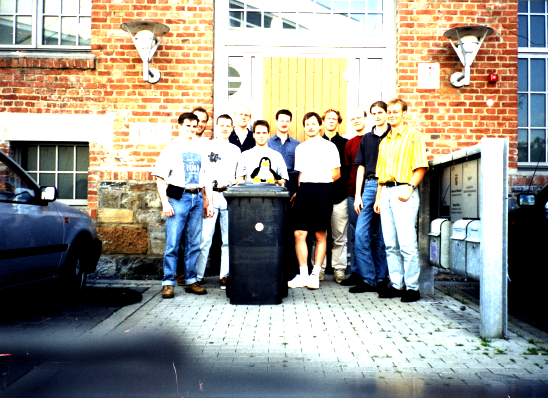
En 1997, environ 15 développeurs de KDE se sont rencontrés à Arnsberg, en Allemagne, pour travailler sur le projet et discuter de son avenir. Cet évènement est devenu connu sous le nom de KDE One.
KDE e.V. est créé
En 1997, KDE e.V., l'entité sans but lucratif représentant la communauté de KDE pour les aspects financier et légal a été créée à Tübingen, Allemagne.
1998
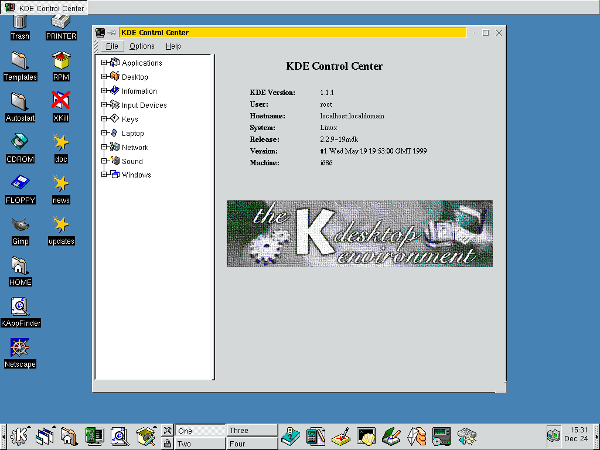
KDE 1 est publié
KDE a publié sa première version stable de son environnement graphique en 1998, avec des points forts tels qu'un environnement de développement d'applications, le KOM / OpenParts et un aperçu de sa suite bureautique.
1999
Konqi est adopté
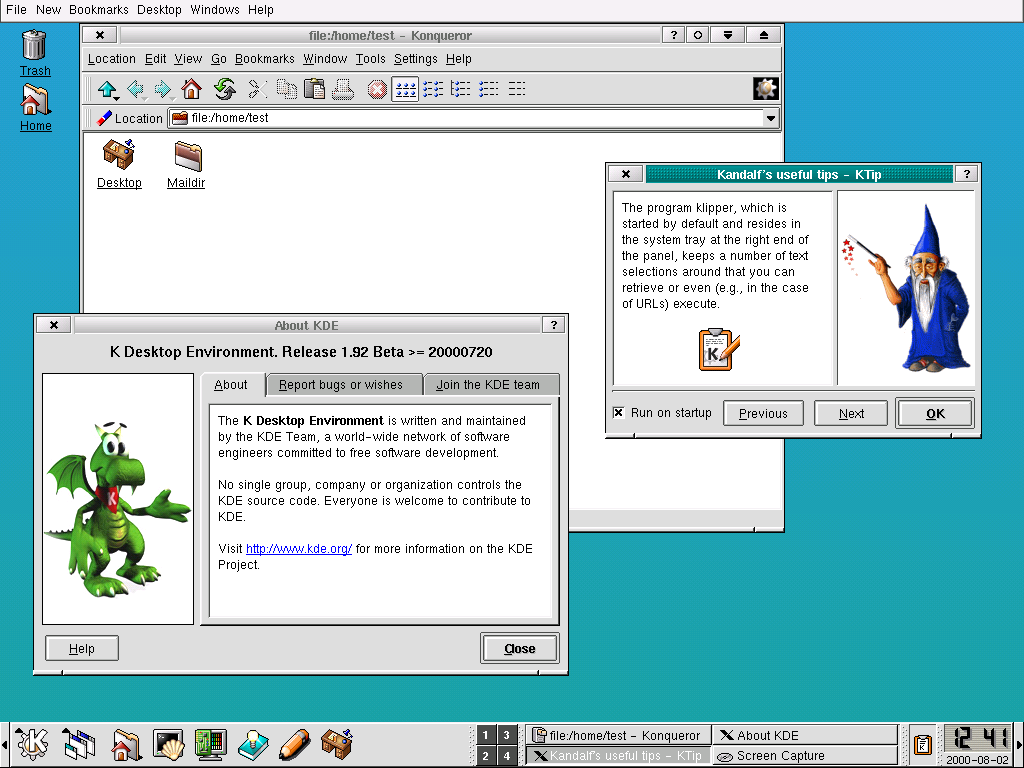
En avril 1999, un dragon est annoncé comme le nouvel assistant animé du centre d'aide de KDE. Il était si charmant qu'il a remplacé la mascotte précédente du projet, Kandalf, à partir de la version 3.x. Veuillez consulter la capture d'écran de KDE 2 présentant Konqi et Kandalf.
2000
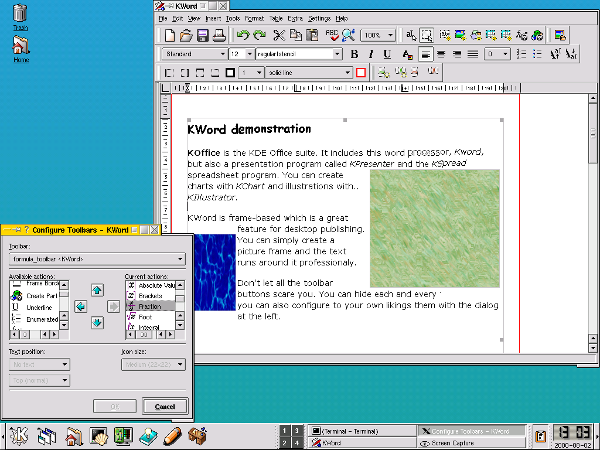
KDE 2 est publié
KDE a publié sa deuxième version, mettant en avant comme principales nouveautés, le navigateur Internet et gestionnaire de fichiers Konqueror et la suite bureautique KOffice. Le code de KDE a été presque entièrement réécrit pour cette deuxième version.
2002
KDE 3 est publié
KDE a publié sa troisième version, présentant les ajouts importants que sont un nouvel environnement d'impression, KDEPrint, la traduction du projet en 50 langues et un ensemble d'applications éducatives, maintenu par le projet « KDE Edutainment ».
2008
KDE 4 est publié
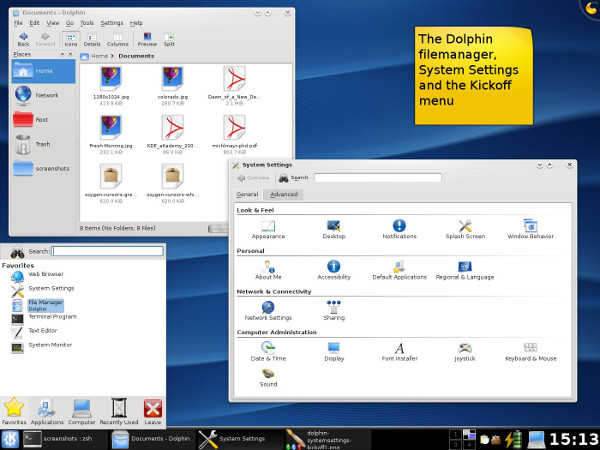
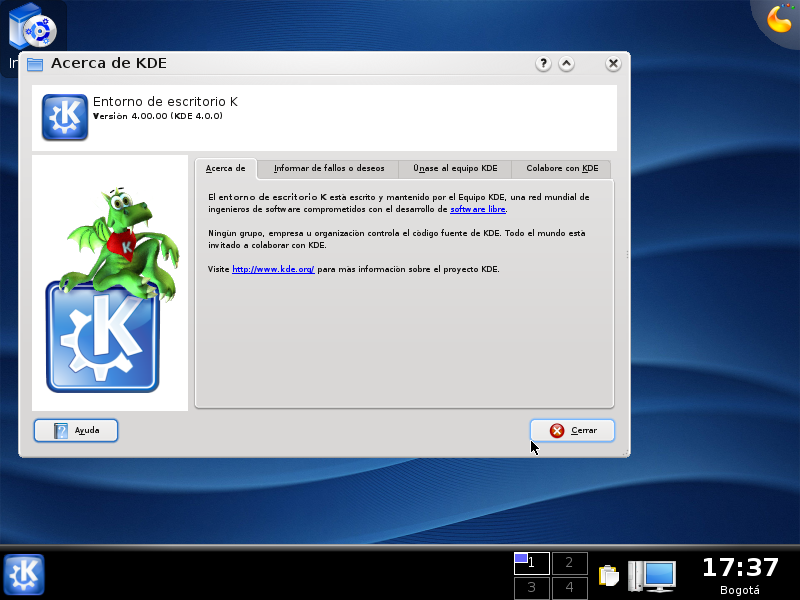
En 2008, la communauté a annoncé le révolutionnaire KDE 4. En plus de l'impact visuel du nouveau thème par défaut, Oxygen, et de la nouvelle interface de bureau, Plasma, KDE 4 a également innové en présentant les applications suivantes : le lecteur de fichiers « PDF » Okular, le gestionnaire de fichiers Dolphin, ainsi que KWin, offrant des effets graphiques. Veuillez consulter le guide visuel de KDE 4.0.
2009
Arrivée à 1 million de commits
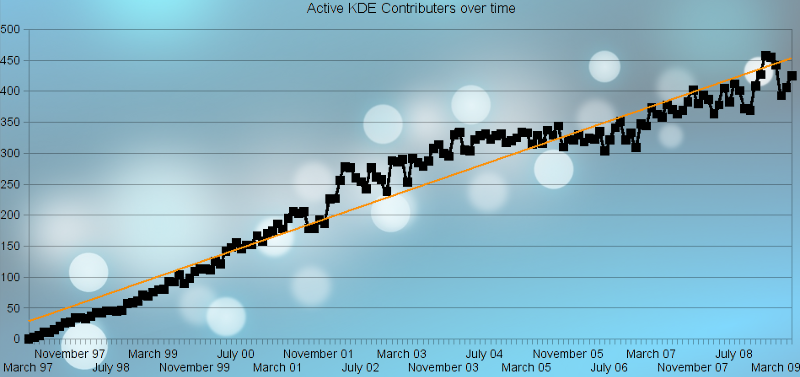
La communauté a dépassé le seuil de 1 million de commits. À partir de 500 000 en Janvier 2006 et de 750 000 en Décembre 2007, seulement 19 mois plus tard, les contributions ont atteint la barre du million de commits. L'augmentation de ces contributions coïncide avec le lancement des innovations pour KDE 4.
2014
Plasma 5 est publié
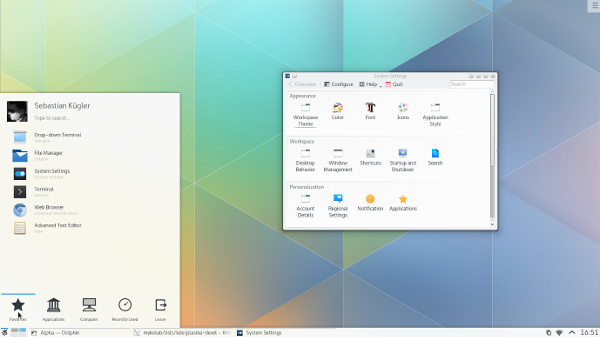
Publication de la première version stable de Plasma 5. Cette nouvelle génération de Plasma possède un nouveau thème, Breeze. Les modifications incluent une migration vers une nouvelle pile graphique entièrement accélérée par le matériel, centrée autour d'une pile graphique OpenGL(ES). Cette version de Plasma utilise comme fondement Qt 5 et son environnement de développement en version 5.
Plasma Mobile est annoncé
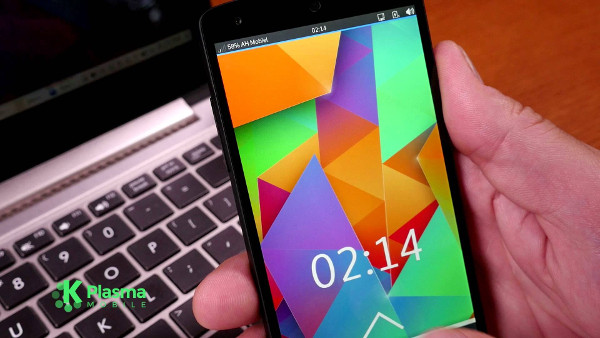
La communauté a annoncé Plasma Mobile, une interface pour smartphones utilisant les technologies que sont Qt, l'environnement de développement en version 5 et Plasma Shell.
2021
Valve choisit KDE Plasma pour son Steam Deck
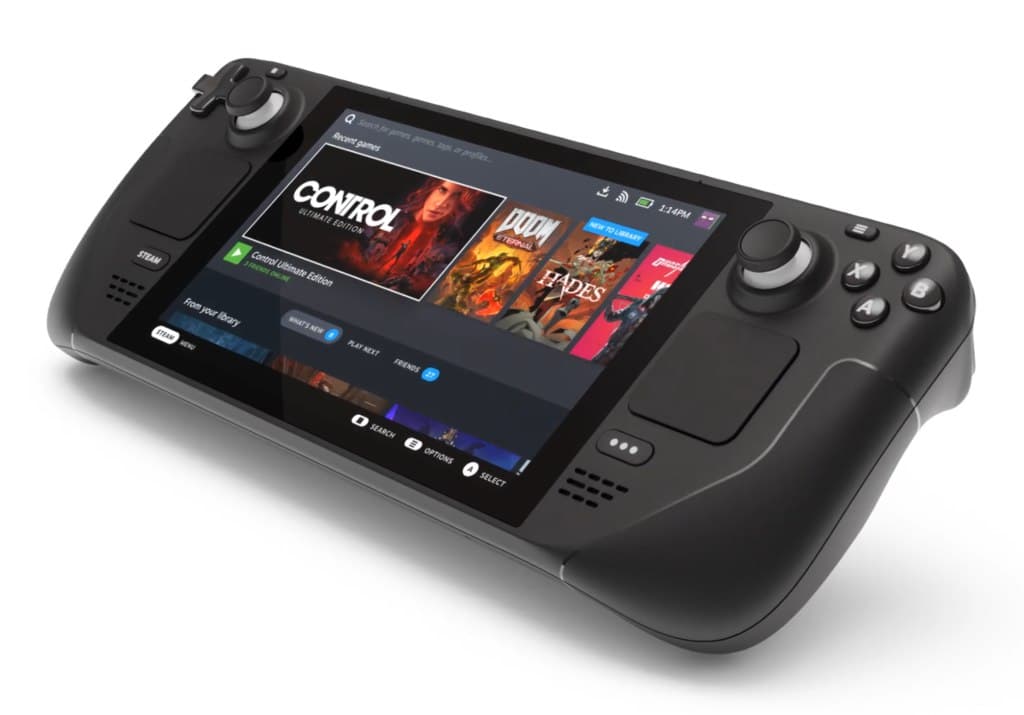
Valve, les créateurs de Steam, ont annoncé que leur ordinateur de jeu portable appelé « Steam Deck » utilise KDE Plasma comme environnement de bureau par défaut. L'équipe de développement de KDE ont travaillé avec Valve pour que Plasma fonctionne bien sur Steam Deck.
2024
KDE lance Plasma 6
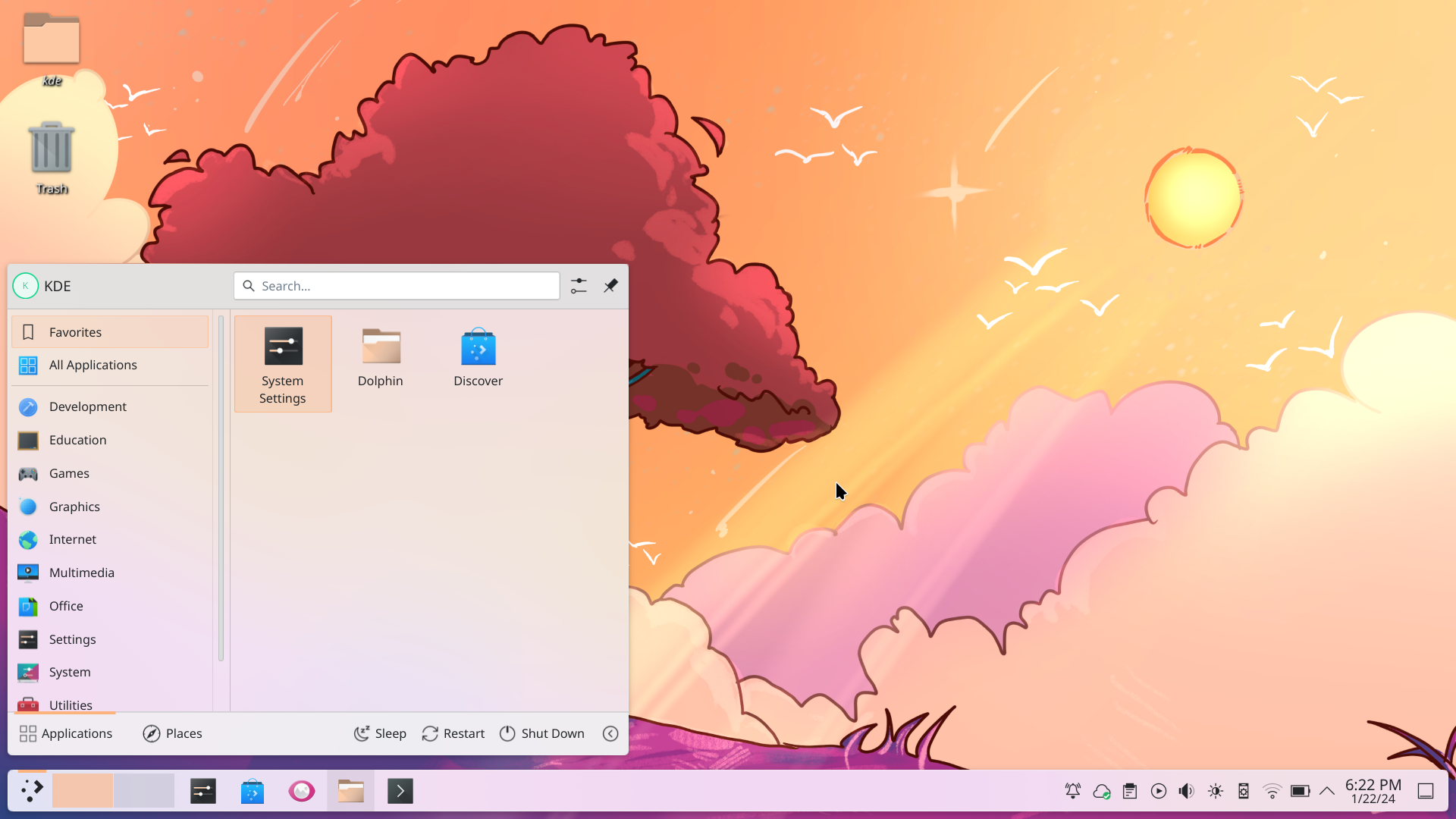
Avec Plasma 6, notre pile technologique a subi deux mises à jour majeures : une transition vers la dernière version de notre environnement de développement d'applications et de Qt ainsi qu'une migration vers la plate-forme graphique Linux moderne, Wayland. Le lancement a été surnommé « Méga Publication », car de nouvelles versions des applications et des environnements de développement de KDE, ainsi qu'une nouvelle version de Plasma Mobile, ont été publiées en même temps.
2025
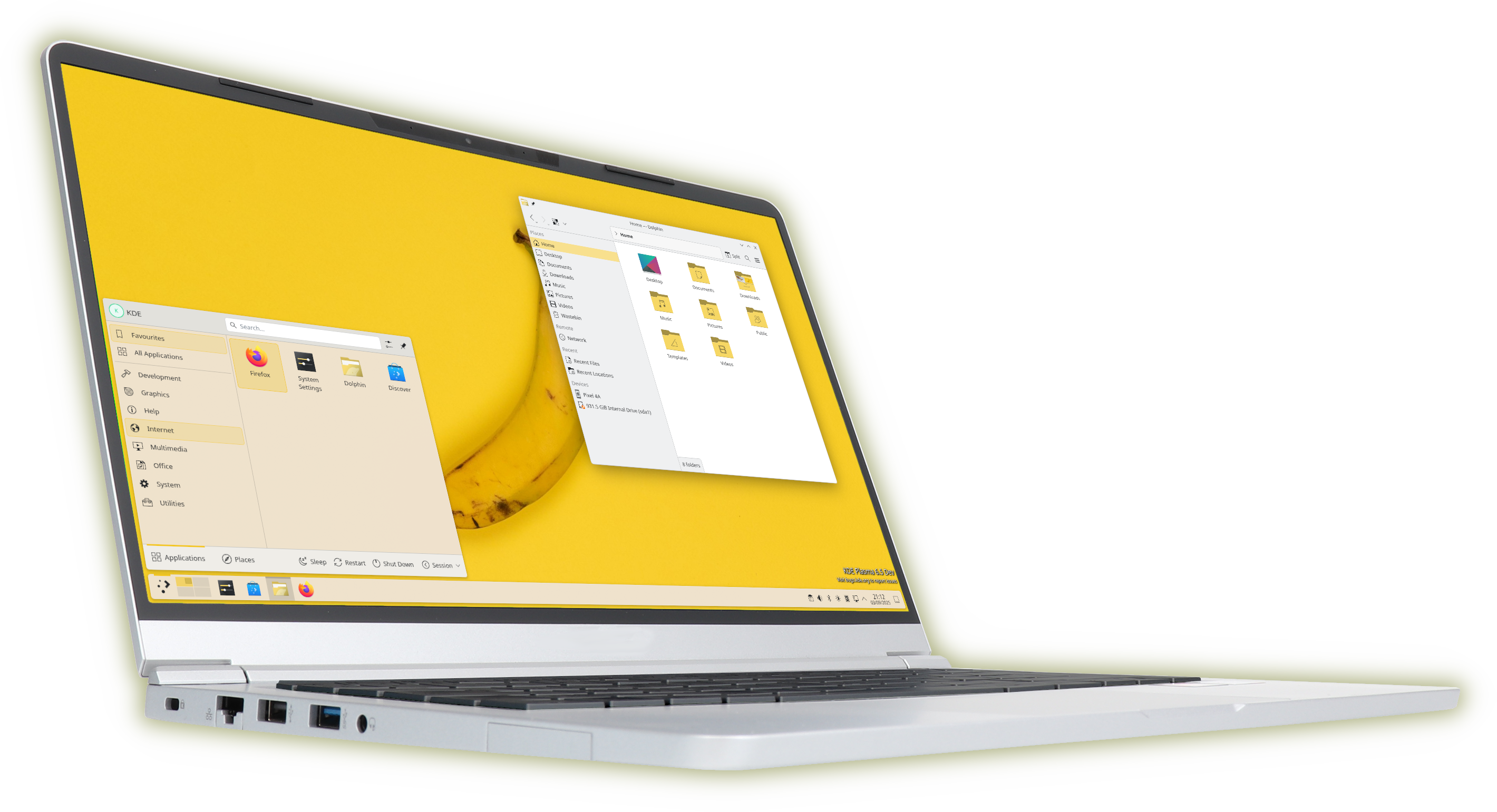
KDE Linux est créé
KDE Linux est un système d'exploitation libre, « Open source », centré sur l'utilisateur, construit par KDE pour inclure la meilleure implémentation de tout ce que KDE peut à offrir, en utilisant les technologies les plus avancées.
Anecdote sur KDE
Saviez-vous que... ?
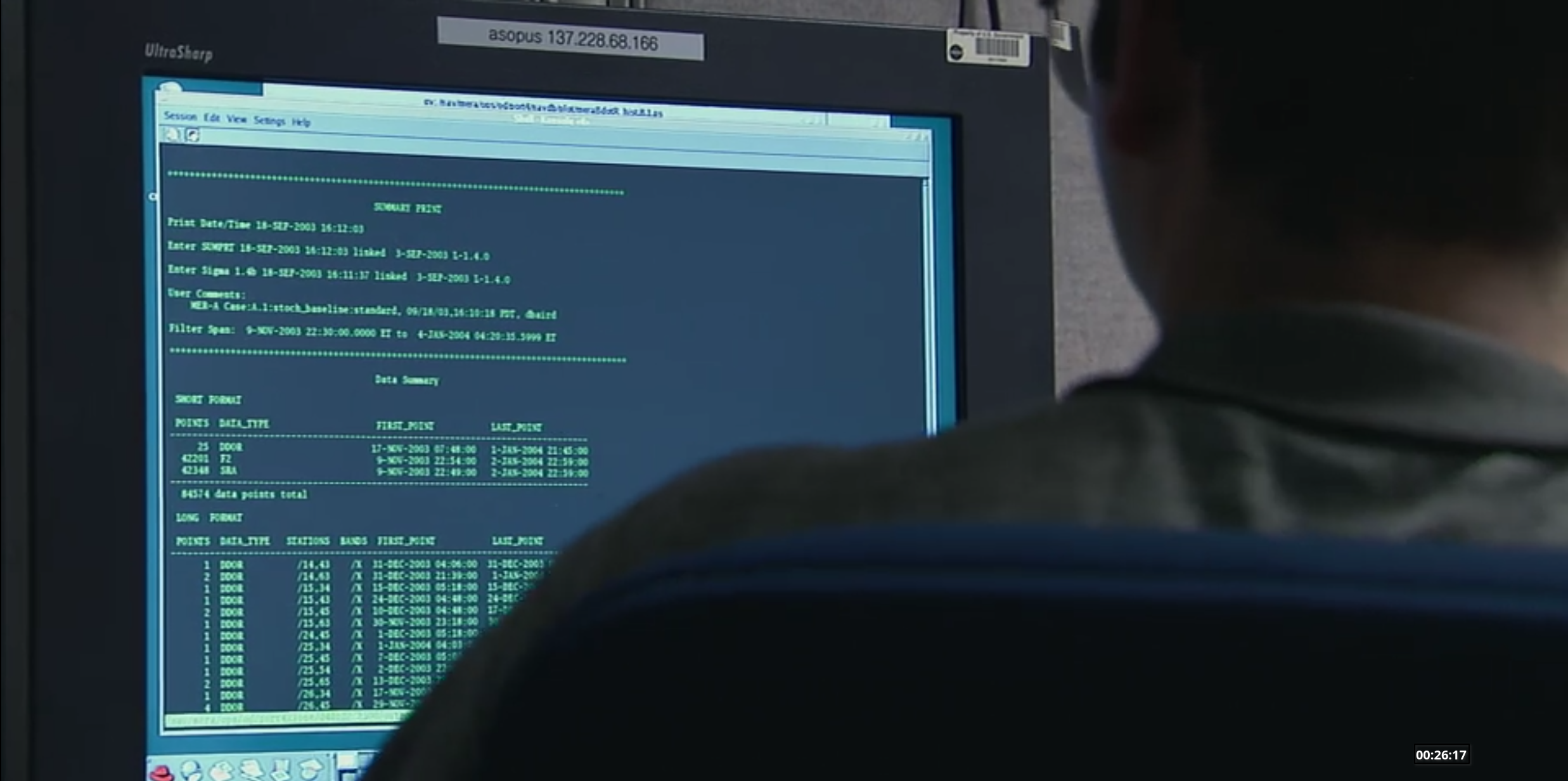
... KDE a aidé à installer des robots sur Mars ?
Nous l'avons fait ! Et nous avons la preuve graphique pour le prouver :
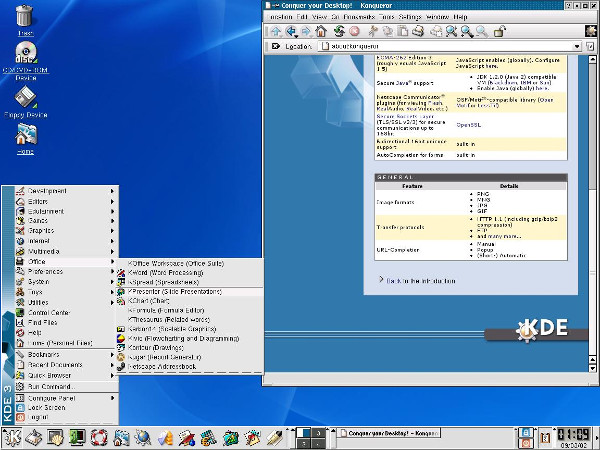
Ceci provient du documentaire Bonne nuit Oppy, à propos du rover Opportunity sur Mars. Dans le reportage, vous pouvez voir un ingénieur de la NASA dépanner le rover alors qu'il est en route vers Mars à partir d'une station de travail sous KDE 3.
Vous pouvez regarder Bonne nuit, Oppy sur Amazon Prime.
Proposé par Paul Brown
... KDE a développé le moteur « HTML » alimentant la plupart des navigateurs Internet ?
C'est vrai !
Le moteur Internet de KDE a été développé entre 1998 et 1999. Il a ensuite été utilisé comme tronc commun pour les moteurs « Webkit » de Apple et « Blink » de Google. Cela signifie que la plupart des navigateurs modernes, y compris Safari, Chrome, Chromium, Microsoft Edge, Opera, Vivaldi et Brave, utilisent un logiciel de KDE comme élément central.
En effet, si vous consultez un jour les journaux d'accès de votre serveur Internet, vous verrez une indication « KHTML » sur presque toutes les lignes.
Et, oui, le « K » dans « KHTML » signifie « KDE ».
Proposé par Paul Brown
Avez-vous une petite anecdote amusante concernant KDE que vous souhaitez partager ? Veuillez nous en parler !
Galerie
Les années 1990
« KDE One », probablement le premier évènement de KDE. Tenu à Arnsberg, en Allemagne, en 1997. Matthias Ettrich, le fondateur de KDE, est à gauche.
Les années 2000
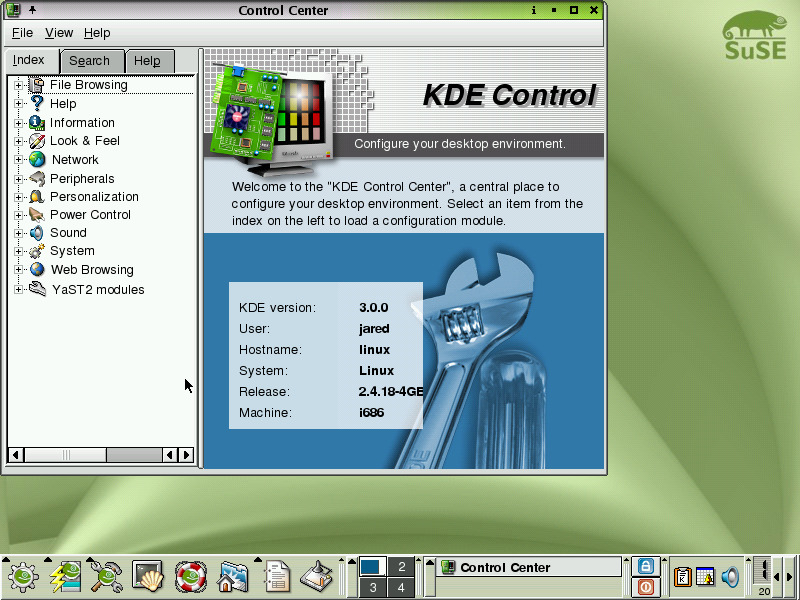
Première publication de KDE 3 sous SuSE - 2002. Merci à Manuel Alberto Ascencio Ramirez.
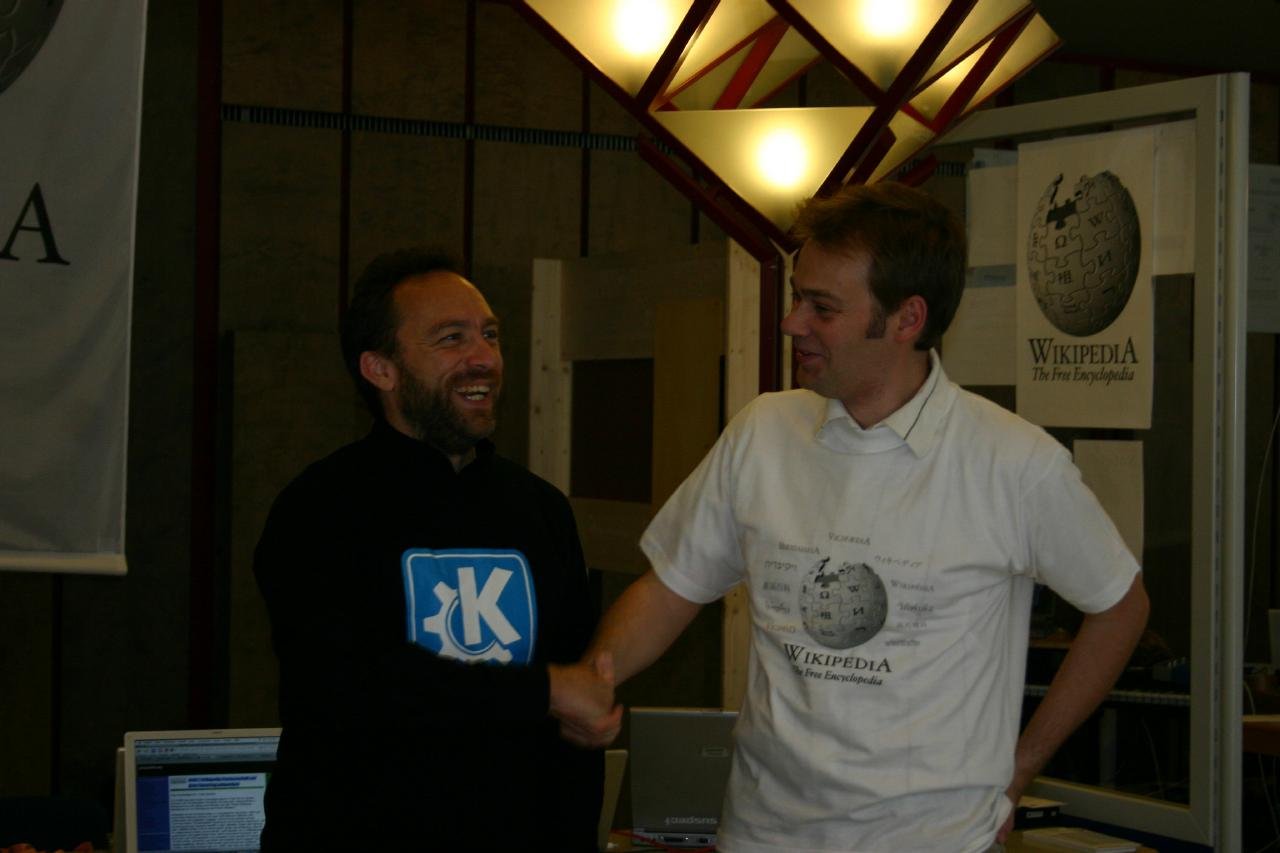
Jimmy Wales (Fondateur de Wikipédia) et Matthias Ettrich (Fondateur de KDE) en 2005
Participants à un sprint de développement pour Amarok tenu en 2007.
Première publication de KDE 4 sous Kubuntu - 2008. Merci à Manuel Alberto Ascencio Ramirez.
Adriaan de Groot à la conférence « FOSDEM 2008 » (Bruxelles), posant près d'une machine portant la marque de KDE au stand de KDE. Photo de Bart Coppens.
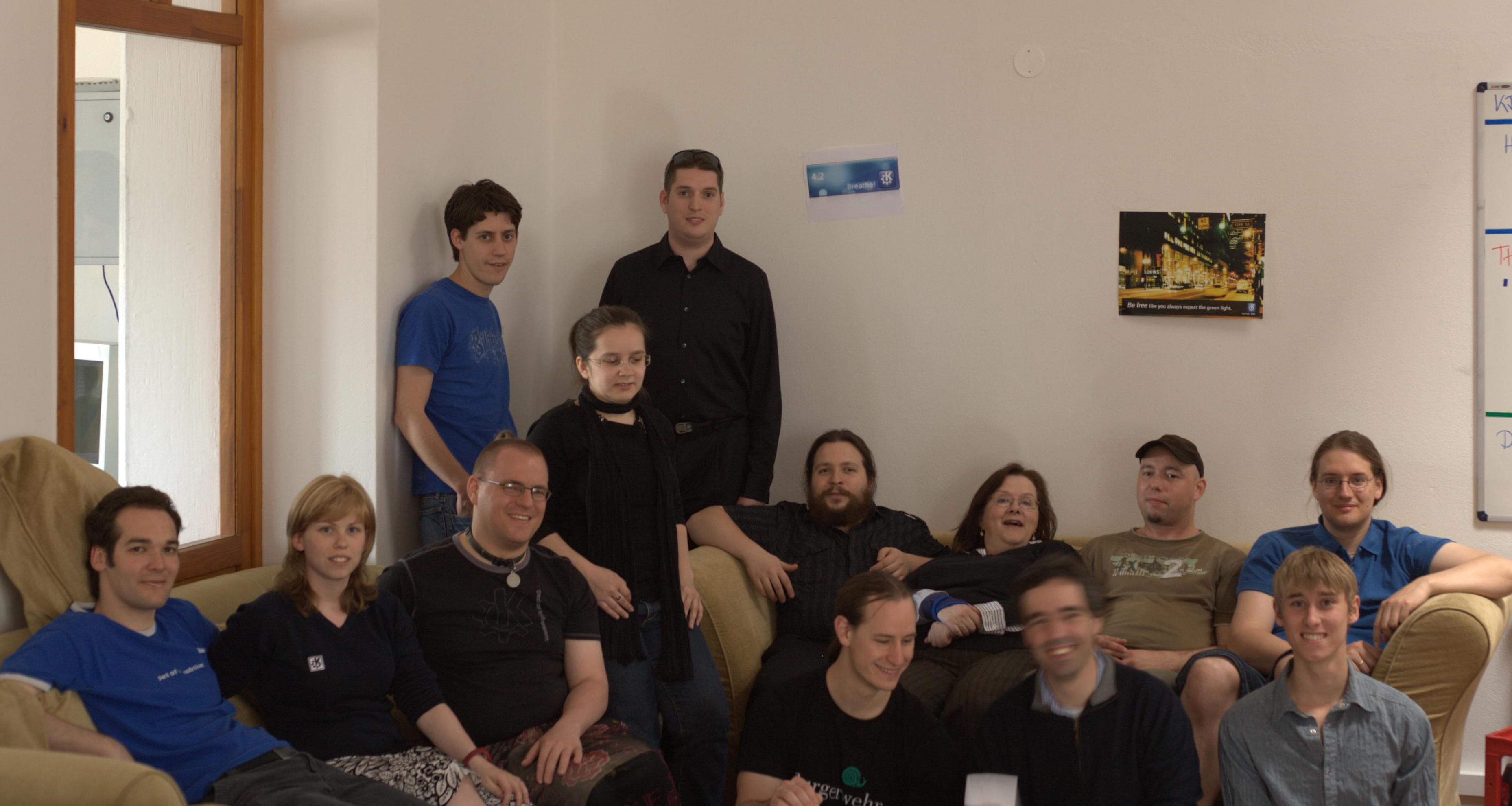
La photo de groupe de l'équipe de développement de KDE à la conférence FOSDEM 2008 (Bruxelles).
La photo de groupe de l'équipe de développement de KDE à la conférence FOSDEM 2009 (Bruxelles).
Les années 2010
La photo de groupe de l'équipe de développement de KDE à la conférence FOSDEM 2010 (Bruxelles).
L'équipe brésilienne avec Konqi à Latinoware 2012.
Akademy 2013 à Bilbao, Espagne. Merci à Gorka Palazio.
Le jour de l'arrivée de la conférence « Plasma Sprint » organisée en 2019 à Valence, les personnes se sont rassemblés dans une petite chambre d'hôtel pour une séance de hacking spontanée.
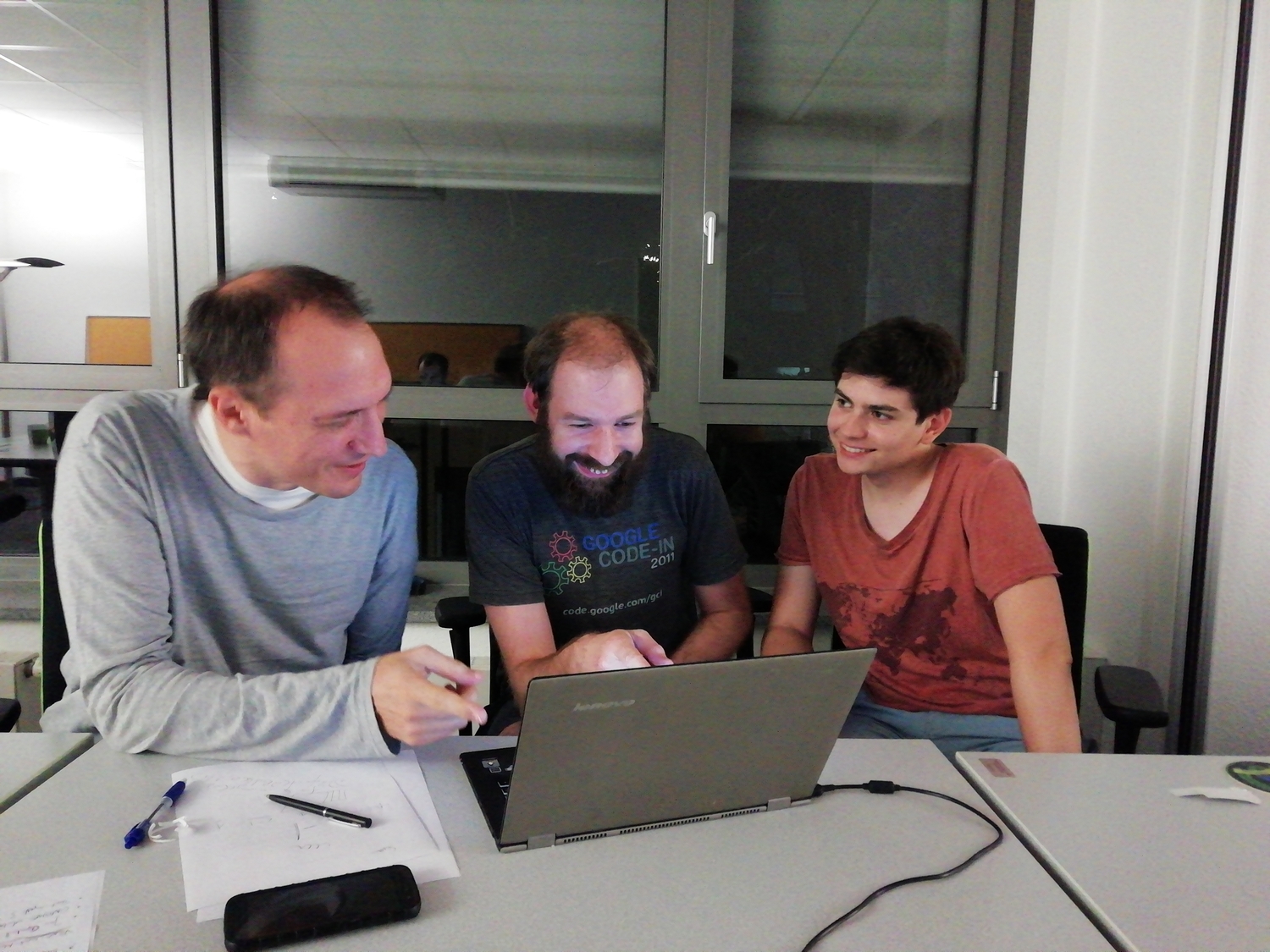
Parfois, la correction d'un bogue du presse-papiers nécessite la puissance de trois générations de David. De gauche à droite : David Faure, David Edmundson, David Redondo. Photo de Neofytos Kolokotronis lors du sprint d'intégration de 2019.
Les années 2020
Fête d'anniversaire de 2024 organisée à Berlin.
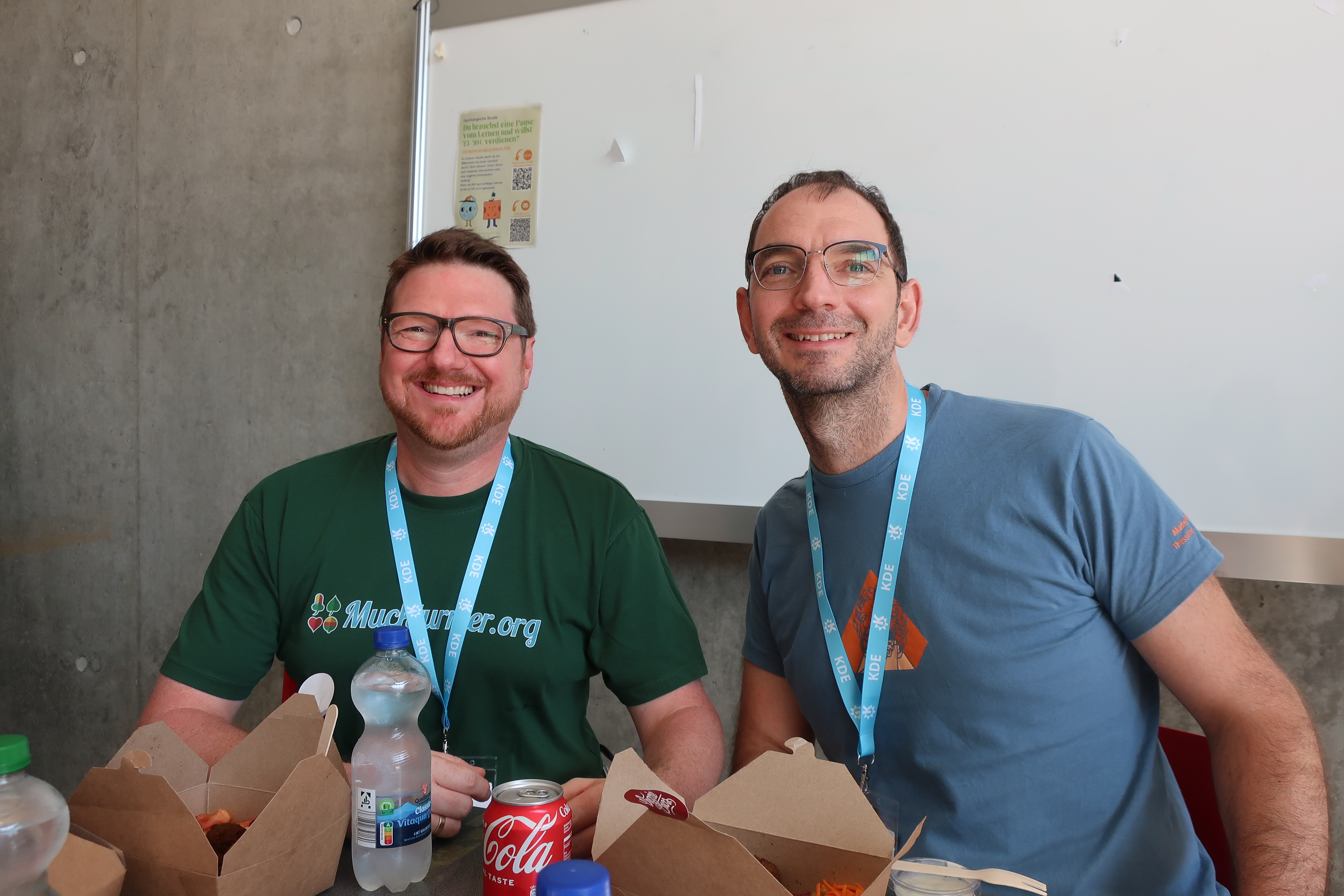
Tobias Leupold (KGeoTag) rencontre Johannes Zarl-Zierl (KPhotoAlbum) en personne pour la première fois en 2024 après avoir travaillé ensemble pendant 10 ans.
Le Konqi Kake préparé pour la fête d'anniversaire organisée en 2025 à Malaga avait un œuf de Pâques en forme de code QR sournois.