Benjamin Xiao ⭐ Hans-Bernd Dr. Lindemann ⭐ Marko Vodanović ⭐ Kai-Uwe Uhlitzsch ⭐ Cristian Le ⭐ Robert Wolniak ⭐ Dave X ⭐ Antonio Teixeira ⭐ Dirk Ziegelmeier ⭐ Ber Quispel van der Kruijs ⭐ Michael Niehoff ⭐ Benjamin Tzschoppe ⭐ Peter König ⭐ Marcos Gutiérrez Alonso ⭐ Robert McCarter ⭐ Robert Lake ⭐ Alexandru Octavian Butiu ⭐ Anton Ch ⭐ Alessandro Marigliano ⭐ Sanjib Patra ⭐ Gerhard Dittes ⭐ Janic Voser ⭐ Andrey Melentyev ⭐ Pierre-Alexandre Hamel-Bussières ⭐ Joost Cassee ⭐ Isaac Patton ⭐ Jack Fletcher ⭐ Leonhardt Schwarz ⭐ Daniel Avilés Hurtado ⭐ Ralph Hohmann ⭐ Grzegorz Wójcicki ⭐ David Germain ⭐ Sarat Chandra ⭐ James Spaloss ⭐ Mateusz Dytkowski ⭐ Dennis Körner ⭐ Matthias Born ⭐ Artur Pieniążek ⭐ Rebecca Sobol ⭐ Alistair Bain ⭐ Przemysław Romanik ⭐ Joel Moore ⭐ a b ⭐ Sergei Lopatin ⭐ Alexander Schmitt ⭐ Keny Chatain ⭐ Łukasz Konieczny ⭐ Olav Seyfarth ⭐ Linghai Yan ⭐ Shuyuan Liu ⭐ Martín Cigorraga ⭐ Mikko Syrjä ⭐ Elian Manzueta ⭐ Luciano Barea ⭐ Jeff Swenson ⭐ Mikel Ward ⭐ Matthias Hoffmann ⭐ Petr Tesarik ⭐ Marcus Lönnqvist ⭐ Kai Moschcau ⭐ Martin Eller ⭐ Brian Lemons ⭐ Christian Leber ⭐ Karl Ove Hufthammer ⭐ Matthew Carter ⭐ Zarin Loosli ⭐ Rhys Jones ⭐ Jingmin Wang ⭐ Christopher Mandlbaur ⭐ Christian Gruber ⭐ MD RIDOWAN ⭐ Johannes Pfrang ⭐ Martin Niemann Madsen ⭐ Anthony REY ⭐ Thomas Gladwin ⭐ Côme Allart ⭐ Jure Repinc ⭐ Ahmed Khan ⭐ Steve Willard ⭐ Gytis Ramanauskas ⭐ Jim Crawford ⭐ Steep Bratzon Salvador Mancisidor ⭐ Muthanna K. ⭐ TrainDoc Last Name ⭐ Carlos Asmat ⭐ Ricardo Soares Demterko ⭐ Martin Meinhardt ⭐ Michael Singer ⭐ Walb Tech ⭐ Olivier Paquien ⭐ ARTEM KULESHOV ⭐ Bjarne Kohnke ⭐ Yu Te Wang ⭐ Corey Schroeder ⭐ Miku Hatsune ⭐ Andres Betts ⭐ Community Compute LLC ⭐ Richard Olmsted ⭐ Morgan Humes ⭐ Joey Eamigh ⭐ Joshua Mohr ⭐ William Z ⭐ Denis Hermann ⭐ Peter Wiersig ⭐ Jeremi Jasinski ⭐ Jonas Larsson ⭐ Mira Tamim ⭐ Tarik Koca ⭐ Max Brede ⭐ Jaspal Chauhan ⭐ Vojtěch Indrák ⭐ Victor Boivin ⭐ Michael Stemle ⭐ Michael Watzko ⭐ Matthew Vitale ⭐ Herbert Feiler ⭐ Gregorio Troncoso ⭐ Patrick Nagel ⭐ Titouan Forgeard ⭐ Sotiris Papaioannou ⭐ David Walluscheck ⭐ Andreas Pietzowski ⭐ Michael Leger ⭐ Jarsto van Santen ⭐ Michel Filipe ⭐ Jacob Perron ⭐ Daniels Satcs ⭐ Luca Cavana ⭐ Jasper Spit ⭐ Mohammad Rawashdeh ⭐ Erik Naprstek ⭐ Kristian Kriehl ⭐ Alexey Toklovich ⭐ David Fridrich ⭐ ismail can gökbudak ⭐ Björn Aili ⭐ Nicholas Jones ⭐ Ryein Goddard ⭐ Tom Bullock ⭐ Jaroslav Reznik ⭐ Emanuele Cannizzaro ⭐ Coty Ternes ⭐ Christian Hölzl ⭐ Alex Domingo ⭐ James Bland ⭐ V B ⭐ Henrik Nielsen ⭐ Regina Abendroth ⭐ Gabriel Malo ⭐ Benny Fields ⭐ Pablo PERNOT ⭐ Nikolai Eugen Sandvik ⭐ Jakub Benda ⭐ Mark Smith ⭐ Jean-François ROUX ⭐ Akseli Lahtinen ⭐ Hendrik Richter ⭐ Reid Wiggins ⭐ Eliseu Amaro ⭐ Herbie Hopkins ⭐ Pontus Mellberg ⭐ Karl Erik Hofseth ⭐ Yannic Schreiber ⭐ Robin Princeley ⭐ Kay Joseph ⭐ alex jorhsen ⭐ Kai DeLorenzo ⭐ Alexandre BROUET ⭐ Omar Luqman ⭐ Edward Chan ⭐ Radek Nováček ⭐ Mark Hiles ⭐ Antoni Aloy Torrens ⭐ Ryan Chambers ⭐ Achim Königs ⭐ Matthew Cazaly ⭐ Ralf Morgenstern ⭐ Janis Bundschu ⭐ Andrei Ioachim ⭐ Maria Rutaha ⭐ Mindaugas Sasnauskas ⭐ Siegfried Meyke ⭐ Frédéric LAURENT ⭐ Damian Fajfer ⭐ Odin Vex ⭐ Stefan Neacsu ⭐ Mikko Mensonen ⭐ Jeffrey Stevens ⭐ Aleksei Balandin ⭐ Aaron Schif ⭐ Diego Saavedra Aguirre ⭐ Maria Teresa Gonzalez-Alujas ⭐ Francisco Bautista ⭐ Jan Wiele ⭐ Ulf Saran ⭐ Raine Liukko ⭐ Oliver Omega ⭐ rey r ⭐ Dominik Lux ⭐ Martin Rossbach ⭐ Nicholas Knoblauch ⭐ Michael Schaffner ⭐ Mitchel Bone ⭐ Frank Schiebel ⭐ Renārs Ceļapīters ⭐ Daniel van den Berg ⭐ David Zaslavsky ⭐ Eli Opal ⭐ Will Styler ⭐ Marc Baumung ⭐ Simon Hötten ⭐ Christoffer Blomvik ⭐ Boji Tony ⭐ Rodrigo Pelorosso ⭐ Peter Simonsson ⭐ Julian Braha ⭐ Carpe Asrael ⭐ Samuel Martin ⭐ Blair Thiessen ⭐ Johannes Wolf ⭐ Teemu Vartiainen ⭐ Étienne Pain ⭐ Ralf Engelmann ⭐ JC Polanycia ⭐ Christian Hvide Jørgensen ⭐ Nova Bürky ⭐ Jasmijn Knoope ⭐ Solomatin Vladimir ⭐ Andrzej Matuch ⭐ Art Haas ⭐ Christopher Snowhill ⭐ Bruno Ribeiro ⭐ Richard Acton ⭐ Xian Wang ⭐ Artur Wala ⭐ Michael Cinkus ⭐ Angus Kelsey ⭐ Alexander Olofsson ⭐ Paulo Dias ⭐ Stijn Trommel ⭐ Richard Mader ⭐ Gene Evans ⭐ 昱愷 黃 ⭐ Lukas Kucerik ⭐ Heinz-Dieter Swiateck ⭐ Lee Seymour ⭐ Eve Carletti ⭐ Wolfgang Kerschbaumer ⭐ Karsten Roberts ⭐ Aroun Clément Baudouin-van Os ⭐ Norbert Spina ⭐ Nathaniel Housman ⭐ Moritz Lammerich ⭐ Shane Farrell ⭐ Billy Van Rooy ⭐ Lars Hollander ⭐ A B ⭐ Philipp Slusallek ⭐ Christoph Vollmer ⭐ Ferdinand Brummet ⭐ John Cohen ⭐ Alex McGinnis ⭐ José María Galdós ⭐ Iulian Baciu ⭐ Lizoblyud Lika ⭐ Jakub Jankowski ⭐ Vladimir Serov ⭐ Mike Dawson ⭐ Ian Boll ⭐ Stefan Draxlbauer ⭐ Victor Castillo ⭐ Linda Polman ⭐ Tim Burnham ⭐ Florian Dittmer ⭐ Anael González Paz ⭐ Hauke Winkler ⭐ Kakaka Ksksksk ⭐ Federico Dossena ⭐ Dallin Dyer ⭐ Gökhan Kocak ⭐ Márton Lente ⭐ Sébastien Jaffre ⭐ Hiyuu Tashiro ⭐ Timothy Wood ⭐ Stavros Gero ⭐ Christian Leopoldseder ⭐ Jennifer Radtke ⭐ Klemen Košir ⭐ Devin Zuczek ⭐ Helmy Saker ⭐ Lars Hoeger ⭐ Marko Hehl ⭐ Mike Eichler ⭐ Rene Salinas ⭐ Bernhard Breinbauer ⭐ Michael Winters ⭐ Benjamin Terrier ⭐ Àlex Magaz Graça ⭐ Tyler Dalbora ⭐ Tilo Brückner ⭐ Jacopo Schiavon ⭐ Jan Meichsner ⭐ Matthias Pfafferodt ⭐ Tatiana Mizerova ⭐ Rainier Ramos ⭐ Melchizedek Shah ⭐ Baptiste Lartigau ⭐ Christoffer Jansson ⭐ Kolja Kauer ⭐ Aurélien COUDERC ⭐ Tomáš Hejátko ⭐ gggg ggg ⭐ Antoni Aloy Torrens ⭐ Vladimír Drgoňa ⭐ Justin van Nieuwpoort ⭐ Ulrich Tomaschowski ⭐ Andras Mantia ⭐ Joshua Phelps ⭐ James Lloyd ⭐ Thomas Frach ⭐ Sergey Platonov ⭐ Cory Adkins ⭐ Marco Velten ⭐ Hayden Schiff ⭐ Dmitry Misharov ⭐ Simon Finlay ⭐ Cristian Chiru ⭐ Joshua Schmitt ⭐ Arian Wichmann ⭐ Martin James Olminkhof ⭐ Patrick Groh ⭐ Sameh Sabry ⭐ Mark Koenen ⭐ Daniel Horecki ⭐ Daniel Waycik ⭐ Till Schröder ⭐ Olivier Morneau ⭐ Alexander Sanderson ⭐ Boji Tony ⭐ Linghai Yan ⭐ Thomas Steffen ⭐ Tim Okrongli ⭐ Martin Bäcker ⭐ Flori G ⭐ Michał Walenciak ⭐ Alexey Abolmasov ⭐ Elijah Racz ⭐ Jason Logue ⭐ Jarl Gjessing ⭐ Mark Woltman ⭐ Rocco Tormenta ⭐ Robert Möller ⭐ Tom Schwarz ⭐ D Ennis ⭐ Bjorn Stange ⭐ Jeffrey Revock ⭐ Ashley Bone ⭐ Christopher Bratusek ⭐ Mira Tamim ⭐ Alicja Michalska ⭐ Johannes Kühnel ⭐ Emanuel Wegh ⭐ Jakub Judas ⭐ Scott Withrow ⭐ Mantas Pocius ⭐ Ivan Sabourin ⭐ Daniel Melin ⭐ Max Buchholz ⭐ Annette Rios ⭐ Hannes Hase ⭐ Ryan Osborne ⭐ Amy Kay ⭐ Tim Blomme ⭐ Pascal Herre ⭐ Julian Wefers ⭐ Martin Guillemot ⭐ Noah Davis ⭐ Ole V. S. Mortensen ⭐ Zane Godden ⭐ Jens Reimann ⭐ Tim Jagenberg ⭐ Pascal Mages ⭐ Klaus Tusch ⭐ Sebastian Fohler ⭐ Sacha Schutz ⭐ Charles Hollingsworth ⭐ Nicolas Rojas ⭐ John Kizer ⭐ Michael Cormier ⭐ Heinrich Schuchardt ⭐ Brian Aberts ⭐ Vincent Delor ⭐ T. Hassing ⭐ Matthew Crowell ⭐ your mom ⭐ Nuno Gomes ⭐ David Knapp ⭐ Rhys Williams ⭐ Erik Fleischer ⭐ Nate Coffey ⭐ Peter Horatschek ⭐ Sai Rahul Poruri ⭐ Darsey Litzenberger ⭐ Nick Beaton ⭐ Kylie Leach ⭐ Grider Li ⭐ Alejandro Muñoz Fernández ⭐ Neil Redfern ⭐ Josef Drasch ⭐ Daniel Bagge ⭐ Martin Hopen ⭐ Harry Mutch ⭐ Robert Hofmann ⭐ Matheus Ferreira Messias Guedes ⭐ Marcin Panic ⭐ Jan Koid ⭐ Florian Schaupp ⭐ Jonathan Martinez ⭐ Tomás Duarte ⭐ Mikko Kujala ⭐ Zach B ⭐ Tanguy Maynard ⭐ mlncn Agaric ⭐ Adam Dymitruk ⭐ Zebula Wienandt ⭐ Konstantin Pleshakov ⭐ Jason Seville ⭐ Travis Suel ⭐ Eimantas Bociulis ⭐ MArk McKillen ⭐ Yishu Wang ⭐ Edoardo Regni ⭐ Rick Groszkiewicz ⭐ Stephen Ackerman ⭐ Fabrizio Pelosi ⭐ William Penrod ⭐ A. Ugalde V. ⭐ Daniel Vršek ⭐ Josemanuel Pastorcampos ⭐ Thomas Chamberlin ⭐ Sam Smucny ⭐ Konstantin Kostov ⭐ Jarkko Torvinen ⭐ Carlos Morales ⭐ Martin Flöser ⭐ Johann Valentin Seebaß ⭐ Ivan Nack ⭐ Chris Davis ⭐ Nicola Mingotti ⭐ Henri Michael ⭐ Esmir Lišić ⭐ Christian Sommerlund ⭐ Andrew Rosenwinkel ⭐ Karl Quinsland ⭐ Georg Lassnig ⭐ Philipp Lohnes ⭐ sa ssa ⭐ Robert McCarter ⭐ Jan Iversen ⭐ Quentin Stuchlik ⭐ Christoph Wolkanowski ⭐ Alberico Forgione ⭐ Samuel Jordan Kleinman ⭐ Michał Kubiak ⭐ Yann Nux ⭐ Lee Courington ⭐ Nino Pinna ⭐ Michael Bolleininger ⭐ João Lucas de Sousa Almeida ⭐ E. Mau. ⭐ Antonio Caiazzo ⭐ Shubham Arora ⭐ Alejandro Muñoz Fernández ⭐ Erlend Furuset Jensen ⭐ Torsten Fratzke ⭐ Adam Luchjenbroers ⭐ Felix Knecht ⭐ Andreas Wagner ⭐ Harald Oberhofer ⭐ Stanislas Leduc ⭐ Sascha Berner ⭐ Dennis Dalstrøm ⭐ Dennis Zellner ⭐ Florentin Rack ⭐ Arjen Hoekman ⭐ Eduardo Correia ⭐ Rob Hyndman ⭐ Conner Smith ⭐ Guenter Schwann ⭐ Antonio de Castro ⭐ Mitchell Hoover ⭐ Severin Hamader ⭐ Mikhail Mutsianko ⭐ Dieter Rogiest ⭐ Frailing Sosa ⭐ Dustin Miller ⭐ Reuben Parfrey ⭐ David Martinez ⭐ Anton Lobashev ⭐ May Doušak ⭐ Bart Otten ⭐ Víctor José Pérez Ruiz ⭐ Santino Mazza ⭐ Dirk Baumgärtner ⭐ Oleksii Markovets ⭐ Tobias Brunner ⭐ John Huckle ⭐ John McKinney ⭐ Cody Harrison ⭐ Daniël Franke ⭐ Linas Mitkevičius ⭐ Ludovic Jozeau ⭐ Rudi Hartinger ⭐ Adam Fidel ⭐ László Kókai ⭐ John Brown ⭐ Roberto Michán Sánchez ⭐ Jörg große Schlarmann ⭐ Rodrigo Lourenço ⭐ Robert Donat ⭐ Dirk Müller ⭐ Dmitry Kagan ⭐ Manfred Mislik ⭐ Markus Nagel ⭐ Robert Masterson ⭐ Richard BEOLET ⭐ Daniel Olson ⭐ Øjvind Fritjof Arnfred ⭐ Hans-Peter Jansen ⭐ Thibaud Franchetti ⭐ Mattias Bader ⭐ Matthew Henry ⭐ Thomas Wihl ⭐ Ryan Badgley ⭐ Julius Binder ⭐ Bill Figliolini ⭐ Jan Braun ⭐ Joe Brockmeier ⭐ Sebastian Paul ⭐ Mischa Zschokke-Gohl ⭐ Benjamin Zachry ⭐ Dennis Schumann ⭐ MIRZA BOROGOVAC ⭐ Peter Johansson ⭐ David Gow ⭐ James Cooper ⭐ Gabriel Matos ⭐ Simon Wittwer ⭐ George Fountzoulas ⭐ Dougie Beney ⭐ Jonatan Rosenius ⭐ Johannes Günther ⭐ Andrea Scartazza ⭐ Andrea Panontin ⭐ Daniel Jost ⭐ Mark Marsh ⭐ Sondre Dalen ⭐ Eduard Nikoleisen ⭐ Karol Piłat ⭐ Lars Jose ⭐ Alan Gresly ⭐ Ami Chayun ⭐ Lucas Hoy ⭐ Joey Twiddle ⭐ Markus Ebner ⭐ Mikołaj Świątek ⭐ Michael Biel ⭐ Curtis Bullock ⭐ Richard Freitag ⭐ Alexander Ypema ⭐ Duc Nhat Minh Phan ⭐ Emil Larsson ⭐ BogDan Vatra ⭐ Pavel Yakunin ⭐ Volker Sachse ⭐ Theo van Rijn ⭐ Martin Tschümperlin ⭐ Anže Časar ⭐ Karl Friedrich Schulz ⭐ Tobias Fellmann ⭐ Vladimir Zapparov ⭐ Matthias Schade ⭐ Paul Merryfellow ⭐ Gregg R ⭐ Szymon Łągiewka ⭐ Maurice Barnich ⭐ Arend van Beelen ⭐ Gareth Hulse ⭐ Skye Van Valkenburgh ⭐ Mario Knothe ⭐ Jan Iversen ⭐ Thomas Eckart ⭐ Daniel d'Andrada ⭐ Hauke Winkler ⭐ Pascal Schmidt ⭐ Alexander Sanderson ⭐ Thai Flowers ⭐ Berker Şal ⭐ Lasse Danegod ⭐ Jacob Becker ⭐ Kjetil Kilhavn ⭐ Grey Peterson ⭐ Techin Eamrurksiri ⭐ David Döring ⭐ Bruno Rocha ⭐ Yousuf Philips ⭐ Kim Hayo ⭐ Paul Fleischer ⭐ Alex Plescan ⭐ Zarin Loosli ⭐ Sergei Golimbievsky ⭐ Jared Adams ⭐ Nicola Feltrin ⭐ Niclas Meick ⭐ Alexander Nikiforov ⭐ Régis GUYOMARCH ⭐ Paxriel Pax ⭐ Markus Schlaffer ⭐ Eric Peruzzo ⭐ Enrique Almiñana Magraner ⭐ Tom Kirsch ⭐ Nico Stöwe ⭐ Winfried Hofmann ⭐ Josef Kejzlar ⭐ Amy Cheathem ⭐ Pirmin Stanglmeier ⭐ Calin Cerghedean ⭐ Kormos Krisztián ⭐ Raphael Pretot ⭐ Kai L ⭐ ILIOPOULOS IOANNIS ⭐ Antun Horvat ⭐ Martin Ségur-Cabanac ⭐ Barkha Herman ⭐ Matt Milliman ⭐ Jacob Ludvigsen ⭐ Klaus Imfeld ⭐ Simon Jorzick ⭐ Alejandro Cholaquidis ⭐ Yrjö Hatakka ⭐ Flavio Fearn ⭐ Kevin Messer ⭐ Philip Graham ⭐ Catalina Rosca ⭐ Jan Iversen ⭐ Batuhan Cinar ⭐ Florin Alexandru Dicu ⭐ Thomas Sappl ⭐ Eric NGUYEN ⭐ Efim Nefedov ⭐ Jason Freidman ⭐ Jonas Büttner ⭐ Mustafa Muhammad ⭐ Alistair Francis ⭐ يونس اسدخانی ⭐ Christoph Nenning ⭐ Justin Christian ⭐ Jacob Childersmith ⭐ Janne Hakonen ⭐ Nico Wrobel ⭐ Tobias Schmidl ⭐ Manuel Bödder ⭐ Paul Porubsky ⭐ Daniel Horecki ⭐ Ali Zomorodi ⭐ Andre Peeters ⭐ Martijn Koolhoven ⭐ Marcin Mikołajczak ⭐ Christian McHugh ⭐ Nils Martens ⭐ Tasuku Suzuki ⭐ Michele Vigilante ⭐ Brian Marsh ⭐ Moritz Füssel ⭐ Sjoerd van Leent ⭐ Benjamin Ulrich ⭐ Benedikt Tritschler ⭐ JIMI ROSS ⭐ Dave Lewis ⭐ Thaddeus Hogan ⭐ Torsten Hansen ⭐ Martin Bednar ⭐ Marijo Mustač ⭐ James Coleman ⭐ Gabriel Morell ⭐ Guido Winkelmann ⭐ Christopher Main ⭐ Lisa StJohn ⭐ Jimmy Lindsey ⭐ Gereon Schomber ⭐ Aario Shahbany ⭐ William Orrison ⭐ Anthony (anthr76) Rabbito ⭐ John Rogers ⭐ Nicholas Harper ⭐ Levi Whennen ⭐ Jakob Rath ⭐ Mads Rotwitt ⭐ Yitian Wang ⭐ Guenther Danhofer ⭐ Jean-Luc GOFFLOT ⭐ johannes Kehrer ⭐ Moritz Niesen ⭐ Stewart Webb ⭐ Andrija Jovanovic ⭐ Jordi Ferrando ⭐ Jeremy Lainé ⭐ Markus Gasser ⭐ Samuel Barkley ⭐ Maximilian Henzl ⭐ Henning Rohde ⭐ Florian Dazinger ⭐ Tim Büning ⭐ Gabriel Shaw Cannabrava ⭐ Aleksei Liudskoi ⭐ Thomas ROBIN ⭐ François Freitag ⭐ Calvin Lang ⭐ Logan Rogers-Follis ⭐ Robert Horvath ⭐ Albert Backer ⭐ Sebastian Löw ⭐ Florian Edelmann ⭐ Turritopsis Dohrnii Teo En Ming ⭐ Robert Heel ⭐ Brandon Clark ⭐ Rodney Lorimor ⭐ John Flynn ⭐ Ben Strasser ⭐ T. Hassing ⭐ Károly Veres ⭐ ZHUOCHENG WANG ⭐ Andre Ramnitz ⭐ Adam Szopa ⭐ Mauro Rocco ⭐ Rachel Berkhahn ⭐ David Koch ⭐ David Wolf ⭐ André Barata ⭐ bill morin ⭐ Jasmijn Knoope ⭐ Ben R ⭐ Thorsten Koslowski ⭐ Shawn Dunn ⭐ Jonas 595Lab ⭐ Peter Schult ⭐ Dennis Smith ⭐ Cary Hughes ⭐ Paul Elliott ⭐ Thomas Franke ⭐ Luis Bolson ⭐ Luis Alvarado ⭐ Jacob Skoog ⭐ Kevin Berkhout ⭐ Roberto Alfieri ⭐ Hennie Marais ⭐ Marko Peteri ⭐ laszlo kiss ⭐ Martial Saunois ⭐ Paul Sobey ⭐ Herbie Hopkins ⭐ Aaron Bockelie ⭐ Piotr Cwieczkowski ⭐ Romuald Poteau ⭐ Malin Stanescu ⭐ Brandon Rozek ⭐ Lucas Streanga ⭐ Matt Van Dyke ⭐ Quentin Gallissot ⭐ Sasha Boyd ⭐ Michael Meister ⭐ Denis Doria ⭐ Seth McDonald ⭐ Nate Kirk ⭐ Gianmarco Gargiulo ⭐ Christopher Woods ⭐ Nathan Misner ⭐ Jan Iversen ⭐ Loïc Bersier ⭐ Christoph Singer ⭐ Parker Dinkelman@hotmail.com ⭐ Jared Gibson ⭐ Sven Spiller ⭐ Luis Garcia ⭐ Kieren Roberts ⭐ Owen Sessiecq ⭐ Ulrich Müller ⭐ Jan Steen ⭐ Monica Ayhens-Madon ⭐ Peter Crasta ⭐ Andrei Sebastian Cîmpean ⭐ P Rosenheim ⭐ Anthony Beninati ⭐ harry loh ⭐ Tobias Borgert ⭐ Mr Meaty ⭐ Bryan Zaffino ⭐ Tristan Remy ⭐ Danilo Giacomini ⭐ Samuel Pelz ⭐ Piotr Gliźniewicz ⭐ Pablo Navarro ⭐ Renè Dorfmann ⭐ Alexey Andreyev ⭐ R.A. Bijl ⭐ Bob Peters ⭐ Wolfgang Braun ⭐ Jens Churchill ⭐ Alexander Gurenko ⭐ Timothy Le Pés ⭐ Jad El Kik ⭐ Azam Farooqui ⭐ Pascal Jung ⭐ Alexander Nolting ⭐ Luis Büchi ⭐ Jack Case ⭐ Roman Pyro ⭐ Milton Hagler ⭐ Dennis Zellner ⭐ Achilleas Koutsou ⭐ James Wilde ⭐ Bogdan Olar ⭐ Marcel Siggelsten ⭐ Beat Gerber ⭐ Daniel Lockhart ⭐ Valerio Pilo ⭐ Jennifer Radtke ⭐ Irina Melnikova ⭐ Malte Jürgens ⭐ Michael Dolcimasolo ⭐ Lukas Kucerik ⭐ Shayne Johnson ⭐ Lukas Skala ⭐ Nina Wanca ⭐ Batuhan Taskaya ⭐ Igor Stojkovic ⭐ E. Mau. ⭐ Peter Johansson ⭐ Matyáš Černý ⭐ Cass Midkiff ⭐ Felix Urbasik ⭐ Zdenek Zikan ⭐ Wyatt Childers ⭐ Michael Stoll ⭐ Julien Enselme ⭐ Christian Hartmann ⭐ Tal Shalif ⭐ Joan Aluja Oraá ⭐ Alison Chaiken ⭐ Michal Hlaváč ⭐ Elijah Helms ⭐ Camille Louédoc ⭐ Petri Koskimaa ⭐ Peter Nunn ⭐ Sahan Fernando ⭐ Jon Downs ⭐ Mathias Monse ⭐ Mustafa Gündoğdu ⭐ Josep Fontelles ⭐ Alishams Hassam ⭐ Lauren Howe ⭐ Tiago Saraiva ⭐ Devon Goode ⭐ Luis "Aragar" Oliveira ⭐ Mark Dietzer ⭐ Henning Sextro ⭐ Ralf Hein ⭐ Utheri Wagura ⭐ Łukasz Nawrot ⭐ Ennio Barbaro ⭐ Mark Gabby-Li ⭐ Helge Bahmann ⭐ Aidan Fell ⭐ Frédéric Mesplède ⭐ Martin Bednar ⭐ Marco Fell ⭐ Dan Arrington ⭐ Ståle Helde ⭐ Mateusz Albecki ⭐ Christian Koop ⭐ Alex Turner ⭐ Thomas Ludwig ⭐ Nathan Wolf ⭐ Gregor Burgeff ⭐ Jason A Holland ⭐ Lukas Hannawald ⭐ Eric Botter ⭐ Sigurd Holsen ⭐ James Judith ⭐ Chris Wallace ⭐ Sebastian Dornack ⭐ Arthur Galiullin ⭐ Riccardo Ciman ⭐ Carlos Gonzalez Cortes ⭐ Dominik Viskovic ⭐ Alan Friedrichsmeyer ⭐ Thiago Oliveira ⭐ René Vandamme ⭐ Max Schwarz ⭐ Jed Baldwin ⭐ Nicolas Everhart ⭐ arjen van drie ⭐ Klemen Košir ⭐ Dimitrios Bogiatzoules ⭐ Jeff Cain ⭐ snow flurry ⭐ Niclas Roßberger ⭐ Spencer Sawyer ⭐ Titouan Fuchs ⭐ Christian G ⭐ Chris Lael ⭐ Lukas Langrock ⭐ Alexander Gabriel ⭐ Jay Tuckey ⭐ Bernie Innocenti ⭐ scaine uk ⭐ Samir Nassar ⭐ Alexander Lagerberg ⭐ Denis Jovic ⭐ Catherine Zotova ⭐ Matthew Standish ⭐ Kjetil Fjellheim ⭐ Michael Butler ⭐ Jens Erdmann ⭐ Raphael Grieger ⭐ Christoph Wolkanowski ⭐ Tapio Metsälä ⭐ Max Sickora ⭐ Dan Heneise ⭐ Jeremy White ⭐ Thomas Schuster ⭐ Markus Banfi ⭐ Fco Javier Bolívar ⭐ Matthew Gulliver ⭐ Seiya Ono ⭐ Lukas Polacek ⭐ Arnaud Dupuis ⭐ Michal Walach ⭐ Nishant Kumar ⭐ ADAM K BIERMAN ⭐ Volker Schoenert ⭐ Julian Borrero ⭐ Ábel Nagy ⭐ Niklas Kämper ⭐ Balthasar Schlotmann ⭐ David Sgro ⭐ Jan Radtke ⭐ Adrián Perales Fernández ⭐ Yosuke Matsumura ⭐ perttu laaksonen ⭐ Samuel Allen ⭐ Deepak HS ⭐ Matthew Orr ⭐ Scott Koch ⭐ Pontus Johansson ⭐ Matthias Born ⭐ Jeremy Linton ⭐ Michael Lelli ⭐ Achim Bohnet ⭐ Henning Tönis ⭐ Damon Omstead ⭐ Colin Evans ⭐ Martin Thomas ⭐ Robin Scholle ⭐ Andriy Kushnir ⭐ Zacharie Monnet ⭐ Johann Jacobsohn ⭐ Lee Pfeifer ⭐ Jan Bonkaß ⭐ Gabriele Guarnieri ⭐ Ramazan Ahmedov ⭐ Jim Rogantini ⭐ Chris Long ⭐ Melissa Autumn ⭐ Ari Butterly ⭐ Martin Supan ⭐ Steven Naumov ⭐ Julian Raschke ⭐ Éric Gillet ⭐ ali xyz ⭐ Cannon Cloud ⭐ Marco Chines ⭐ Florentin Rack ⭐ Sascha Möller ⭐ Dario Turco ⭐ Wiktor Walaszuk ⭐ Jeffrey Zhang ⭐ Filip Digrín ⭐ Karl Johnsson ⭐ Ferenc Lengyel ⭐ Frank Mankel ⭐ Matija Šuklje ⭐ Joaquim Serra ⭐ Rob Goris ⭐ Stefan Hellwig ⭐ Bernd Queck ⭐ Rolf Wentland ⭐ Jon Atkinson ⭐ Jan Wameling ⭐ Jordan Crawford ⭐ Joe Dight ⭐ Rüdiger Stenke ⭐ Srikar Gottipati ⭐ Lino Moser ⭐ Richard Morrill ⭐ Neil Baker ⭐ Kraus Rene P. P. ⭐ Anthony Garratt ⭐ Jean-Philippe Carlens ⭐ Teemu Vartiainen ⭐ Gaurav Dasharathe ⭐ Alex Ramallo ⭐ Christian Clifford ⭐ Lennart Koopmann ⭐ Phillip Gray ⭐ John Boero ⭐ Franz Kuntke ⭐ Robert Wolniak ⭐ François Delpierre ⭐ Julio Moya ⭐ Ashley Rezna ⭐ Trey Boyer ⭐ Jackson Williams ⭐ Marcel Pierre Simon ⭐ Justin Lutz ⭐ Titas Karvelis ⭐ Barry Titterton ⭐ Thomas Eckart ⭐ Guruprasad L ⭐ Harald Gall ⭐ Raphael Walcher ⭐ Lee Dedear ⭐ Baptiste Rajaut ⭐ Bailey Hollis ⭐ Morten Buhl ⭐ Will Butler ⭐ user user ⭐ Teemu Vartiainen ⭐ Robert Heel ⭐ Cornelius Kluge ⭐ Plamen Dimitrov ⭐ Max R ⭐ Robert Levine ⭐ TIMOPHEY TSITAVETS ⭐ Andreas Heinkelein ⭐ Aidan Gauland ⭐ Suhas Srinivasan ⭐ AoNeko Yachiyo ⭐ Heinrich Arnold Witt ⭐ Peter Permenter ⭐ Seiichi Horie ⭐ Bob Richter ⭐ Wian Potgieter ⭐ Gordon Dexter ⭐ Sarah Hillebrand ⭐ Tony James ⭐ George Pchelkin ⭐ Kevin Steinbach-Reif ⭐ Sean Clayton ⭐ Iñigo Salvador Azurmendi ⭐ Mauri Latvala ⭐ Joseph Gollery LaFournaise ⭐ David Chocholatý ⭐ Eliana Beasley ⭐ Thomas Riedler ⭐ Wouter Eerdekens ⭐ Andreas Paul ⭐ Emilio Cobos ⭐ Jim Helm ⭐ Μιχάλης Αντωνόπουλος ⭐ Alberto Bec ⭐ Riho Kalbus ⭐ Ryan McCullough ⭐ Stephane Perrin ⭐ Jesper Palmér ⭐ Giambonini Luca ⭐ Alexis FLANQUART ⭐ Marcus Jacobs ⭐ Lawrence Davis ⭐ René Sebestian ⭐ Wiktor Walaszuk ⭐ Archie Lamb ⭐ Bastian Veith ⭐ Sergi Navas ⭐ Peter Wesselius ⭐ Lise Gay ⭐ Kyle Lange ⭐ Witold Sosnowski ⭐ Travis Miller ⭐ Florian Klamer ⭐ Christopher Scheibel ⭐ Aaron Ebert ⭐ Andrew Bowen ⭐ Merry Mello ⭐ Mahendra Tallur ⭐ Gary Dale ⭐ Jan De Luyck ⭐ Tobias Knöppler ⭐ Grzegorz Wierzowiecki ⭐ Daniel Czapla ⭐ Alexander Ben Nasrallah ⭐ Norbert Langner ⭐ Florian Stadler ⭐ Tony Harmelink ⭐ Coen Blijker ⭐ Ezekiel Littlefield ⭐ Nicolai Manique ⭐ Felipe Torrents ⭐ Marcin Sliwinski ⭐ Thomas Holder ⭐ Tobias Brunner ⭐ james ruggles ⭐ Jeroen Huijsman ⭐ Dennis Kibbe ⭐ Jonas Gamao ⭐ Oliver Rasche ⭐ Kory Byrns ⭐ Olivier Roy ⭐ David Roth ⭐ Jared Blackard ⭐ Valentin Petzel ⭐ Xuanyu Yu ⭐ Muthanna K. ⭐ John Kizer ⭐ François-Xavier Thomas ⭐ James North ⭐ Alexander Kaiser ⭐ Alonso Mendoza ⭐ Øystein Sture ⭐ Martin Schwarz ⭐ Roger Powell ⭐ Benjamin Robinson ⭐ Marián Polťák ⭐ Vojtech Kuchar ⭐ Jairo Benitez ⭐ Jeremy Winter ⭐ Linus Karl ⭐ Matthias Bartl ⭐ Stefan Zurucker-Burda ⭐ Chris Killingsworth ⭐ Toxes Foxes ⭐ Matthias Born ⭐ Thomas Karpiniec ⭐ Christopher Allan ⭐ Patrick David ⭐ Matthias Born ⭐ Ruiqi Niu ⭐ John Hopper ⭐ Keith Connor ⭐ Gleb Sinyavskiy ⭐ Roman Grebennikov ⭐ Yuriy Zinchuk ⭐ Pieta Schofield ⭐ Störm Poorun ⭐ Petronio Coelho ⭐ Tubo Shi ⭐ Dominik Riedl ⭐ Asim Shrestha ⭐ Konrad Jahn ⭐ Timothy Carr ⭐ Carlos Espinal ⭐ Klaus Tusch ⭐ Harald Herrmann ⭐ Eike Neumann ⭐ Iain Cuthbertson ⭐ Luis Alvarado ⭐ Aniruddh Deshpande ⭐ Daniel Noga ⭐ Monu Monu ⭐ Ckhina Pratt ⭐ Paul Riley ⭐ Luke Renaud ⭐ bartosz bialek ⭐ Hayk Karapetyan ⭐ Sean Kellner ⭐ Mario Loik ⭐ Evan Chang ⭐ John Fee ⭐ Mo Gwai ⭐ Computer Guy ⭐ Ben Weiß ⭐ Peter Tangemann ⭐ Morten Lind ⭐ Arne Keller ⭐ Christian Locher ⭐ Vincent Wilms ⭐ Janis B ⭐ Wiktor Zieliński ⭐ Christian Compagnon ⭐ Ravi Rauber ⭐ Rahul Ramesh ⭐ Ionel Ghidarcea ⭐ William Wojciechowski ⭐ Andres Reyes ⭐ Thor Aiff ⭐ Chris Niewiarowski ⭐ Kendrick Shaw ⭐ Amritpal Gill ⭐ Tomás Duarte ⭐ Ralf E ⭐ Jonas Hucklenbroich ⭐ Steffen Jasper ⭐ Matthew Wong ⭐ Mateusz Brdoń ⭐ Shaan Patel ⭐ Joachim Lasserre ⭐ Ulrich Feindt ⭐ Rain Doggerel ⭐ Ramazan Ahmedov ⭐ Ingolf Schäfer ⭐ Miroslav Ondrasina ⭐ Petr Kadlec ⭐ Chad McCullough ⭐ David Drapeau ⭐ Adon Metcalfe ⭐ Tim Geel ⭐ Brendan Foote ⭐ Leander Nachreiner ⭐ Conny Magnusson ⭐ Maks He ⭐ Gonzalo Fernandez ⭐ Sean Borak ⭐ Mick Brun ⭐ Paul McAuley ⭐ Adam Bushell ⭐ Daniel Hurtado ⭐ ali xyz ⭐ Ondřej Hruška ⭐ Dmytro Nezhevenko ⭐ Bart Fibrich ⭐ Michael Schönitzer ⭐ Etienne Bucher ⭐ Knut Masanetz ⭐ Ethan Hussong ⭐ Lisardo Sobrino ⭐ Kris Gray ⭐ Sergio Rodríguez Sansano ⭐ Maximilian Häcel ⭐ Marco Nelles ⭐ Angelos Skembris ⭐ Frederik Hoffmann ⭐ Carl Schwan ⭐ Warren Krettek ⭐ Jan Válek ⭐ Aurélien COUDERC ⭐ Rodislav Moldovan ⭐ Grégoire Duvauchelle ⭐ Keelan Jones ⭐ Lauren Hafford ⭐ Shingo Ishida ⭐ Grant Klassy ⭐ Seth Morabito ⭐ Nico Opheys ⭐ Timo Büttner ⭐ Christophe Burais ⭐ Xuetian Weng ⭐ Samwise Hansen ⭐ Florian Hirschhuber ⭐ Ben Vidulich ⭐ Martin Fox ⭐ Thomas Moerschell ⭐ James Dore ⭐ Artur Simonyants ⭐ Sandy F ⭐ Rebecca Müller ⭐ Brandon Jones ⭐ Björn Bauer ⭐ Fabian Niepelt ⭐ Stevenson Weston ⭐ Bengt Norlander ⭐ Erik Heynekamp ⭐ Ole Erik Heins Brennhagen ⭐ Jan Maag ⭐ Matvey Ryabchikov ⭐ Olli-Pekka Karjalainen ⭐ Michael Meister ⭐ Jan Papež ⭐ Robin Thomas ⭐ Julien Kaspar ⭐ Eric Peters ⭐ Jose Munoz ⭐ Markus Lauchs ⭐ Michael John Nuñez ⭐ Lucas Ji ⭐ Ramón Cahenzli ⭐ Takahiro Hashimoto ⭐ Joey Simone ⭐ Byron Fröhlich ⭐ Harley Napolitano ⭐ Adam Gochenour ⭐ Graham Cashin ⭐ Esteve Farrés ⭐ Pjol . ⭐ Yves Soete ⭐ Andrew Keenan Richardson ⭐ Christoph Dreier ⭐ Dmytro Skorodenko ⭐ Lenno Nagel ⭐ Jennifer Linnenberg ⭐ Ben Strozykowski ⭐ Paul Sadauskas ⭐ Jan Iversen ⭐ Cameron Bosch ⭐ Henry Backman ⭐ Henry Asbridge ⭐ Semen Sobolev ⭐ Zachary Wyatt ⭐ Ingo Klöcker ⭐ Christian Moesgaard ⭐ Peter Kryger ⭐ Jon Stelly ⭐ Jan Válek ⭐ Lars Maier ⭐ Bryan Childs ⭐ Brent Maxwell ⭐ Alessio Adamo ⭐ Angel Golev ⭐ Adrian Friedli ⭐ Maxime Bernard ⭐ Emanuele Cannizzaro ⭐ Agustin Gimenez ⭐ Oscar Falkman ⭐ cvcv cvcvc ⭐ Szymon Łągiewka ⭐ Marco Götze ⭐ ali xyz ⭐ Tamas Kornman ⭐ Graham Littlewood ⭐ Andreas Gocht-Zech ⭐ Ziyi Song ⭐ Huw McNamara ⭐ Paul Birkholtz ⭐ Anastasios Laouros ⭐ Albert Goncharov ⭐ Burgess Chang ⭐ Sander Smid-Merlijn ⭐ Nikita Malgin ⭐ Louis Salkeld ⭐ Gernot Schiller ⭐ Paul Marin ⭐ Antonios G. Panos ⭐ OC Blanco ⭐ Marvin Jahn ⭐ Robert Riemann ⭐ Tom Bullock ⭐ Klaus Wagner ⭐ Chrismettal Binary-6 ⭐ Stephen Rider ⭐ Mehrad Mahmoudian ⭐ Gyuwon Seol ⭐ Jan Krause ⭐ Philipp Reichmuth ⭐ Edward Flick ⭐ Kevin McCarthy ⭐ Matthew Brunelle ⭐ Pieter Van Trappen ⭐ Justin Geigley ⭐ Galin Yordanov ⭐ Anej Budihna ⭐ Steven Barrett ⭐ Matthias Born ⭐ Arjan van Griethuijsen ⭐ Oliver Zobel ⭐ Ethan Li ⭐ Arne Boedt ⭐ Aljosha Papsch ⭐ Dawid Sowa ⭐ David Gonzalez Rivera ⭐ Giovanni Tromp ⭐ Loïc Michel ⭐ Davor Grubisa ⭐ Henrique Borsatto de Campos ⭐ Rémi Verschelde ⭐ Tomislav Karaturović ⭐ Daniel Landau ⭐ Alasdair Stewart ⭐ Nicole Hélène FAURE ⭐ Adam Tazul ⭐ Marcin Wolf ⭐ Lorenzo Bicci ⭐ Lars Ehrhardt ⭐ Michael Rassokhin ⭐ titouan jezequel ⭐ Jason Nall ⭐ Nicholas Buckner ⭐ Samuel Therrien ⭐ Outi Lauhakangas ⭐ Sebastian Krönert ⭐ Paul Worrall ⭐ Andrew Munkres ⭐ Adam Tibbetts ⭐ Christopher Muller ⭐ Jason Spisak ⭐ Fred Dickens ⭐ Dekrit Gampamole ⭐ Janne Taipalus ⭐ Chris Chapman ⭐ Etienne Prud'homme ⭐ Romain Fleurette ⭐ Ismar Kunic ⭐ Fabian Ramos ⭐ Joshua Strobl ⭐ Eliana Beasley ⭐ Kiril Vladimirov ⭐ Richard Langis ⭐ Dirk Holsopple ⭐ Pavel Gejdos ⭐ Christoffer Jansson ⭐ Howard T ⭐ Raunak Chhatwal ⭐ Henrique Araujo ⭐ E. Koster ⭐ Douglas Shaw ⭐ Dipesh Patel ⭐ Aaron Nixon ⭐ Mayank Mehrotra ⭐ Stefano Badoino ⭐ Waylon Peng ⭐ Chris Feigl ⭐ Artem Puzikov ⭐ Heath Waite ⭐ David Martinez ⭐ Guennadi Kochelev ⭐ Pablo Caballero ⭐ Samega 7Cattac ⭐ Patrick Cannon ⭐ Guillaume GAY ⭐ Simon Will ⭐ Bel Lord-Williams ⭐ Oriol Tomas ⭐ Ryan Chew ⭐ Nick Severino ⭐ Andrei Khanin ⭐ Alice Miller ⭐ Johannes Goller ⭐ Michael Plemmons ⭐ John Dowling ⭐ Iacopo Spalletti ⭐ Linus Fell ⭐ Josua Stuber ⭐ Marcin Mikołajczak ⭐ Stephan Huebner ⭐ Timo Paappanen ⭐ ren taotie ⭐ Rémi Dehenne ⭐ José Couto ⭐ Lennart Kroll ⭐ Jérémy Friche ⭐ Sébastien Monassa ⭐ Alexander Reimelt ⭐ Simon Österle ⭐ Christian Gmeiner ⭐ Patrick Gianelli ⭐ sebastian Rampe ⭐ Rocky Cardwell ⭐ Maarten Bijster ⭐ Jeffrey E. Jones ⭐ Mario Ebenhofer ⭐ edwin vervliet ⭐ Daniel Dvergsnes ⭐ Marc Collin ⭐ Michael Brunner ⭐ Tommy Beauclair-Mariotti ⭐ Francesco Sardara ⭐ Justus Tartz ⭐ Leonardo Rodoni ⭐ Eddie Carswell ⭐ Clemente Cuevas ⭐ Brett Hagen ⭐ Andrzej Matuch ⭐ Christian Strebel ⭐ Vincent Roach ⭐ Jason Carrete ⭐ Michal Klaus ⭐ Leif-Jöran Olsson ⭐ Cassandra de la Cruz-Munoz ⭐ Alex VanBeekum ⭐ Jon Iler ⭐ Alex Billson ⭐ Milas Bowman ⭐ Nostre NZ ⭐ Dawid Dziedzic ⭐ Sebastian Turzanski ⭐ Derek Bolthausen ⭐ Robin Slot ⭐ BigMouth TheGreat ⭐ zzidun bourbaki ⭐ Lucas Schmidt ⭐ Dennis Malmin ⭐ Mark Murphy ⭐ Alma Gottlieb ⭐ Tobias Hellmann ⭐ Dino Čobo ⭐ André Matos ⭐ Gregory Helding ⭐ Daniel Zalar ⭐ Ruben Hamelink ⭐ Tobias Theisselmann ⭐ Matthew Gulliver ⭐ Jasper de Laat ⭐ Zhangzhi Hu ⭐ Andy Meier ⭐ Zoran Dimovski ⭐ LG Ponte-PQ Arante ⭐ Benedikt Roth ⭐ James Maxson ⭐ Stefan Lithén ⭐ Patrick Wu ⭐ Allen Hazen ⭐ Martín Libedinsky ⭐ Aly Raffauf ⭐ Mikle Kerim ⭐ Robin Slot ⭐ Dmitry Sobolev ⭐ Ole Solbakken ⭐ Jonas Kiefer ⭐ Ray Trautman ⭐ Thomas Reinhardt ⭐ Laust Lund Kristensen ⭐ Florian RICHER ⭐ Victor Elmir ⭐ Tom Berthold ⭐ Alex Lienert ⭐ Oliver Jaksch ⭐ Lukas Neubert ⭐ Jeremy Fielder ⭐ Armand Sleiman ⭐ Daniel Larkin-York ⭐ PGL Porta-Mana ⭐ Ammon Kent ⭐ Wiktor Zieliński ⭐ John Fusek ⭐ Kevin Fleming ⭐ Mustafa Muhammad ⭐ Simon Berz ⭐ Nathan Upchurch ⭐ Nathan Westerman ⭐ Iulian Baciu ⭐ Thomas Hepp ⭐ Teodor Calin Sirbu ⭐ Costin-Tiberiu Vasilescu ⭐ Hugo Libine ⭐ Christoffer Jansson ⭐ Jindra Dušek ⭐ Simon Vinberg Andersen ⭐ Łukasz Plich ⭐ Dima T ⭐ Aman Chhabra ⭐ Gerbrand van Dieyen ⭐ Teague Millette ⭐ Jonathan Fisher ⭐ Christoph Hümbert ⭐ Martin Geißler ⭐ Ján Trenčanský ⭐ Seaton Dosher ⭐ Mark Wilson ⭐ Ubaldo Lopez Bernis ⭐ Slobodan Halavanja ⭐ Jose Antonio Insua ⭐ Bread Loaf ⭐ José Guardado ⭐ Konstantin Queckr ⭐ Julian Espina ⭐ Kasper Lind ⭐ James Medlicott ⭐ Thomas Heckmann ⭐ Nico Bunte ⭐ Jai Clark ⭐ Ice Spades ⭐ Ecen Cronzeton ⭐ TIMOPHEY TSITAVETS ⭐ Denis Doria ⭐ Willow Aran ⭐ Reinhold Wissing ⭐ Enes Selim ⭐ Mian Kunze ⭐ Marc Henning ⭐ sergei pavlov ⭐ Mark Rushing ⭐ may meow ⭐ Daan Boerlage ⭐ Josh Dix ⭐ Alexander Verweinen ⭐ Brian Diederich ⭐ Martin Beck ⭐ Zhaosi Qu ⭐ Tone Milazzo ⭐ Saurabh S ⭐ René Schmieding ⭐ Stephen Crocker ⭐ Brandon Lewis ⭐ Marcus Harrison ⭐ Thomas Braun ⭐ Joseph Enders ⭐ Malte Swart ⭐ Michel van Son ⭐ Martin Blumenstingl ⭐ Simon Österle ⭐ Mihail Morosan ⭐ F. Freiwald ⭐ Quentin Guyot ⭐ Kilian Schlosser ⭐ Wesley Schroth ⭐ Nathan Pennington ⭐ Tim van Osch ⭐ George Galt ⭐ Christoper Patti ⭐ Simon Schweighofer ⭐ Adrien Guichard ⭐ Valentyn Bykov ⭐ Jonas Mutke ⭐ Rob Hasselbaum ⭐ Ivo Marciniak ⭐ Yoann LE TOUCHE ⭐ Lucas Dooms ⭐ Aleksandar Janković ⭐ Emanuele Cannizzaro ⭐ Skyler Malinowski ⭐ Are Egner-Kaupang ⭐ Glenn Jenkins ⭐ Mike Dawson ⭐ Lee Seymour ⭐ Sebastian Da Silva ⭐ Yuen Hoe Lim ⭐ Urs Joss ⭐ Christoffer Jansson ⭐ Roger Granrud ⭐ Jonathan Verner ⭐ Ramón Cahenzli ⭐ Bjørnar Hausken ⭐ Shir Havron ⭐ Ulrich Schreiner ⭐ Long Vu ⭐ Félim Whiteley ⭐ Gerardus Franciscus Maria van Iersel ⭐ Arthur Tadier ⭐ Christian Hofstede-Kuhn ⭐ Steve Renz ⭐ James Fryman ⭐ Nikolai Maziachvili ⭐ Rene Lange ⭐ Ionut Leonte ⭐ Luca Junge ⭐ Kit Cox ⭐ Giacomo Moser ⭐ Andrei Zhatkin ⭐ Hunor Czaka ⭐ Moritz Schulte ⭐ Remy Genin ⭐ Anders S Danielsen ⭐ Charlie Chan ⭐ Ronny Kunze ⭐ John Chufar ⭐ Dyllan Kobal ⭐ Sebastian Voitzsch ⭐ Torsten Gattung ⭐ Gregor Hilpert ⭐ Pierre van Niekerk ⭐ Kyle Keefer ⭐ Hawk - ⭐ Uldis Petersons ⭐ Diego Miguel Lozano ⭐ AJ Walter ⭐ Jay L ⭐ Jan Iversen ⭐ Christian Fröhlich ⭐ Mukilan Thiyagarajan ⭐ Chuck Ard ⭐ Marius Hergel ⭐ Niklas Oetken ⭐ Michał Sala ⭐ Ondřej Vodáček ⭐ Torsten Römer ⭐ Björn A ⭐ Michael Alexsander ⭐ john athanasiadis ⭐ Neil Cadman ⭐ Neal Gompa ⭐ Ilias Yacoubi ⭐ Johan Breuninger ⭐ niko türk ⭐ Torsten Fratzke ⭐ Justin Zobel ⭐ Dylan Taylor ⭐ Markus Meier ⭐ Leo Gass ⭐ Klaus Weidenbach ⭐ Bentleigh Beugelaar ⭐ Peter Strick ⭐ Nicola Jelmorini ⭐ Roman Shaposhnikov ⭐ Janne Hakonen ⭐ Stefan Marotta ⭐ Martin Kustra ⭐ Antti Luoma ⭐ Kristian Kriehl ⭐ Harry A ⭐ Vladimir Baskakov ⭐ Christian Skoubye ⭐ Jeroen Tor ⭐ Sebastian Goth ⭐ Lisa Di Martino ⭐ Daniel Lloyd-Miller ⭐ Srikar Gottipati ⭐ Alexander Gottweis ⭐ Marco Julian Solanki ⭐ Dean Bradley ⭐ Florian Schaffers ⭐ Jonathan Bernard ⭐ Philip Grant ⭐ Michael Farkas ⭐ Vincent R ⭐ Maximilian Meßmann ⭐ Lukas Potthast ⭐ Rahul Ramesh ⭐ Tino Strauß ⭐ Christopher Clarke
Wenn Sie Fördermitglied werden, schließen Sie sich einer aufgeklärten und selbstlosen Gemeinschaft an, der Freie Software wirklich am Herzen liegt. Sie sichern deren Fortbestand und können sie nicht nur selbst nutzen, sondern helfen damit auch anderen, denen es oft weniger gut geht als Ihnen.
Werden Sie Mitglied und adoptieren Sie eine Anwendung
Um eine Anwendung zu adoptieren, klicken Sie auf die gelbe Schaltfläche „Mitgliedschaft“, um zum Mitgliedschaftsformular zu gelangen. Aktivieren Sie das Kästchen „Schreiben Sie uns einen Kommentar“ und nennen Sie Ihren Namen (oder den Spitznamen bzw. das Pseudonym, das wir verwenden sollen) sowie den Namen der Anwendung, die Sie adoptieren möchten.
Wenn Sie eine Anwendung adoptieren, geht Ihre Spende an den KDE e. V. und wir verwenden sie zur Finanzierung von Aktivitäten, zur Zahlung von Gehältern, zur Unterstützung von Mitwirkenden bei Reisekosten oder anderen Zwecken entsprechend den Bedürfnissen der Gemeinschaft. Als Anerkennung für Ihre Unterstützung werden wir Ihren Namen für die Dauer Ihrer Mitgliedschaft auf der Startseite des Projekts aufführen.
Klicken Sie auf den blauen Knopf, um mehr über die einzelnen Anwendungen zu erfahren.
Schauen Sie regelmäßig vorbei! Wir fügen neue Anwendungen hinzu, sobald diese adoptiert wurden.
Adoptierte Anwendungen
Diese Anwendungen wurden bereits adoptiert. Klicken Sie auf den blauen Knopf, um mehr über die einzelnen Anwendungen zu erfahren.
1500
1996
Zu Beginn der Kampagne waren es 1200 Fördermitglieder. Unser Ziel ist es, 15001 zu erreichen.
%1 NEUE MITGLIEDER HABEN SICH BEREITS REGISTRIERT!
KDE ist 1996 entstanden, daher ist es für uns von symbolischer Bedeutung, unser erweitertes Ziel von 1996 Fördermitgliedern noch vor Beginn unserer jährlichen Akademy zu erreichen.
Als gemeinnützige Organisation dürfen wir kein Vermögen ansammeln. Wir können uns nicht darauf verlassen, dass eine Schatzkiste uns durch schwierige Zeiten hilft. Ihre regelmäßigen Spendensorgen dafür, dass KDE unter allen Umständen weiter funktioniert.
Sie werden zu einem echten Förderer, zu einem unverzichtbaren Teil unserer Gemeinschaft, der Dinge ermöglicht, einen Beitrag leistet und Unterstützung bietet. Mit regelmäßigen Spendenkönnen Sie wirklich sagen: „Ich habe geholfen“.
Um unsere Dankbarkeit für Ihre Unterstützung zum Ausdruck zu bringen, möchten wir Sie in die Liste der Personen aufnehmen, die uns regelmäßig dabei helfen, KDE am Leben zu erhalten. Möchten Sie lieber anonym bleiben, ist das natürlich auch in Ordnung. Wenn Sie jedoch auf unserer Förderer-Seite aufgenommen werden möchten, werden wir Ihren Namen/Spitznamen in Kürze hier veröffentlichen und ihn auch in die Begrüßungs-Diashow von Plasma 6.82 aufnehmen.
1 Der Fortschrittsbalken wird täglich aktualisiert. Sobald wir unser erstes Ziel erreicht haben, erscheint ein vollständiger Regenbogen🌈
2 Plasma 6.8 wird im Oktober veröffentlicht, pünktlich zum offiziellen Geburtstag von KDE.
Entwerfen Sie Konqi in 3D
Sie haben die Blender-Skills, wir haben die Fähigkeiten!
Tyson Tan hat 2012 die aktuelle Version von Konqi entworfen. Jetzt hätten wir den KDE-Drachen gern in 3D! Sie können sich das Bild oben speichern oder das gesamte Paket 📦 herunterladen.
Erstellen Sie ein Blender-Modell (Bonuspunkte gibt es, wenn es vollständig geriggt ist – und doppelte Bonuspunkte, wenn Sie auch Modelle von Katie und Kori erstellen!) und laden Sie es in unseren 3D-Ordner 📂 hoch. Die besten Modelle werden hier präsentiert und geteilt, und wir werden sie in Grafiken, Animationen, 3D-gedruckten Figuren, Actionfiguren und Trophäen für die Akademy Awards verwenden.
Möchten Sie die Hilfe anderer Künstler, Rigger und Materialentwickler in Anspruch nehmen? Schauen Sie sich die Live-Diskussion hier an und teilen Sie Ihre Fortschritte mit!
Helfen Sie KDE …
Der Großteil unserer Mittel (70 %!) stammt von privaten Endnutzern wie Ihnen. Werden Sie Fördermitglied und helfen Sie uns dabei, regelmäßig auf verlässliche Einnahmen zählen zu können. So können wir besser planen und wissen, womit wir im nächsten Monat, Quartal oder Jahr rechnen können.
Wir entwickeln erstklassige Software – Ihre Spende sorgt dafür, dass wir weitermachen können und unsere Software auch für künftige Generationen erhalten bleibt.
Sie behalten die Kontrolle – Ihre Spende ermöglicht es KDE, wirklich unabhängig zu bleiben.
Wir erreichen Menschen, die von der Tech-Branche zurückgelassen wurden – Ihre Spende trägt dazu bei, denjenigen zu helfen, die von der Branche ignoriert werden. Marginalisierte Nutzer werden in die Gemeinschaft integriert, was uns dabei hilft, das Projekt für alle weiterentwickeln zu können.
Wir setzen uns dafür ein, Freie Software in öffentlichen Einrichtungen zu etablieren – Ihre Spende hilft uns dabei, unsere Software an die Anforderungen öffentlicher Einrichtungen anzupassen, sodass Ihre Steuergelder in die Finanzierung freier Software fließen und nicht in die Taschen großer Tech-Konzerne.
Wie wir das Geld verwenden
Unsere Ziele sind ambitioniert und wir benötigen finanzielle Mittel, um sie zu verwirklichen. Wir benötigen:
eine solide Infrastruktur für Entwickler, Übersetzer und andere Mitwirkende
Auftragnehmer (Marketingfachleute, Veranstaltungsplaner, Rechtsanwälte, Buchhalter), die spezielle Aufgaben ausführen
Aufwandsentschädigungen für Reisekosten von Mitwirkenden, sodass jeder die Chance hat, in der Gemeinschaft mitwirken zu können
Geld für die Standmiete bei Veranstaltungen und für Werbematerial
Mittel, um Grafiken und Designs in Auftrag zu geben
gezielte Entwicklung.
… und retten Sie die Welt
KDE leistet einen Beitrag zur Reinhaltung der Umwelt – und das können Sie auch. Wir haben unser Engagement für eine ökologisch nachhaltigere digitale Gesellschaft ausgeweitet. Werden Sie Teil dieser Initiative und nehmen Sie an unserem „30 für 30“-Programm teil.
Der KDE-Mitwirkende Farid hat uns dazu inspiriert, die „30 für 30“-Challenge anzunehmen: Anlässlich unseres 30. Geburtstags bitten wir Sie, sich zu beteiligen und ein Projekt zu starten, das der Umwelt zugutekommt und unseren Planeten zu einem schönen, lebenswerten Ort macht. Farid pflanzt 30 Bäume und wir wünschen uns, dass Sie sich etwas Ähnliches einfallen lassen.
Filmen Sie sich, Ihre Freunde und Kollegen bei der Arbeit und wir werden Ihr Projekt in den sozialen Medien bewerben.
Hier sind noch ein paar Ideen:
Retten Sie 30 Computer (oder mehr!) vor der Mülldeponie, indem Sie darauf ein freies und kostenloses Betriebssystem installieren
Werten Sie 30 Mobiltelefone mit einem freien mobilen Betriebssystem auf
Befreien Sie 30 Hektar Wald von Müll
Helfen Sie 30 Personen, ein freies Betriebssystem zu installieren
Bringen Sie 30 Tech-Bros vor Gericht, damit sie aufhören, die Luft, das Wasser und das Internet durch ihre KI-Rechenzentren zu verpesten
Egal, ob es sich um ein Treffen bei ein paar Drinks, ein gemütliches Essen mit Freunden, eine Installationsparty oder eine große Konferenz handelt – lassen Sie uns wissen wie, wo und wann Sie den Geburtstag von KDE feiern.
Wir nehmen Ihre Veranstaltung in unsere Liste auf und sie wird auf der Karte unten erscheinen.
WIE SIE IHRE VERANSTALTUNG HINZUFÜGEN:Besuchen Sie unsere Wiki-Seite und fügen Sie Ihre Veranstaltung mithilfe der Vorlage hinzu.
Die Geschichte von KDE
KDE blickt auf eine lange und aufregende Geschichte zurück. Hier geben wir einen kurzen Überblick über die Ereignisse der letzten Jahrzehnte. Wenn Sie alle Details erfahren möchten, besuchen Sie unsere Zeitleiste-Website, die bei jedem wichtigen Ereignis aktualisiert wird.
1995
Qt erschaffen
1995 entwickelte das norwegische Unternehmen „Troll Tech“ das plattformunabhängige Framework Qt, womit im darauffolgenden Jahr KDE entwickelt wurde. In diesen 20 Jahren wurde Qt zur Basis der Haupttechnologien von KDE. Erfahren Sie mehr über die Geschichte von Qt.
1996
KDE angekündigt
1996 kündigt Matthias Ettrich die Entwicklung des „Kool Desktop Environment“ (KDE) an, einer grafischen Oberfläche für Unix-Systeme. Erstellt wurde KDE unter Verwendung von Qt und C++, die Zielgruppe waren die Endanwender. Der Name „KDE“ entstand als ein Wortspiel in Anlehnung an die proprietäre grafische Arbeitsflächenumgebung CDE. Lesen Sie die Originalankündigung des KDE-Projekts.
1997
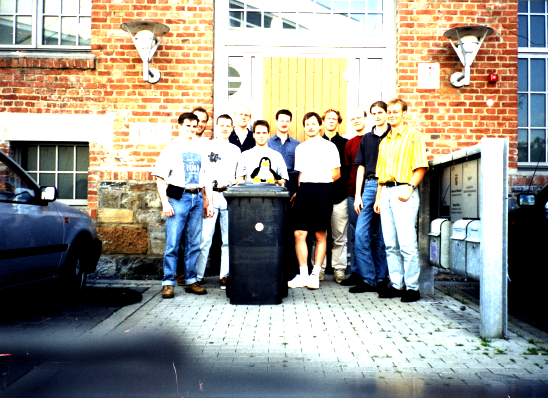
„KDE One“-Konferenz in Arnsberg
1997 treffen sich ca. 15 KDE-Entwickler in Arnsberg (Deutschland), um am Projekt zu arbeiten und über dessen Zukunft zu diskutieren. Dieses Ereignis wurde als KDE-One bekannt.
KDE e. V. gegründet
1997 wird KDE e. V., eine gemeinnützige Organisation, die die KDE-Gemeinschaft in finanziellen und rechtlichen Angelegenheiten repräsentiert, in Tübingen (Deutschland) gegründet.
1998
KDE 1 veröffentlicht
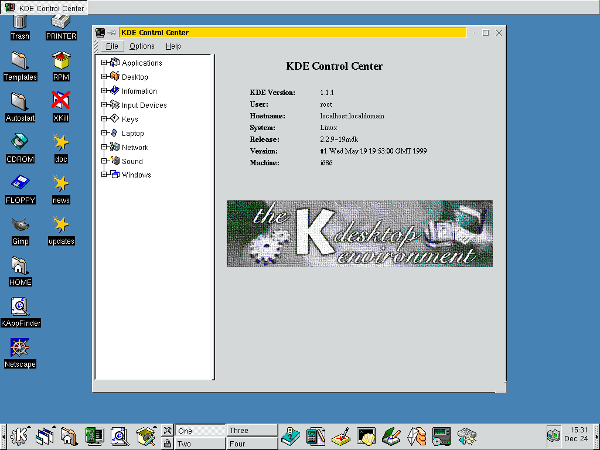
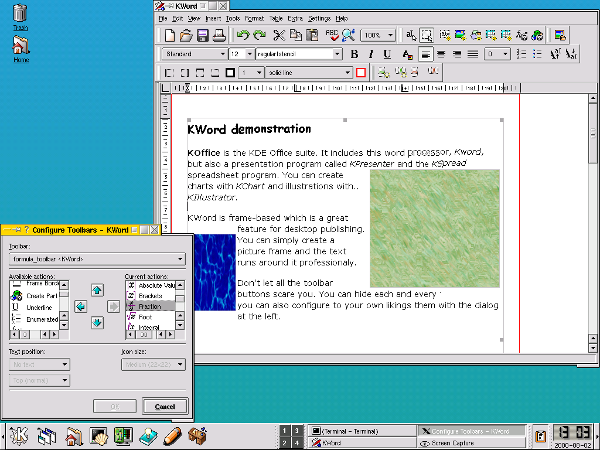
1998 veröffentlicht KDE die erste stabile Version seiner grafischen Umgebung mit Highlights wie einem Framework für die Anwendungsentwicklung, KOM/OpenParts und einer Vorschau seiner Office-Suite.
1999
Konqi adoptiert
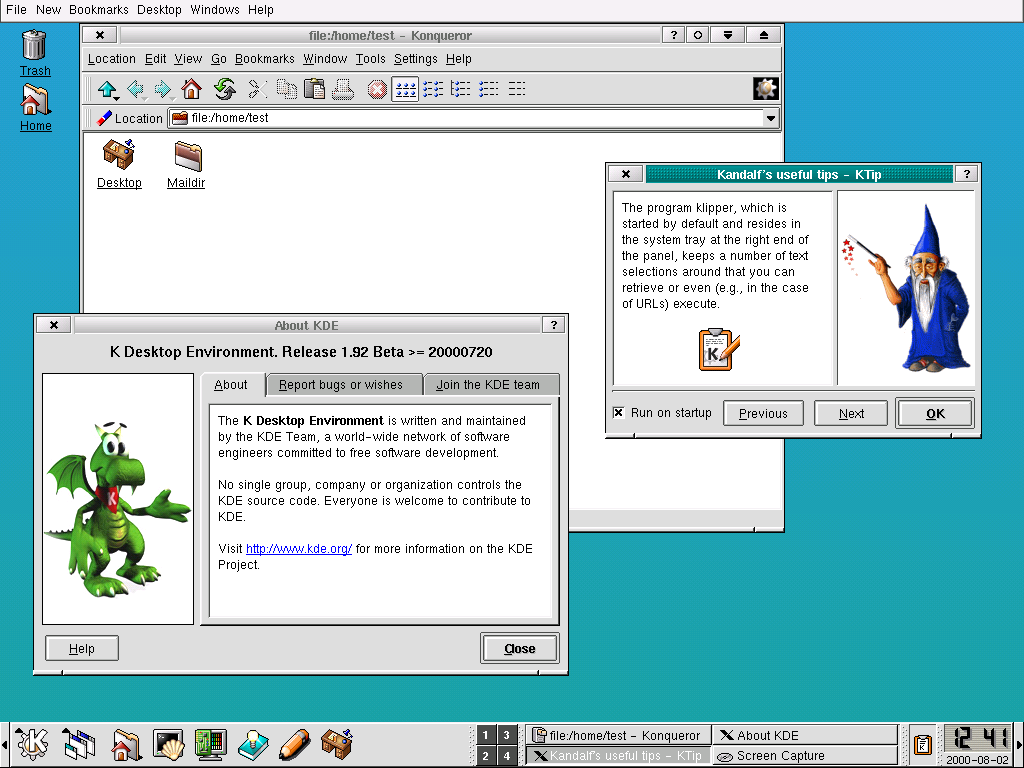
Im April 1999 wird ein Drache als neuer animierter Assistent im KDE-Hilfezentrum angekündigt. Da er so entzückend war, hat er ab der Version 3.x das bisherige Maskottchen Kandalf ersetzt. Betrachten Sie dazu das „KDE 2“-Bildschirmfoto mit Konqi und Kandalf darauf.
2000
KDE 2 veröffentlicht
KDE veröffentlicht die zweite Version, deren wichtigste Neuerungen der Webbrowser und die Dateiverwaltung Konqueror sowie die Office-Suite KOffice sind. Der Code von KDE wurde für diese zweite Version fast vollständig neu geschrieben.
2002
KDE 3 veröffentlicht
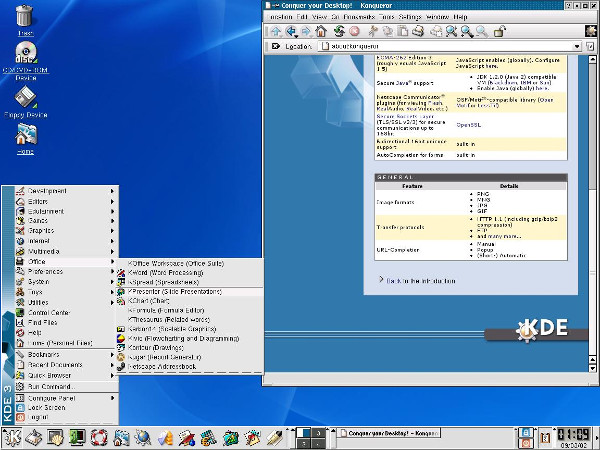
KDE veröffentlicht die dritte Version. Deren wichtigste Neuerungen sind das neue Druck-Framework „KDEPrint“, die Übersetzung des Projekts in 50 Sprachen sowie ein Paket mit Bildungsanwendungen, das vom KDE Edutainment Project gepflegt wird.
2008
KDE 4 veröffentlicht
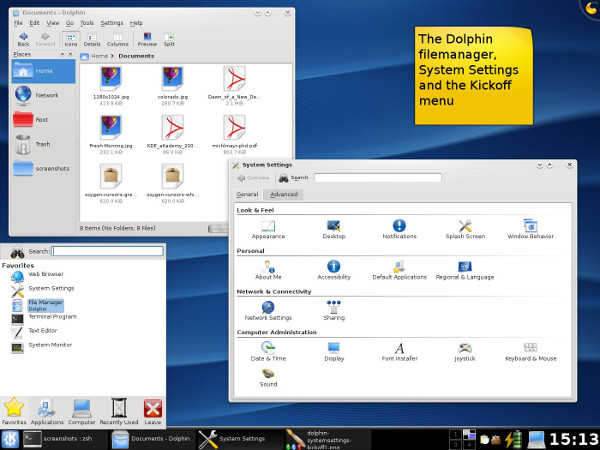
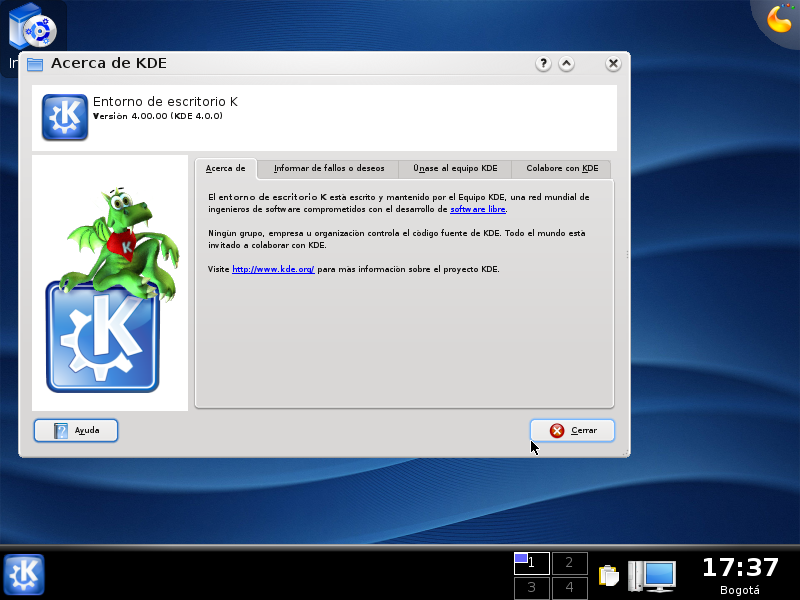
Im Jahr 2008 stellt die Gemeinschaft das revolutionäre KDE 4 vor. Neben der optischen Wirkung des neuen Standarddesigns „Oxygen“ und der neuen Oberfläche „Plasma“ bringt KDE 4 auch folgende innovative Anwendungen mit sich: den PDF-Reader „Okular“, die Dateiverwaltung „Dolphin“ sowie „KWin“, das Grafikeffekte unterstützt. Siehe KDE 4.0 Visual Guide.
2009
Eine Million Commits erreicht
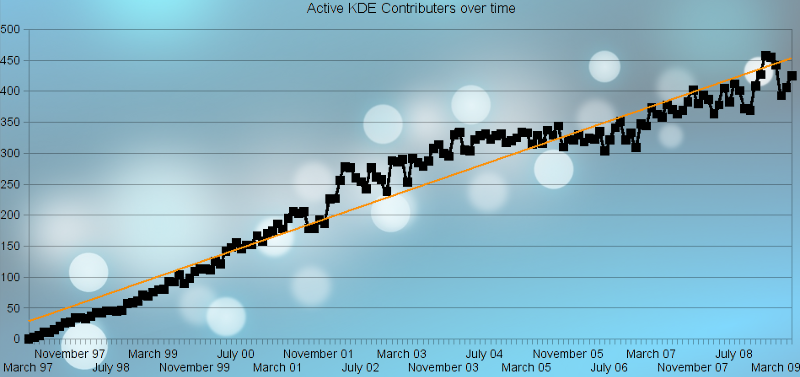
Die Gemeinschaft erreicht die Marke von 1 Million Commits. Von 500.000 im Januar 2006 und 750.000 im Dezember 2007 erreichen die Beiträge nur 19 Monate später die 1-Million-Marke. Der Anstieg dieser Beiträge überschneidet sich mit der Einführung des innovativen KDE 4.
2014
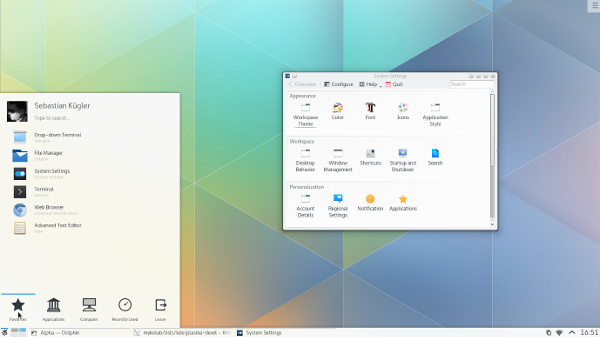
Plasma 5 veröffentlicht
Veröffentlichung der ersten stabilen Version von Plasma 5. Diese neue Generation von Plasma verfügt über ein neues Design namens „Breeze“. Zu den Änderungen gehört die Umstellung auf einen neuen, vollständig hardwarebeschleunigten Grafikstack, der auf einem OpenGL(ES)-Scenegraph basiert. Diese Version von Plasma verwendet Qt 5 und Frameworks 5.
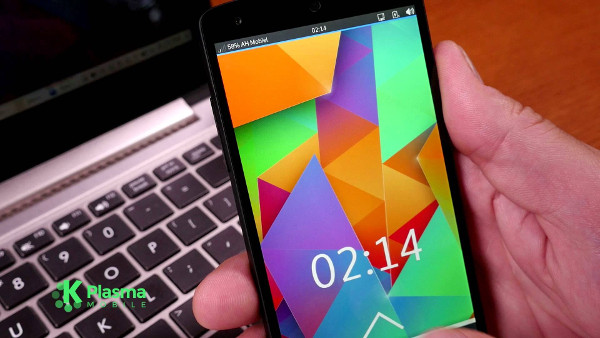
Plasma Mobile angekündigt
Die Gemeinschaft kündigt Plasma Mobile an, eine Benutzeroberfläche für Smartphones, die auf Qt, Frameworks 5 und der Plasma-Shell basiert.
2021
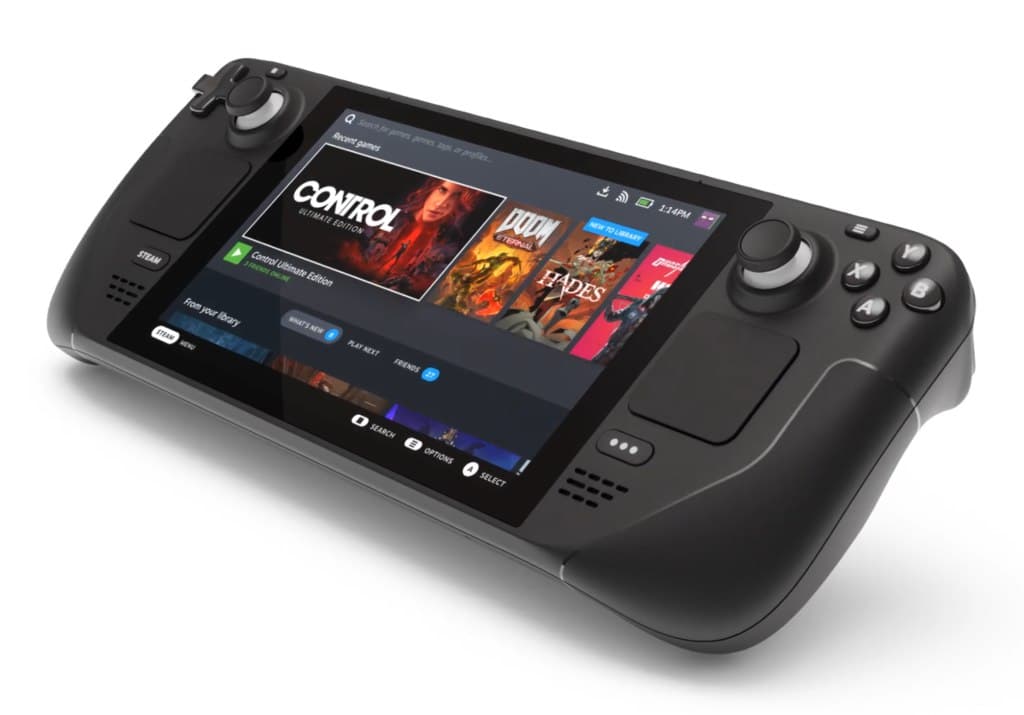
Valve wählt KDE Plasma für das Steam Deck
Valve, die Entwickler von Steam, geben bekannt, dass ihr tragbarer Gaming-Computer „Steam Deck“ standardmäßig mit KDE Plasma ausgestattet ist. Die KDE-Entwickler haben eng mit Valve zusammengearbeitet, um Plasma optimal auf das Steam Deck abzustimmen.
2024
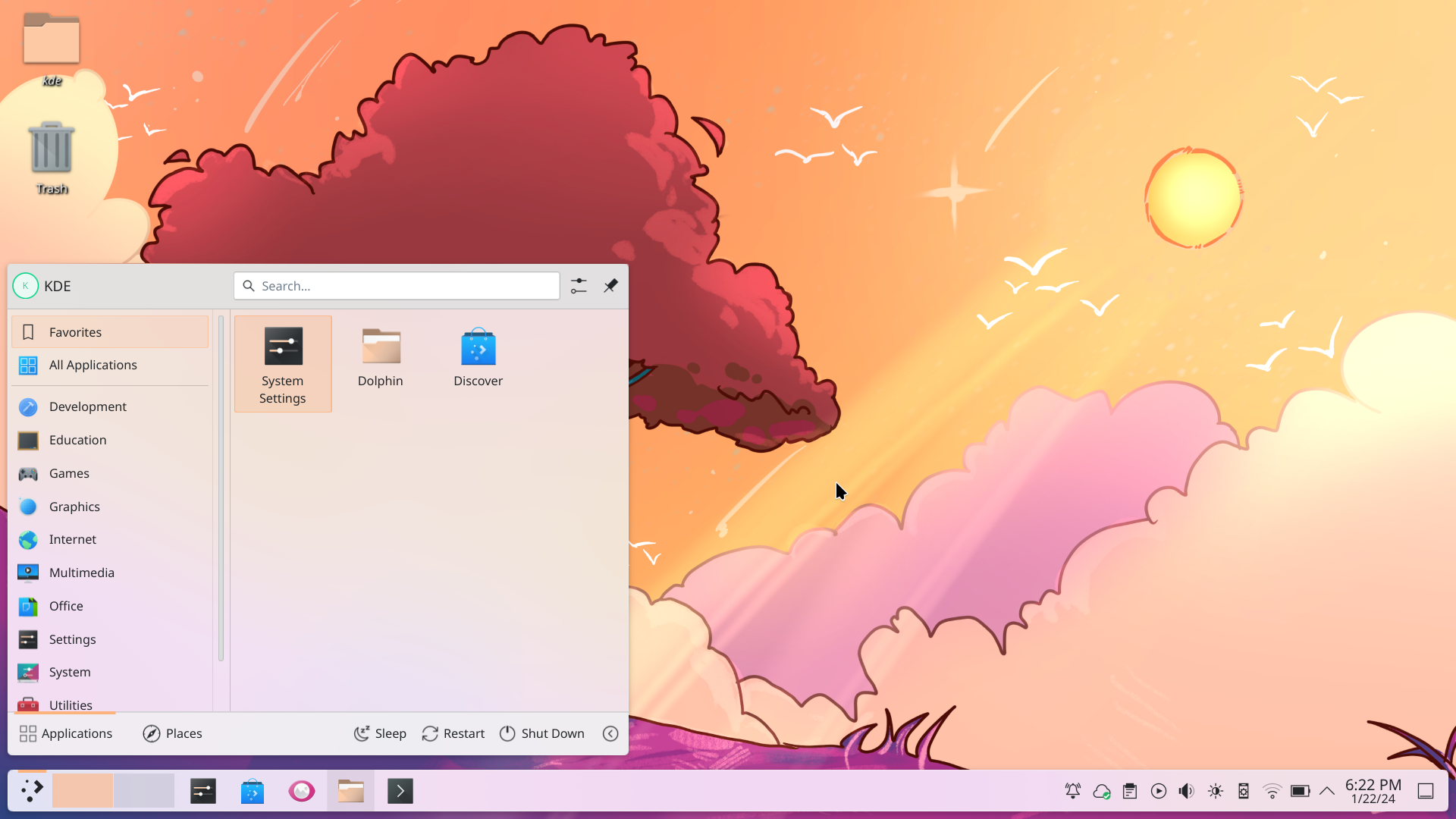
KDE führt Plasma 6 ein
Mit Plasma 6 erfährt unser Technologie-Stack zwei wesentliche Verbesserungen: den Umstieg auf die neueste Version unseres Anwendungsframeworks Qt und die Umstellung auf die moderne Linux-Grafikplattform Wayland. Die Veröffentlichung wurde als „MegaRelease“ bezeichnet, da neue Versionen der KDE-Anwendungen und -Frameworks sowie eine neue Version von Plasma Mobile gleichzeitig veröffentlicht wurden.
2025
„KDE Linux“ wird geboren
KDE Linux ist ein freies, quelloffenes und benutzerorientiertes Betriebssystem, das von KDE entwickelt wird, um die besten Funktionen von KDE unter Einsatz modernster Technologien zu vereinen.
KDE-Trivia
Wussten Sie, dass …?
… KDE dabei geholfen hat, Roboter auf den Mars zu bringen?
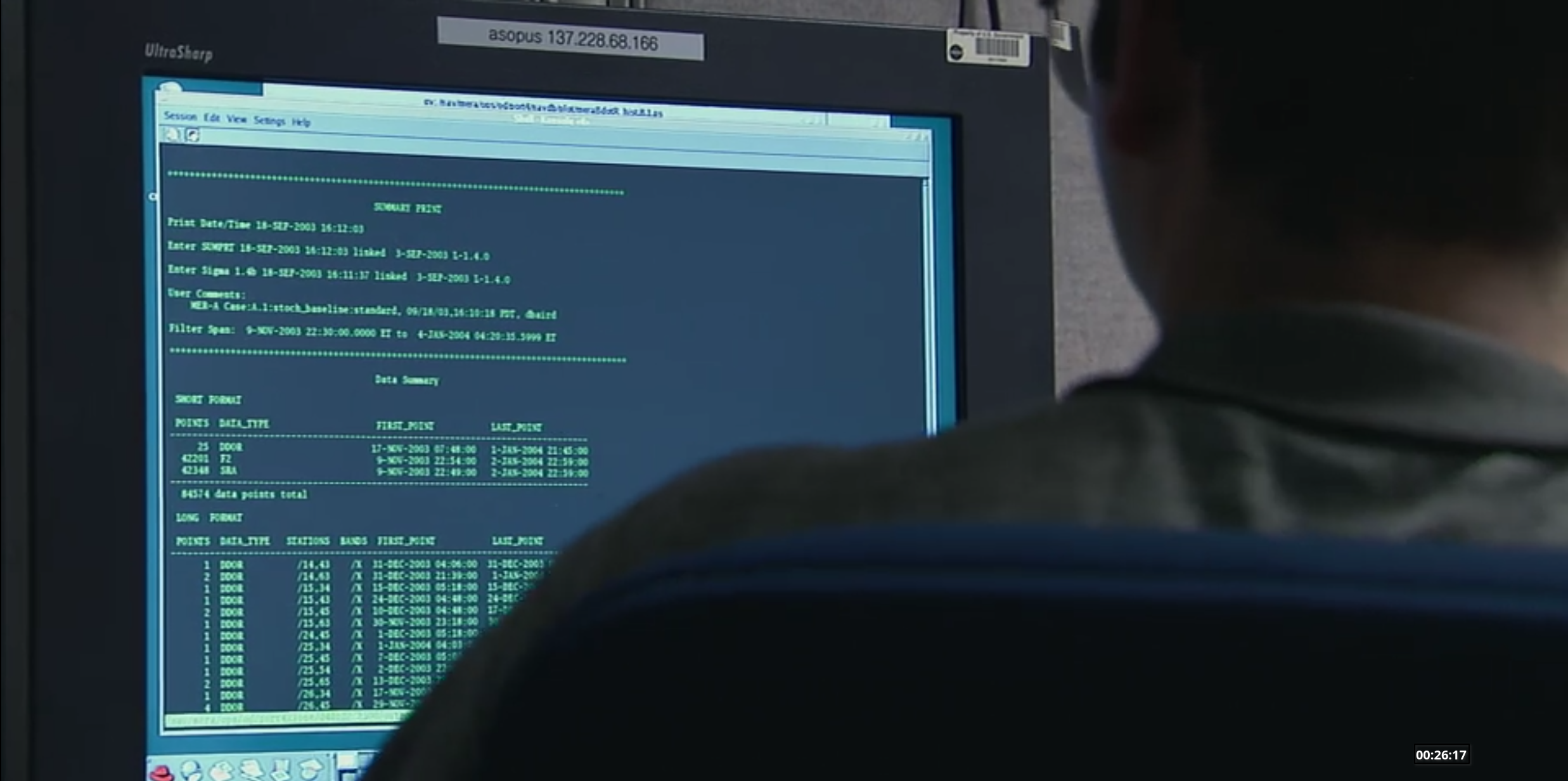
Haben wir wirklich! Und wir haben einen bildlichen Beweis dafür:
Das stammt aus der Dokumentation Gute Nacht, Oppy über den Mars-Rover Opportunity. In dieser Szene sieht man, wie ein NASA-Ingenieur während des Fluges zum Mars von einer KDE-3-Workstation aus Fehlerbehebungsmaßnahmen am Rover durchführt.
Good Night Oppy ist auf Amazon Prime verfügbar.
Eingereicht von Paul Brown
… KDE die HTML-Engine entwickelt hat, auf der die meisten Webbrowser basieren?
Das ist wahr!
Die Web-Engine von KDE wurde bereits in den Jahren 1998–1999 entwickelt und diente später als Grundlage für Apples WebKit- und Googles Blink-Engines. Das bedeutet, dass die meisten modernen Browser, darunter Safari, Chrome, Chromium, Microsoft Edge, Opera, Vivaldi und Brave, im Kern auf KDE-Software basieren.
Wenn Sie sich einmal die Zugriffsprotokolle Ihres Webservers ansehen, werden Sie feststellen, dass in fast jeder einzelnen Zeile „KHTML“ steht.
Und ja, das „K“ in „KHTML“ steht für „KDE“.
Eingereicht von Paul Brown
Haben Sie eine interessante Anekdote über KDE, die Sie gerne teilen möchten? Erzählen Sie uns davon!
Bildergalerie
1990er
„KDE One“, wahrscheinlich die erste KDE-Veranstaltung, fand 1997 in Arnsberg (Deutschland) statt. Matthias Ettrich, der Gründer von KDE, ist auf der linken Seite zu sehen.
2000er
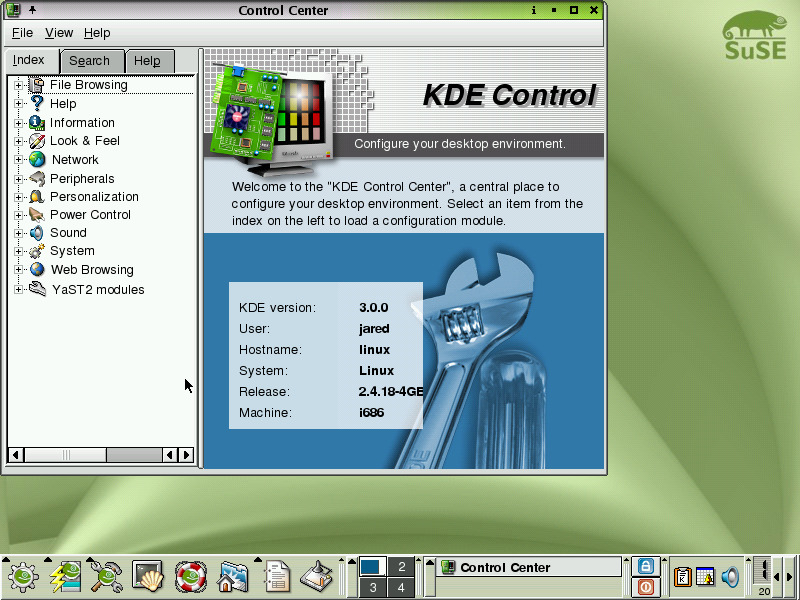
Erstveröffentlichung von KDE 3 unter SuSE – 2002. Dank an Manuel Alberto Ascencio Ramirez.
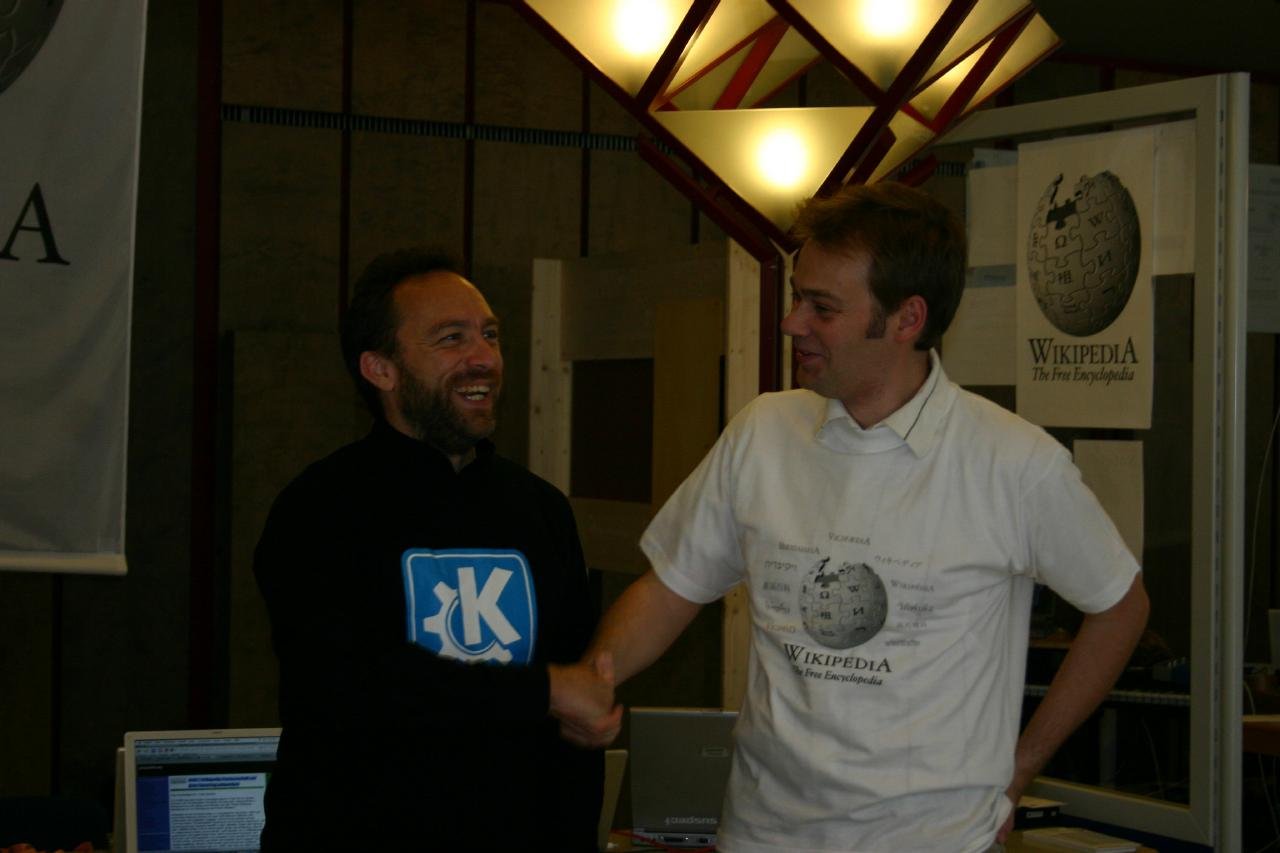
Jimmy Wales, Gründer von Wikipedia, und Matthias Ettrich, Gründer von KDE, im Jahr 2005.
Teilnehmer eines Amarok-Entwicklersprints im Jahr 2007.
Erstveröffentlichung von KDE 4 auf Kubuntu – 2008. Dank an Manuel Alberto Ascencio Ramirez.
Adriaan de Groot auf der FOSDEM 2008 (Brüssel), posierend vor einem Rechner mit KDE-Logo am KDE-Stand. Bild von Bart Coppens.
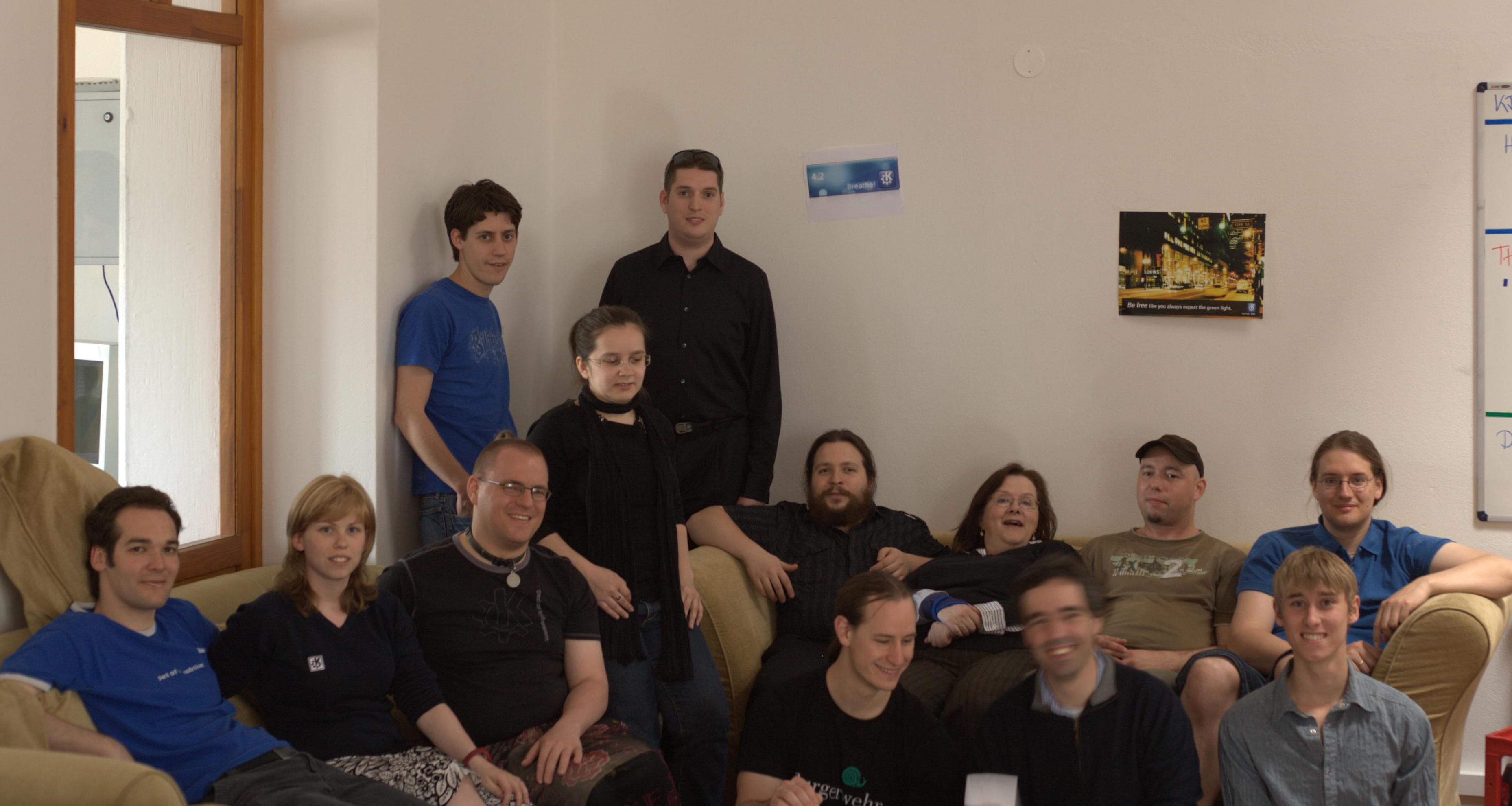
Das Gruppenfoto aus dem KDE-Entwicklerraum auf der FOSDEM 2008 (Brüssel).
Das Gruppenfoto aus dem KDE-Entwicklerraum auf der FOSDEM 2009 (Brüssel).
2010er
Das Gruppenfoto aus dem KDE-Entwicklerraum auf der FOSDEM 2010 (Brüssel).
Das brasilianische Team mit Konqi auf der Latinoware 2012.
Akademy 2013 in Bilbao (Spanien). Dank an Gorka Palazio.
Am Anreisetag des Plasma Sprint 2019 in Valencia drängten sich die Teilnehmer in einem winzigen Hotelzimmer zu einer spontanen Hacking-Session zusammen.
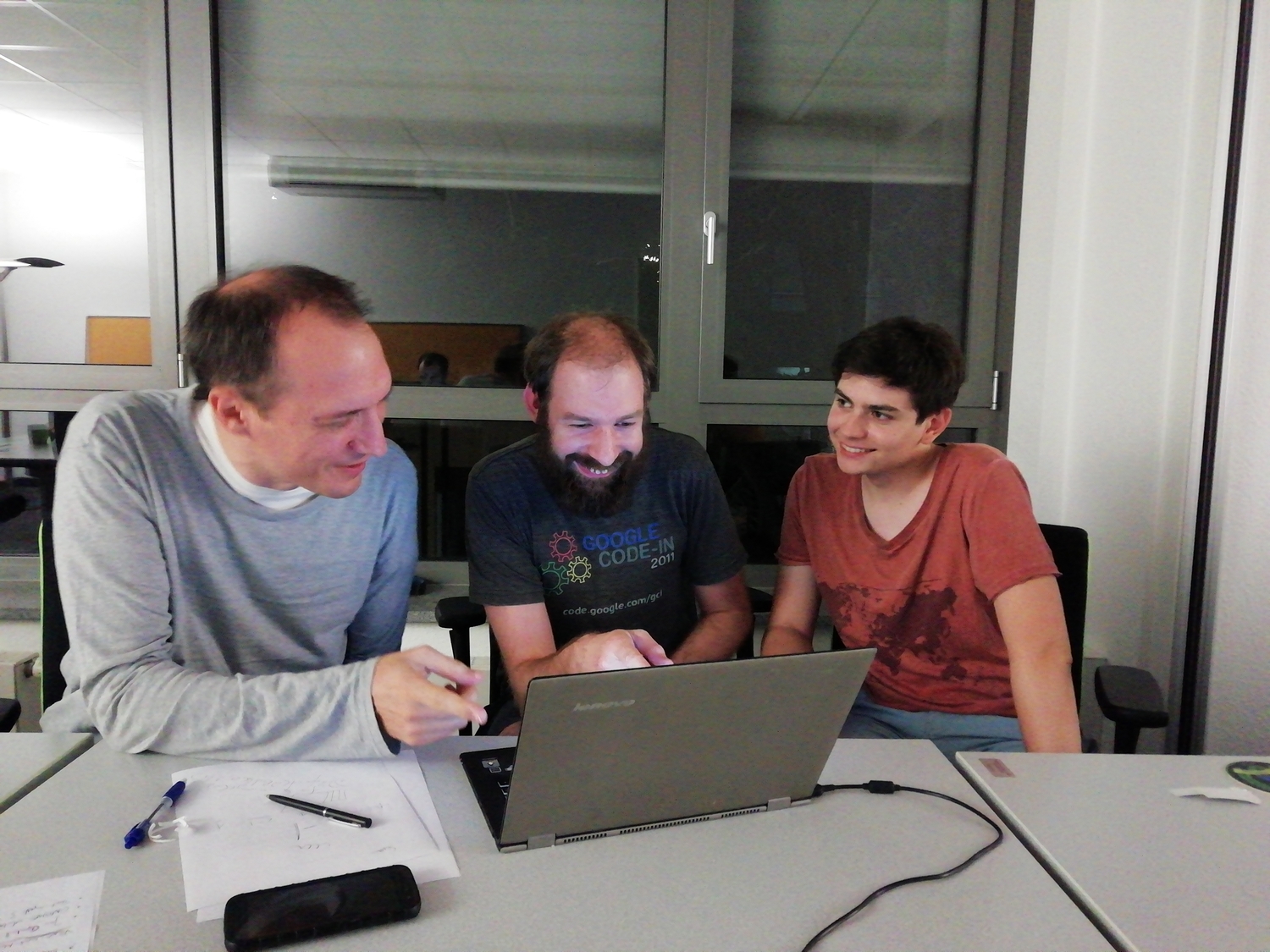
Manchmal benötigt es die vereinten Kräfte von drei Generationen „David“, um einen Fehler mit der Zwischenablage zu beheben. Von links nach rechts: David Faure, David Edmundson, David Redondo. Foto von Neofytos Kolokotronis, während des Onboarding-Sprints 2019.
2020er
Geburtstagsfeier 2024 in Berlin.
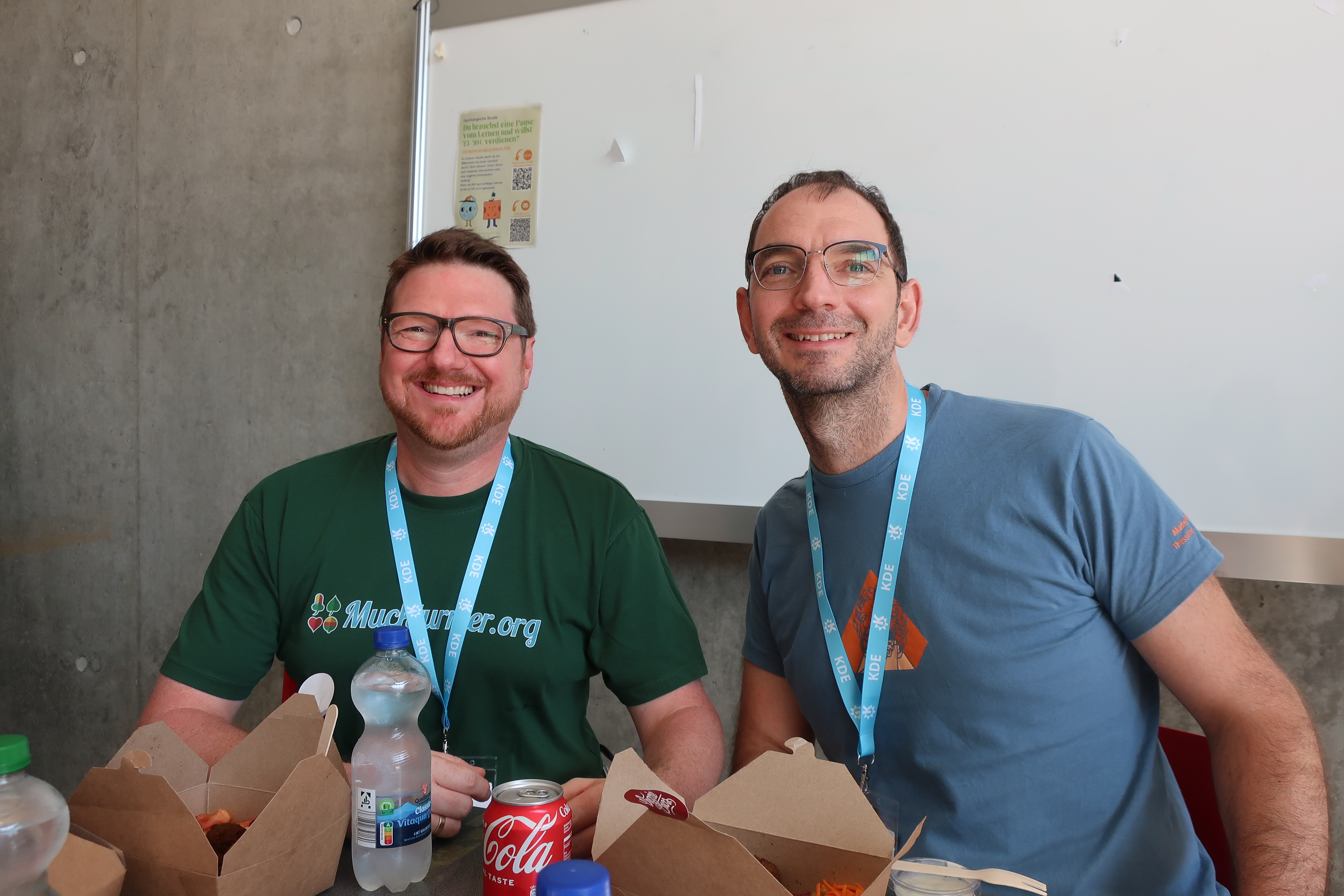
Tobias Leupold (KGeoTag) trifft Johannes Zarl-Zierl (KPhotoAlbum) 2024 zum ersten Mal persönlich, nachdem sie bereits seit 10 Jahren zusammenarbeiten.
Der Konqi-Kuchen, der für die Geburtstagsfeier 2025 in Málaga gebacken wurde, enthielt ein Easter Egg in Form eines versteckten QR-Codes.