Live Images
The easiest way to try it out is with a live image booted off a USB disk. Docker images also provide a quick and easy way to test Plasma.
Download live images with Plasma Download Docker images with Plasma
KDE Plasma 5.10 Beta
Monday, 15 May 2017
Today KDE has made a testing release of our desktop Plasma 5.10 with new features across the suite to give users an experience which lives up to our tagline: simple by default, powerful when needed.
Task Manager, the list of applications in the panel, has gained options for middle mouse click such as grouping and ungrouping applications.
Several other improvements here include:
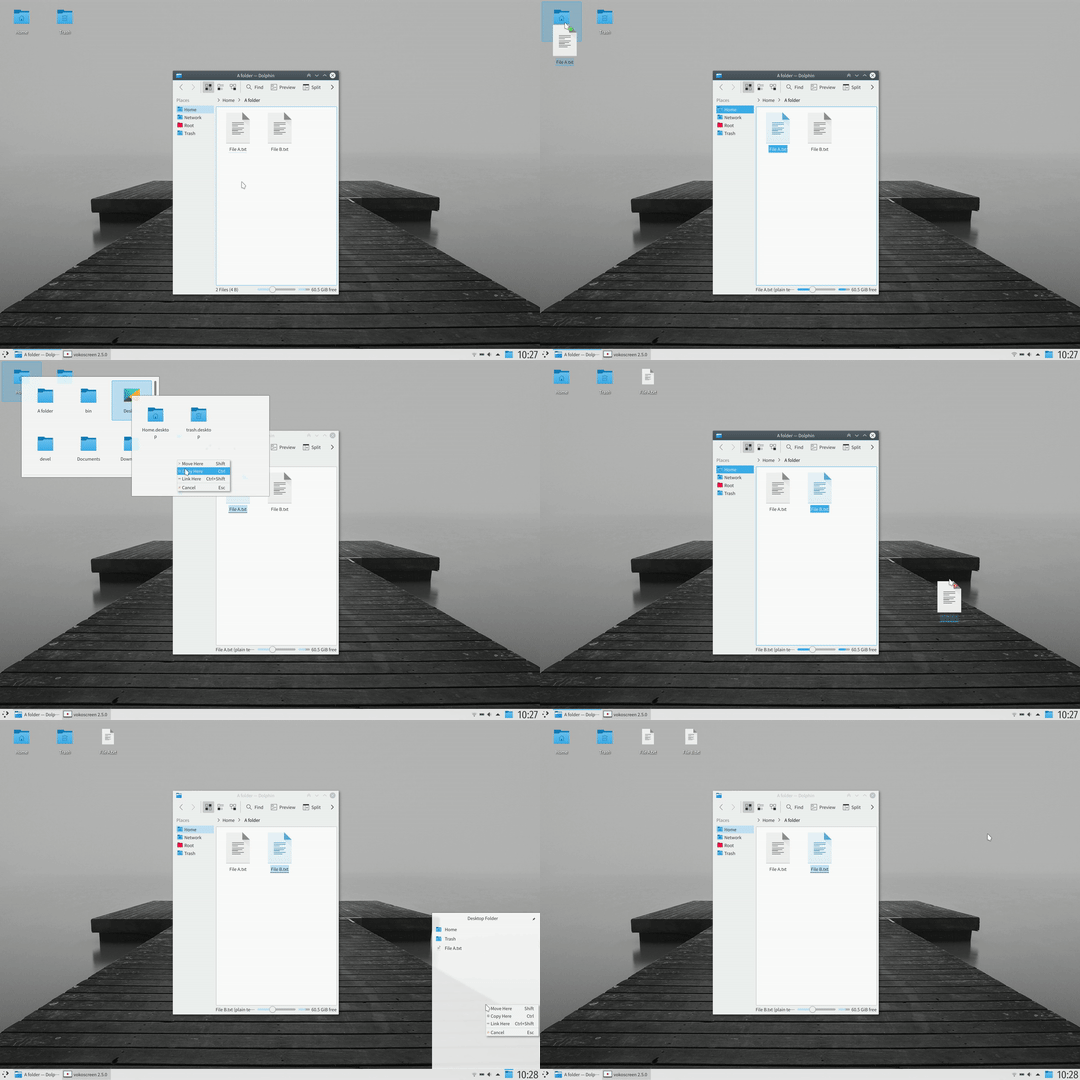
Folder on the Desktop by Default
After some years shunning icons on the desktop we have accepted the inevitable and changed to Folder View as the default desktop which brings some icons by default and allows users to put whatever files or folders they want easy access to. Many other improvements have been made to the Folder View include:
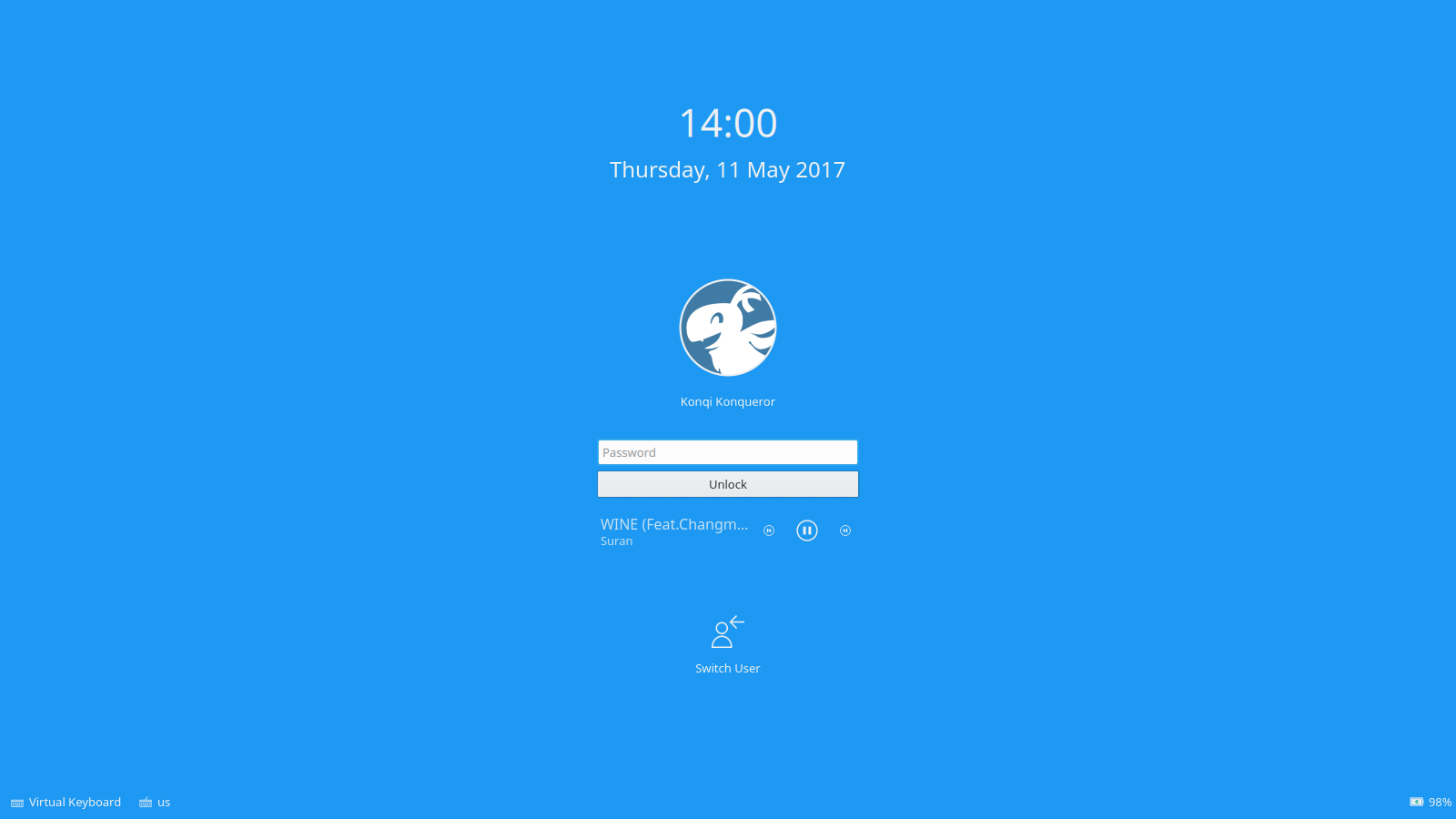
Lock Screen Now Has Music Controls

Software Centre Plasma Search offers to install apps
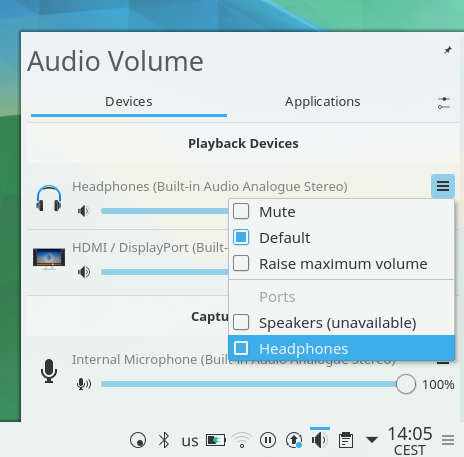
Audio Volume Device Menu
There are so many other improvements throughout the desktop, here's a sample:
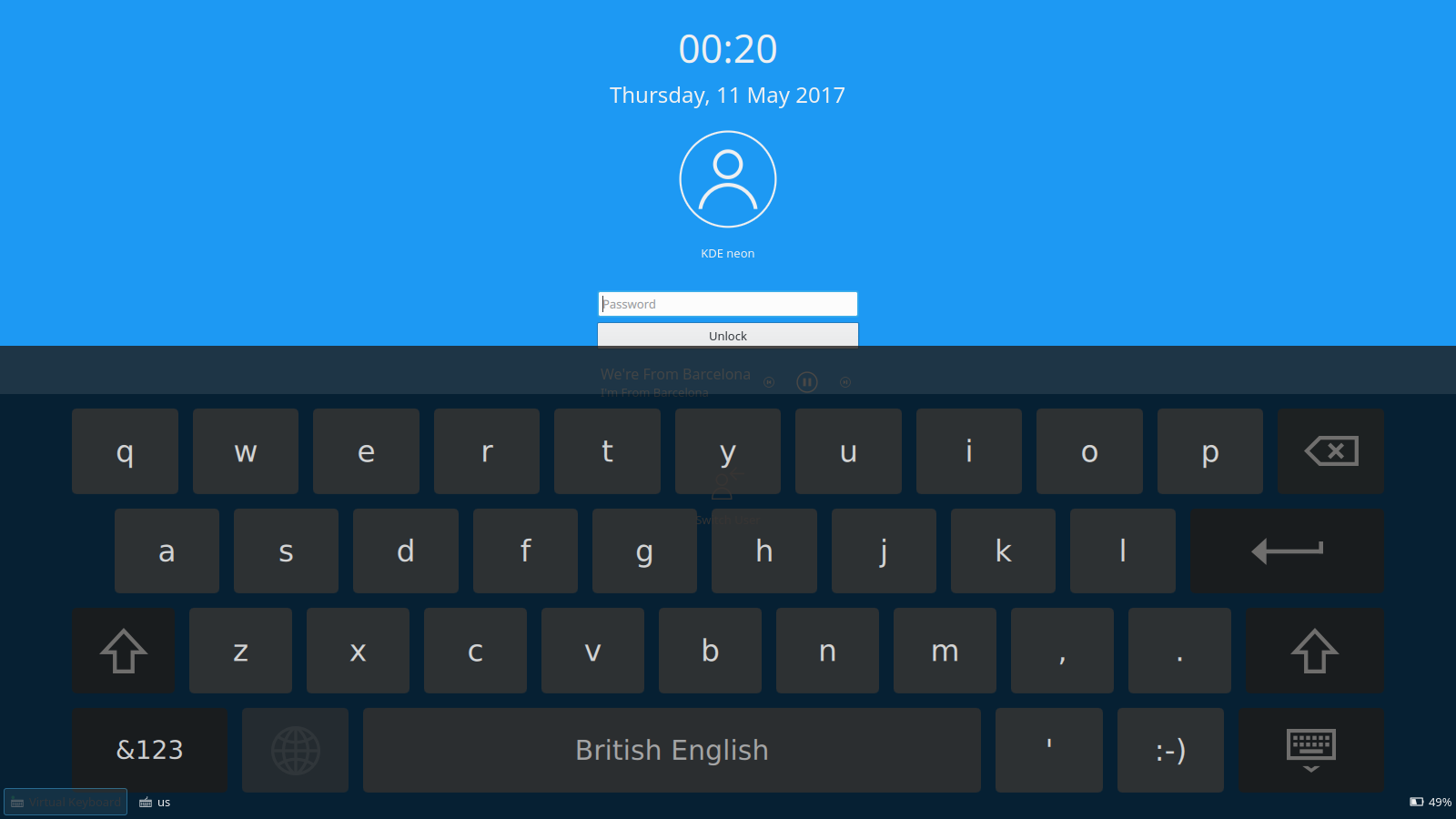
Virtual keyboard on Log In and Lock Screen
Touch Screen Support has improved in several ways:
We have put a lot of work into porting to new graphics layer Wayland, the switch is coming but we won't recommend it until it is completely transparent to the user. There will be improved features too such as KWin now supports scaling displays by different levels if you have a HiDPI monitor and a normal DPI screen. Keyboard layout support in Wayland now has all the features of X11:
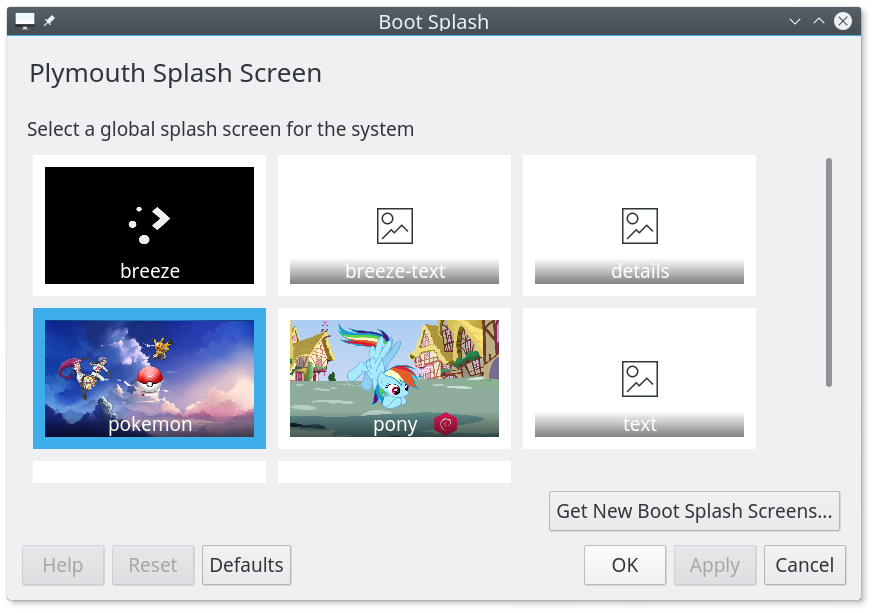
Plymouth KControl Module
A new System Settings module lets you download and select boot time splashes.
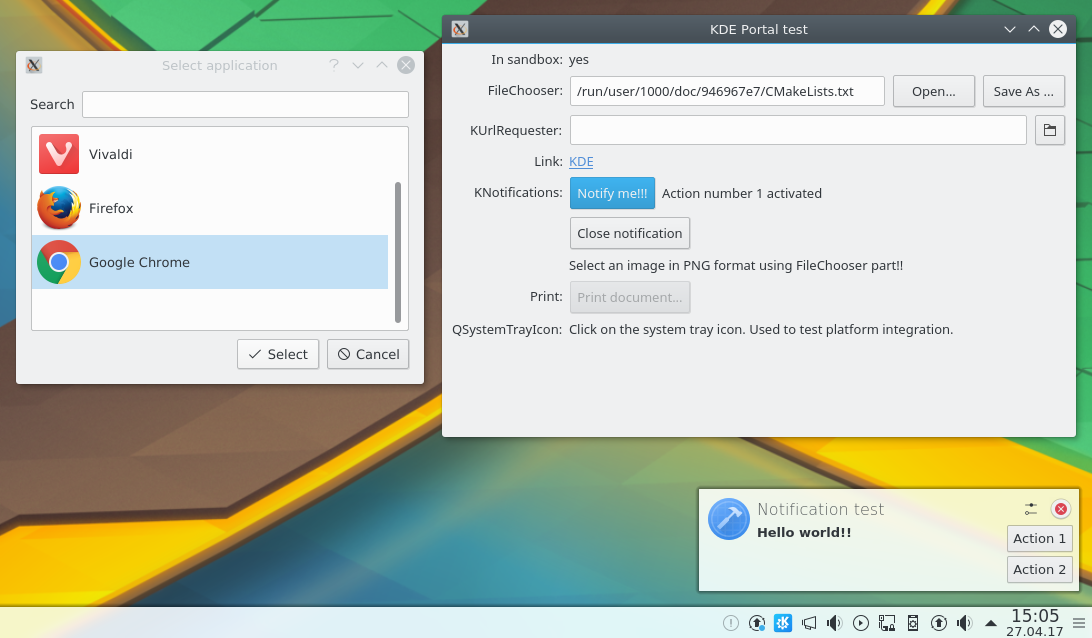
Flatpak integration with xdg-desktop-portal-kde: selecting a file using file chooser portal, invoking openURI portal and notification portal
Experimental support for forthcoming new bundle package formats has been implemented. Discover software centre has gained provisional backends for Flatpak and Snappy. New plugin xdg-desktop-portal-kde has added KDE integration into Flatpak packaged applications.
Support for GNOME’s Open Desktop Ratings, replacing old Ubuntu popularity contest with tons of already existing reviews and comments.
View full changelogThe easiest way to try it out is with a live image booted off a USB disk. Docker images also provide a quick and easy way to test Plasma.
Download live images with Plasma Download Docker images with PlasmaDistributions have created, or are in the process of creating, packages listed on our wiki page.
Note that packages of this release might not be available on all distributions at the time of this announcement.
Package download wiki pageYou can install Plasma directly from source.
Community instructions to compile it Source Info PageYou can give us feedback and get updates on our social media channels:
Discuss KDE on the KDE Forums.
You can provide feedback direct to the developers via the #Plasma Matrix channel, Plasma-devel mailing list or report issues via Bugzilla. If you like what the team is doing, please let them know!
Your feedback is greatly appreciated.
KDE is a Free Software community that exists and grows only because of the help of many volunteers that donate their time and effort. KDE is always looking for new volunteers and contributions, whether it is help with coding, bug fixing or reporting, writing documentation, translations, promotion, money, etc. All contributions are gratefully appreciated and eagerly accepted. Please read through the Supporting KDE page for further information or become a KDE e.V. supporting member through our Join the Game initiative.
KDE is an international technology team that creates free and open source software for desktop and portable computing. Among KDE’s products are a modern desktop system for Linux and UNIX platforms, comprehensive office productivity and groupware suites and hundreds of software titles in many categories including Internet and web applications, multimedia, entertainment, educational, graphics and software development. KDE software is translated into more than 60 languages and is built with ease of use and modern accessibility principles in mind. KDE’s full-featured applications run natively on Linux, BSD, Windows, Haiku, and macOS.
Trademark Notices.
KDE® and the K Desktop Environment® logo are registered trademarks of KDE e.V..
Linux is a registered trademark of Linus Torvalds. UNIX is a registered trademark of The Open Group in the United States and other countries.
All other trademarks and copyrights referred to in this announcement are the property of their respective owners.
For more information send us an email: press@kde.org